

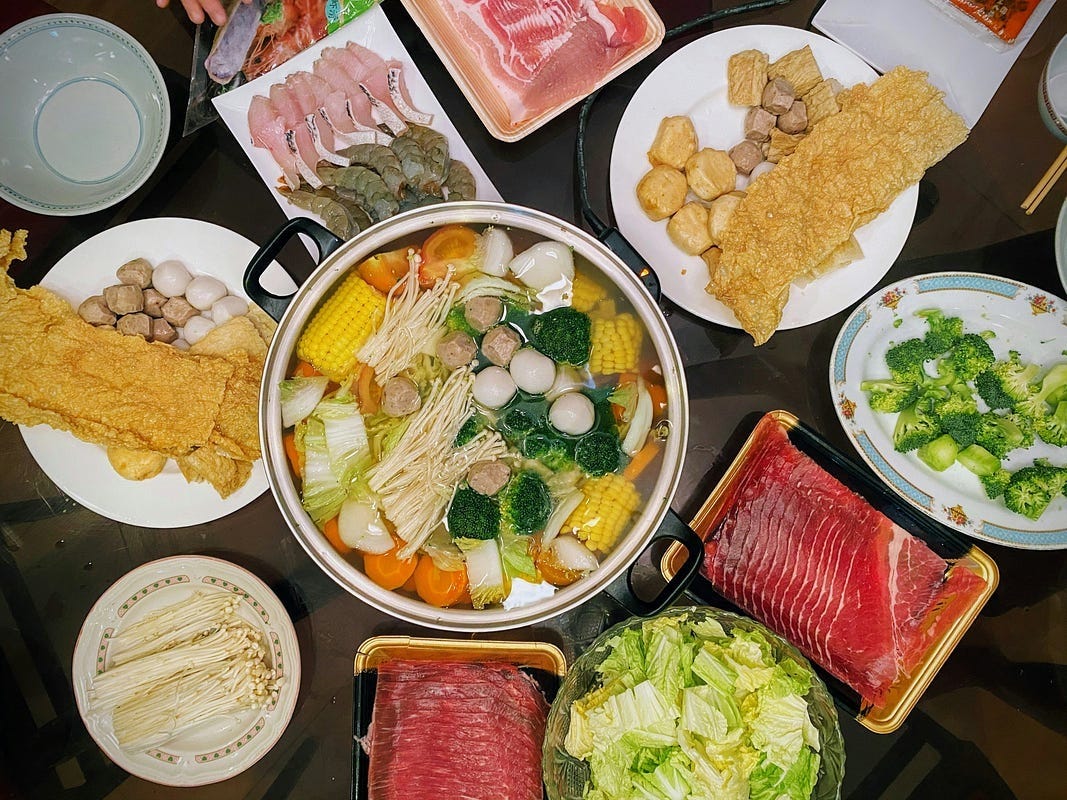
When we were running our restaurant and takeaway, we often organised hotpot dinners or lunches with our friends and neighbours on weekends and holidays. These were private events that were always filled with laughter and memories. Customers have asked many times for me to turn it into another “menu” item. Hotpot dinners are not profitable unless done on a large scale. It will take too long or cost too much for our small restaurant.
So I thought, why don’t more people do this themselves?
You can certainly go to one of many hotpot restaurants in the city, but it’s really very different from having it at home. And I think it is easier to organise than a BBQ. At least you don’t have a large grill to clean after.
So in this brief article, I will share how we organise a hotpot dinner in Australia. Especially now that winter is just around the corner.
But first, a glimpse into the Chinese Reunion Dinner
The Reunion Dinner
Central to Chinese cultures, especially around occasions like the Lunar New Year, is the reunion dinner. It is a momentous family gathering, usually on the eve of the first day of spring.
Back when life was harder, winter in China was especially difficult. The “Nian (年)”, the beast in the popular lion dance you often see in Chinatowns all over the world during this period, symbolised this hardship. Nian also means “Year”, so that Guo Nian (過年) literally means “The passing of the Year”.
The long, cold winter means that sometimes, people don’t make it through. So on the eve of the last day of winter, families gather for a reunion and count their blessings if everyone made it through. And for the next few days of the New Year (Spring Festival), we visit friends and relatives to congratulate them on making it through winter.
Growing up in Singapore, it was usually an annual affair on the eve of the Chinese Lunar New Year, a kind of communal cooking experience that brings everyone together. In some parts of China, families gather around to make dumplings for dinner.
So a hotpot dinner is not just delicious food, but the ritual of sitting around the table, sharing stories, laughter, and love. It’s an intimate, interactive dining experience that fosters bonds. And we should all do it often.
Tracing the Roots of Hotpot
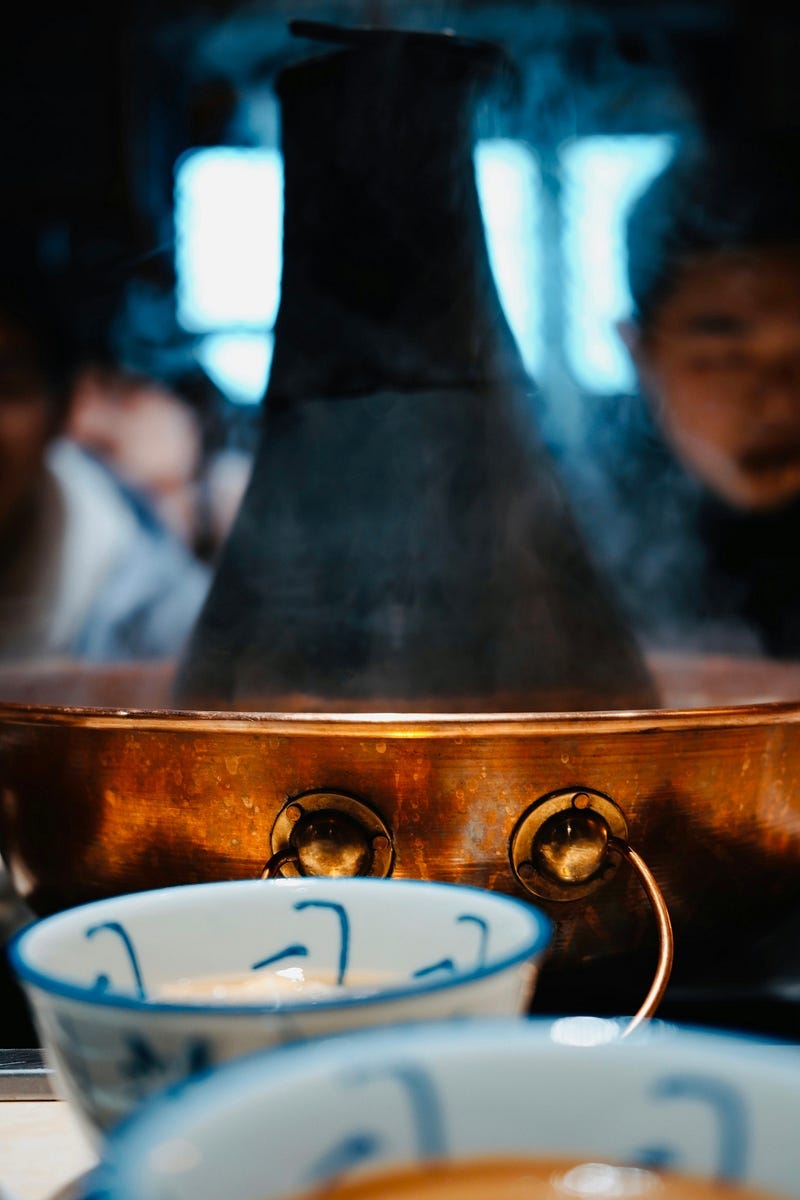
The history of hotpot dates back thousands of years. The tripods of the Zhou Dynasty in China date back to 1046 BC, when nobles ate from personal bronze hotpots over burning charcoal called the Ran Lu (燃炉). My parents, in the Teochew dialect, used the same description when I was growing up in the 60s. I am often amazed that my mother, who didn’t go to school much, used words that go back over 3000 years without realising it. Wei Lu (围炉) or gathering around the pot, meant having a reunion dinner.
But the hotpot has long spread beyond Chinese borders, inspiring similar traditions elsewhere. In Japan, there’s the “Shabu-shabu,” a lighter hotpot that focuses on thinly sliced meats swished in a bonito and kelp-based broth. Korea offers the “Jeongol,” a hotpot filled with vegetables, meats, and rich seasonings. I love the kimchi hotpot, especially when the weather is cold. Even in France, fondue resembles hotpot, with a communal pot of melted cheese or chocolate.
But let’s get on with it.
Your Hotpot Checklist
Organising a hotpot dinner is surprisingly simple and requires minimal preparation. I think it is easier than when I am preparing for a usual dinner. The first thing you will need is the cooking utensils and the hotpot setup. If you want to keep it simple, an electric induction setup or camping (butane) stove with a pot from most supermarkets or camping stores works just fine.
We use a camp stove with a $3 butane cartridge. And you need a wide, shallow pot so it is easier to cook and eat without standing up. We use a pot with a divider to separate two types of broth. You can have just one type of broth, but 2 is better than 1.
Word of caution. Be careful when you have children at the table. Especially with boiling broth and a hot stove. Charcoal and butane stoves are only suitable for outdoor hotpot. If you are having it indoors, an electric induction stove or very good ventilation prevents carbon monoxide build-up.
Serving utensils, chopsticks, and small bowls and sauce plates. I usually provide Korean BBQ tongs or food tweezers for guests who do not use chopsticks.
Ingredients:
Depending on what you like, the soup can be made with a chicken, beef, mushroom, or spicy Sichuan base. Vegans and vegetarians can also use a vegetable soup base. This is usually the most time-consuming part, boiling bones, vegetables and aromatics for a few hours. If you have time, it will be delicious. But don’t let this stop you.
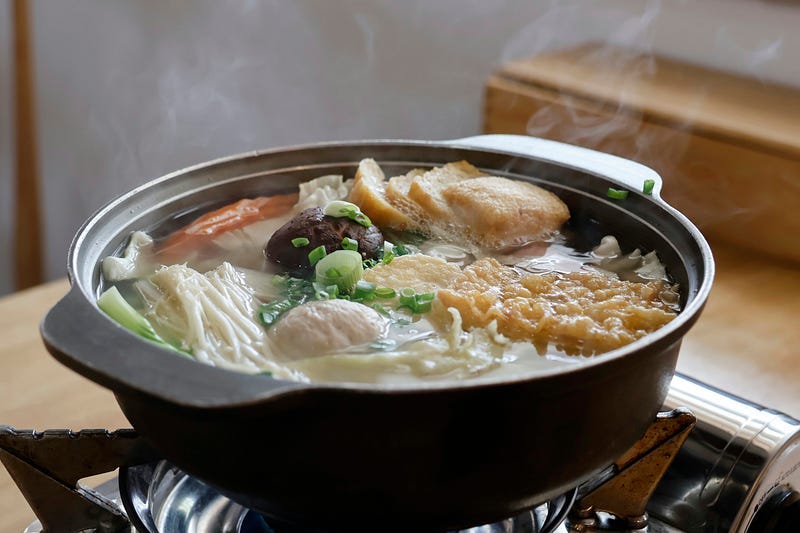
You can also use packet soup if you do not want to spend hours making the stock. You can get these from your local Asian grocery. Or order online from Amazon. The Lee Kum Kee soup base is our favourite when I am too lazy to make stock.
Ingredients for the hotpot include beef, chicken, lamb, pork and seafood such as fish, shrimps and scallops. Basically, whatever you like. The important thing is that you sliced these as thinly as possible so that they cook quickly. If you can find a Korean butcher, they usually have a variety of meats ready for hot pots and Korean BBQ. We also love adding sliced Spam into our ingredients. Remember, whatever you like.
Vegetables like spinach, bok choy, choy sum, a variety of mushrooms, even carrots, potatoes, and dried seaweed are delicious. You can add tofu and noodles for carbs and textures. You can easily get udon, rice noodles, or mung bean noodles.
Finally, when you dish out the cooked ingredients, dip them in a delicious sauce before eating. The simplest would be a blend of soy sauce with a dash of sesame oil. You can also add minced garlic, chilli, and/or green onions into the soy sauce. We love the popular Kewpie Japanese Dressing with Roasted Sesame, available at any supermarket. Whatever you like.
Then, sit everyone down, turn on the stove, and eat as you cook and cook as you eat. Have a beer, a glass of wine, or a gin and tonic. In the cold of winter, laughing and talking loudly, serving food to each other, and simply enjoying the company of your family and friends.
When it is done, everything can go into the dishwasher.
The Cultural Heartbeat of Hotpot
The hotpot reflects the culture of sharing and unity, where the act of eating together is as significant as the meal itself. It demands little in terms of preparation but yields abundant rewards in laughter, conversation, and the human connection.
Whether it’s the joy of reuniting or the comfort of deepening bonds, the hotpot dinner, with its rich flavours and cultural significance, reminds me that the most memorable gatherings are often the ones that require the least. Could there be any greater gift than the simple pleasure of sharing a hotpot with those we love?