

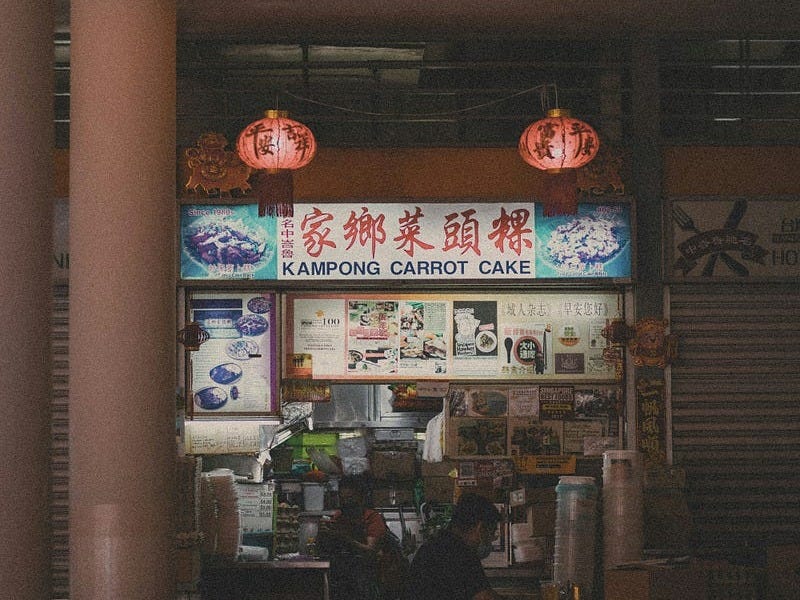
It started when I was 8. I fell in love with fried carrot cake. The “white” kind.
On my 8th birthday, I wanted to have fried carrot cake. The “white” kind.
Growing up in the 70s in Singapore, we never ate in restaurants. Except for the occasional Chinese Wedding Banquet, hawker food was always a treat for us. Sometimes, neighbours bought fried carrot cake, the “black” kind (I’ll explain what this is) and gave the neighbour’s children a tiny piece each on a toothpick.
Oh…yeah.
So, on my 8th birthday, my mother asked me what I would like to eat.
When she returned from the market, she said it was too expensive. At $1.20 a packet (the shop had a kind monopoly on fried carrot cake in the place where we lived), it was more expensive than a bowl of wonton noodles (50c). She told me they even berated her when she asked if she could buy a smaller pack and commented on how expensive it was.
“I will make some for you.” She promised.
And she tried. And tried. And tried.
She never really succeeded. It was always too “gluggy” or pasty, so you couldn’t cut it into pieces. She tried different flours and flour-to-water ratios. She asked friends who frankly didn’t know how to make it. And she always added too much daikon (white carrot, we call it), which made it too wet when steamed. She wanted it to be better than those from the stall. I have often complained that it wasn’t nice. It was not the same.
Of course, eventually, we could afford it, and we bought them regularly.
And she eventually stopped trying to make them.
History of Chinese Carrot Cake
Carrot cake is a Teochew dish. In Singapore, it is commonly called “Chye Tow Kueh” or 菜头粿. This is what it looks like.
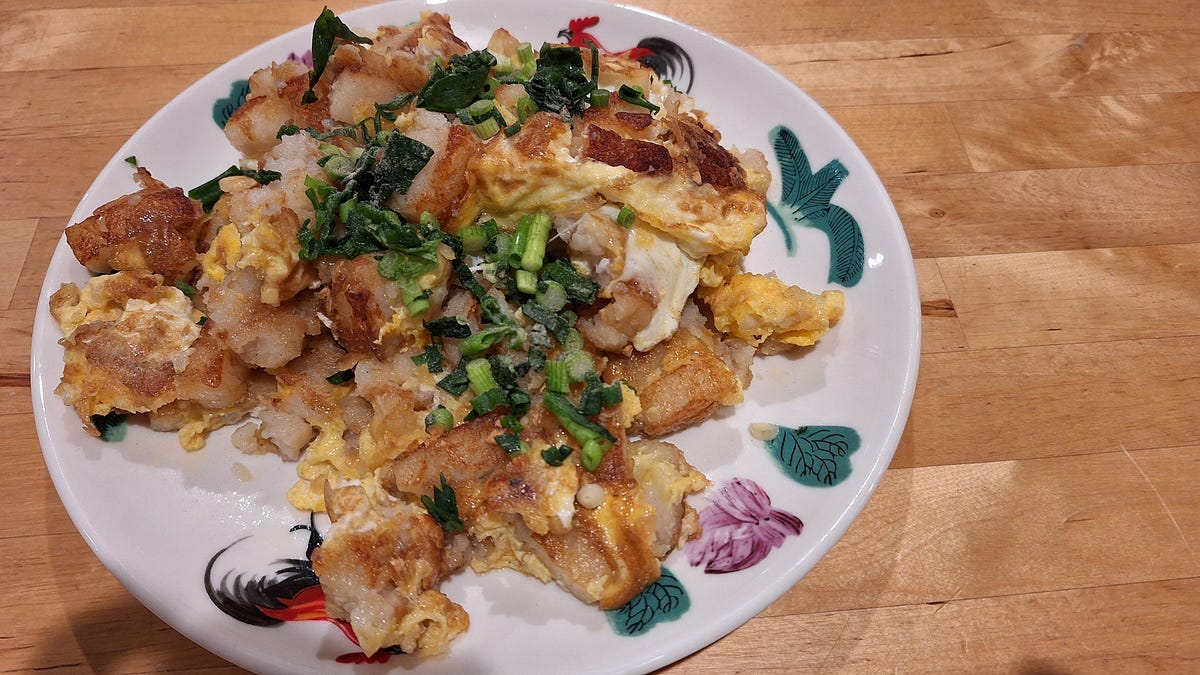
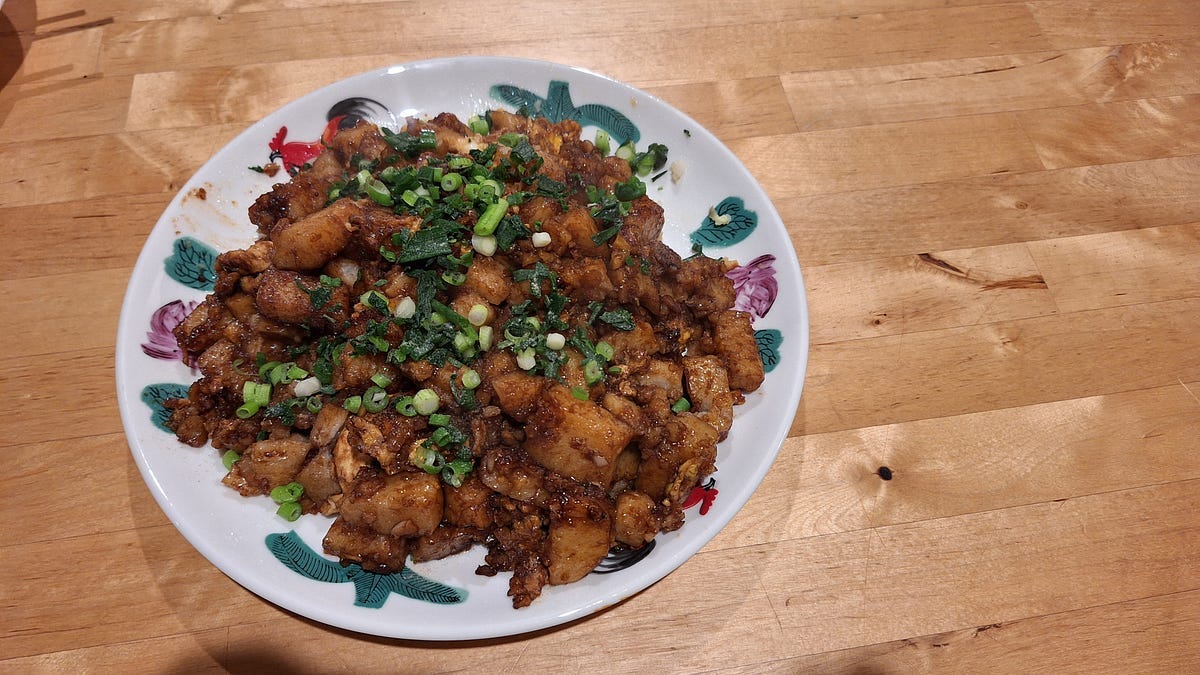
Most shops now will have both the black and white versions. The black version uses a “sweet dark sauce,” so it will taste a little sweeter, especially when it caramelises in the hot pan. The white version uses “fish sauce” and lots of eggs and has a salty, savoury taste. Both are delicious.
Cake, or Guo (粿) or Gao (糕) in Southern Chinese cuisine, is usually a rice-based snack that is steamed. It occurred during the mass migration from the north in the 4th and 10th centuries to the Fujian and Guangdong regions.
When they arrived, they discovered that wheat was not readily available. Rice was the staple. So they adapted and use rice to make rice-based noodles like “Kueh Teow” 粿條 and “Bee Hoon” 米粉. There were also versions of steamed cake using rice flour, like the carrot cake. This radical 米 means rice, which you can find in all those dishes I just mentioned.
There is no fried carrot cake in Australia
It wasn’t until we arrived in Australia some 15 years ago that I missed the good ‘ol fried carrot cake. The “white” kind.
Except for the fancy, overpriced XO-sauced laden fried daikon cake occasionally served in some restaurants, you can’t get “Chye Tow Kueh” anywhere here. I had to learn how to make it myself.
It was a long journey, and I faced the same challenges (and failures) my mother did when she tried to create this dish.
I have included my recipe below for curious readers who may want to try making it. And homesick Singaporeans who may have missed it.
Black and White Carrot Cake
Whenever we served it to our friends or in the restaurant we used to run, my wife would tell this lovely story.
“Black and White isn’t a racist label for the carrot cake,” she would say. “It’s because there are 2 versions of this dish.”
And continue to tell of the difference between our Chinese carrot cake and the sweet carrot cake (dessert) that most in the West are familiar with.
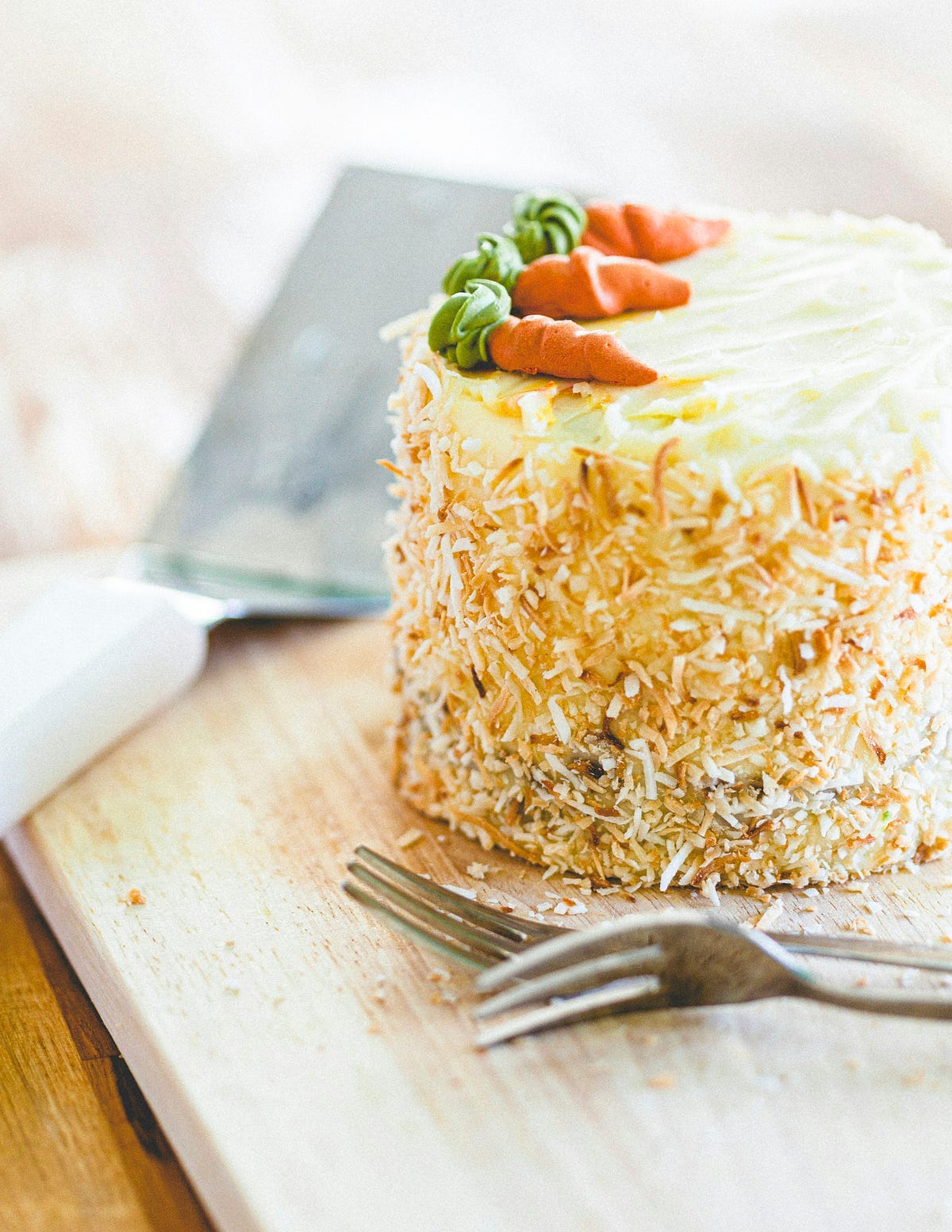
So, imagine the confused looks when we bring out the Singapore “carrot cake.” The suspicion when they pick up a small piece to try it. And the subsequent delight when they realise it tastes much better than it looks.
They always finish it.
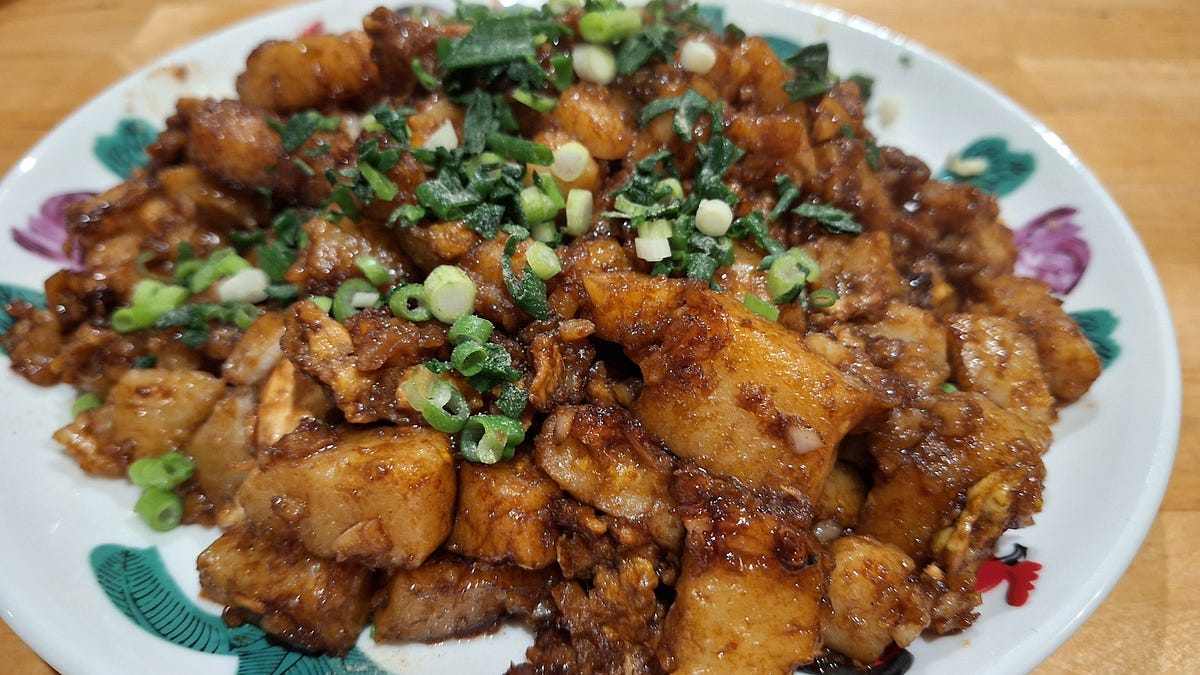
There isn’t anyone I know who doesn’t like it. Many of our Australian friends have also asked for the recipe. It took me a long time to get the recipe right. To achieve that springy texture when you bite into it.
In that process, I learned to appreciate the effort that my mother put in. As a parent, I now understand the frustration and anxiety as she tried to give her children what they wanted, what she couldn’t afford to buy at the time.
I cry a little each time I make this. I shouldn’t have criticised her fried carrot cake.
My Recipe and the Secret Ingredient
You don’t need many ingredients to make fried carrot cake. Like most Singapore dishes, you need time. This dish is best prepared over two days, since it needs to cool properly before you can fry it. Here are the ingredients I use:
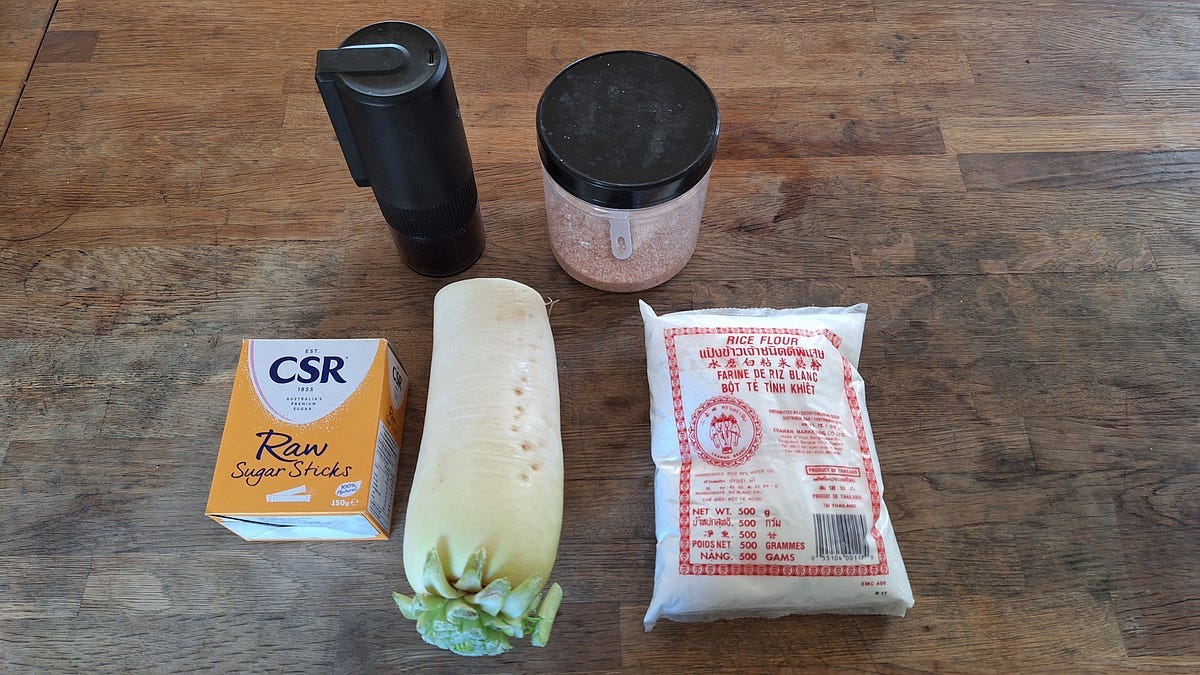
Ingredients for the carrot cake:
1500 ml of water
500g white radish (daikon), grated
500g rice flour
3 tablespoons tapioca starch (This is the secret ingredient. It makes the cake springy when cooked)
1 teaspoon salt
1 tablespoon sugar
Chicken Powder (I have used clear chicken stock to replace the 1500 ml of water, and it tastes even better)
Making and Steaming the cake
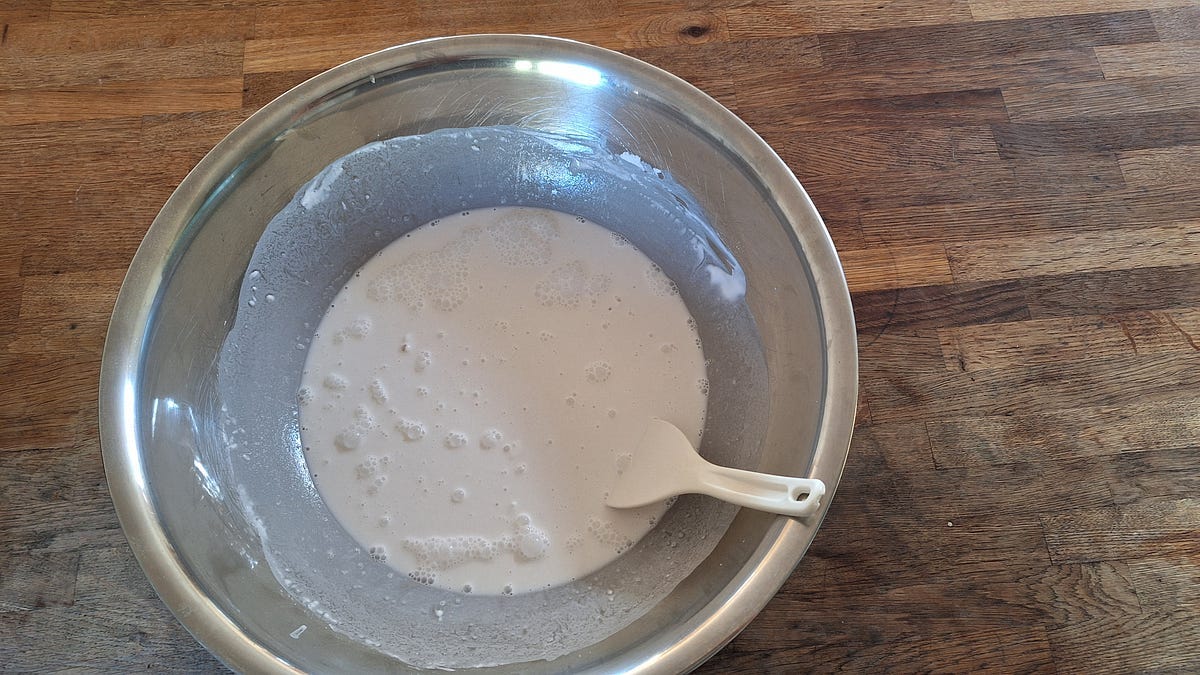
The first step is to make the cake. Begin by hydrating the rice flour. Mix the rice flour and starch well with 1000ml of room temperature water. Let it soak for about an hour. I do not use boiling water because it cooks the flour and starch, and the mix becomes lumpy and gluggy. There should be no lumps of flour after mixing in the water.
Note: Rice flour is very forgiving in the water-to-flour ratio. I have tried 1:2 up to 1:4 for flour and water. You will get varying degrees of firmness and softness as you increase the water. I found that 1:3 gives me the closest result to the usual Singapore version.
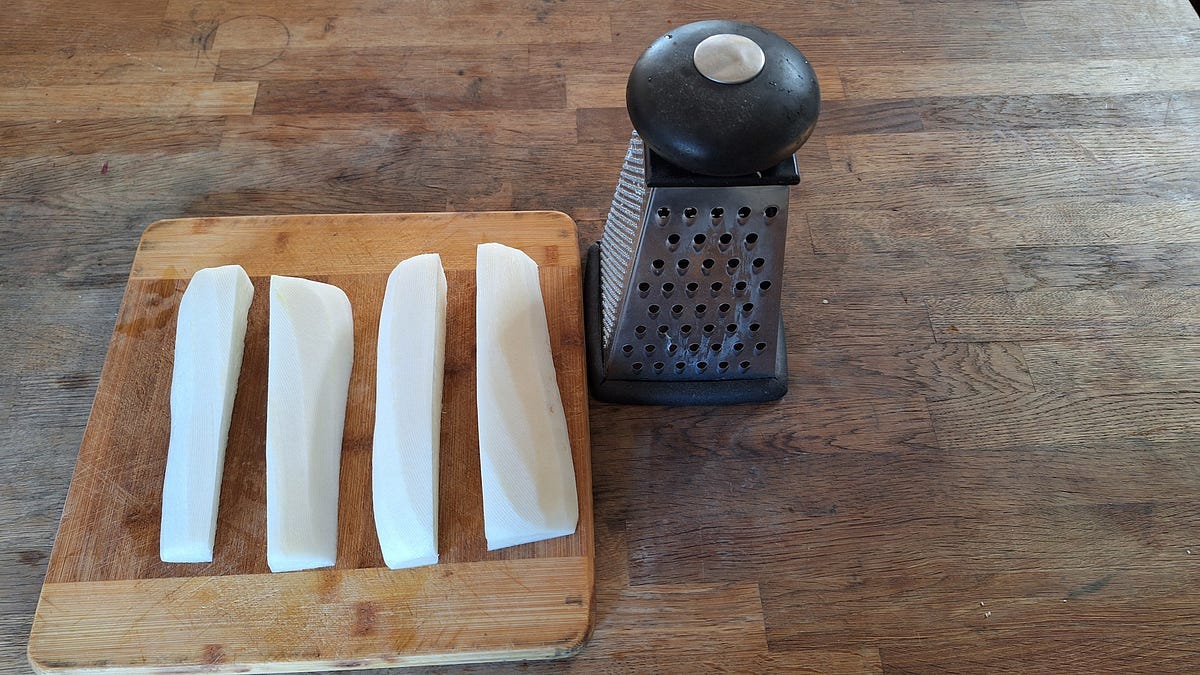
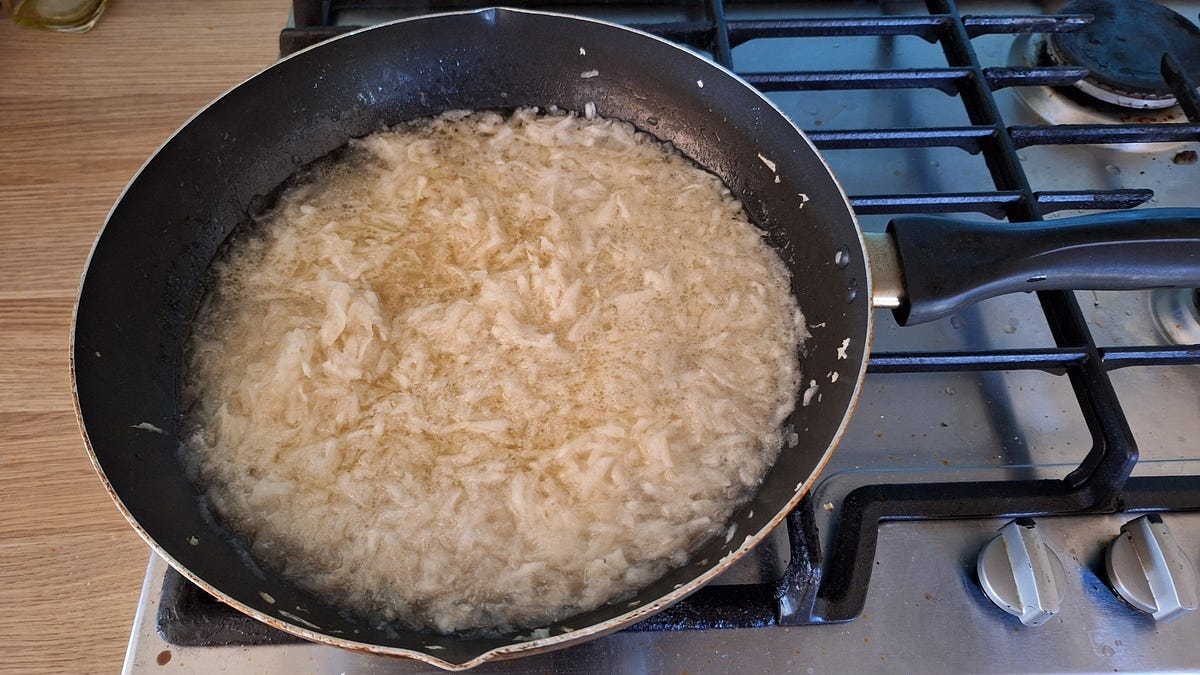
Grate the daikon. Then, with a little oil, cook it with the remaining 500ml of water. Just bring it to a gentle boil. Add salt, sugar, and chicken powder. Taste it to see if you like it.
Then, add the radish mixture to the flour mixture. Slowly, stirring constantly so you don’t get lumps, in case the hot radish cooks the flour mixture (it shouldn’t).
It should be watery. I recommend using a large pot or mixing bowl for the next step. Taste again to see if it needs more salt, fish sauce, or chicken powder.
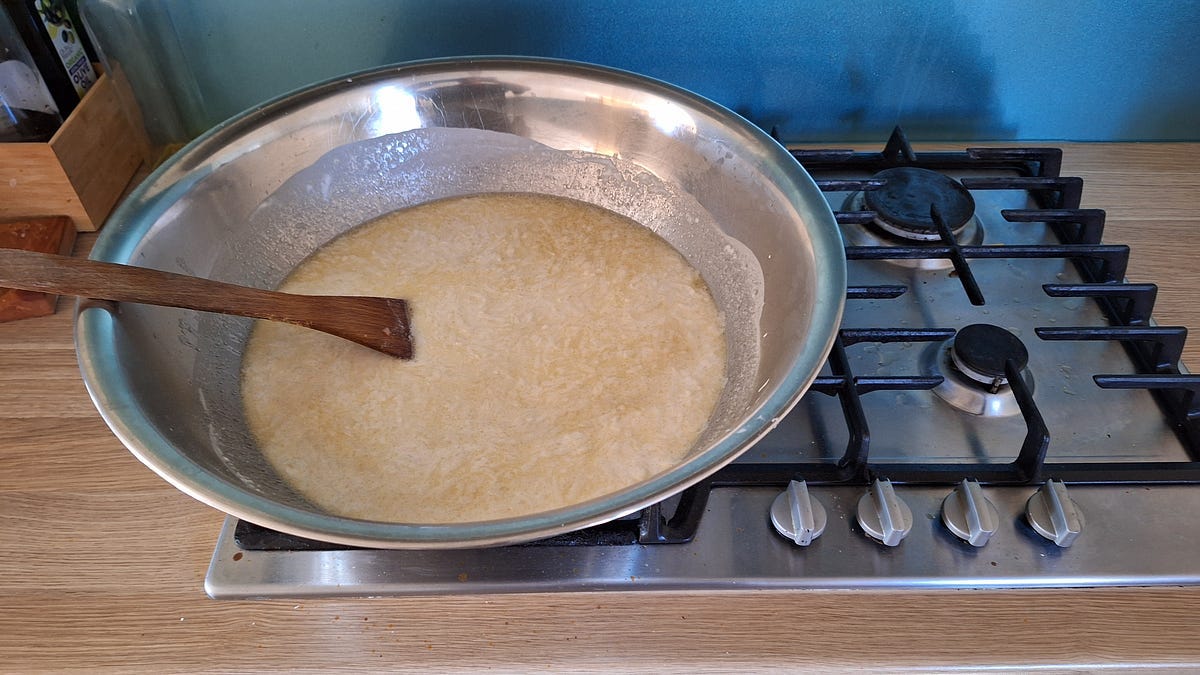
Over a slow fire, cook the mixture until it becomes like a paste. This is the important part. Stir constantly to prevent the mixture from sticking to the bottom of the pot or bowl. Keep doing this until it is stiff like this:
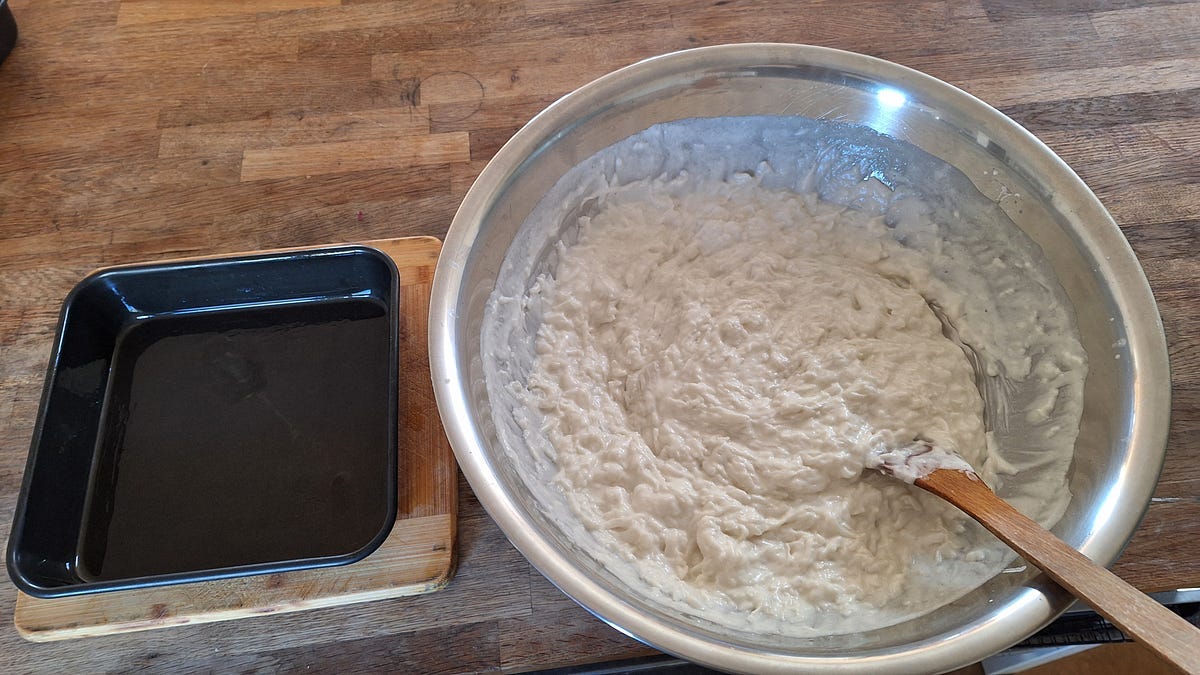
Note that you can skip this process if you like and just steam the mixture in a greased cake pan. The problem is that the daikon may sink to the bottom, and you won’t get an even mix when the cake is done. So, I recommend cooking it partially first.
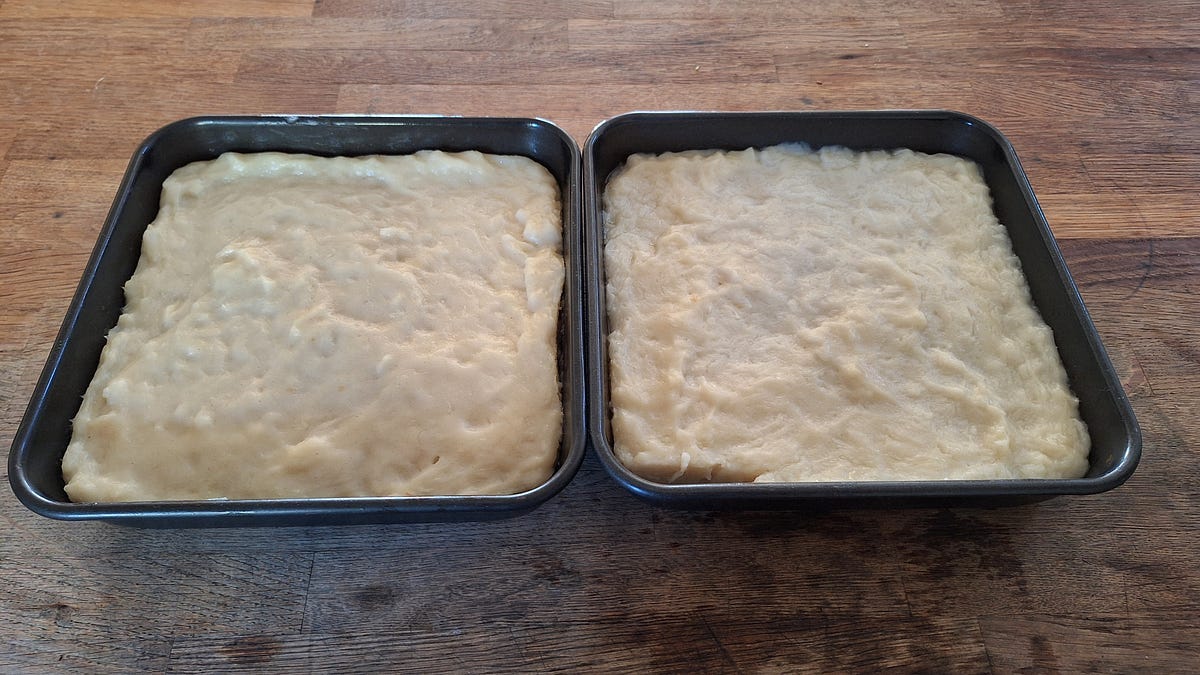
Then transfer to greased pans and steam for 45–50 minutes. It depends on how deep your pan is. I usually put a wooden chopstick into the cake to check for doneness. If it does not stick, it’s ready.
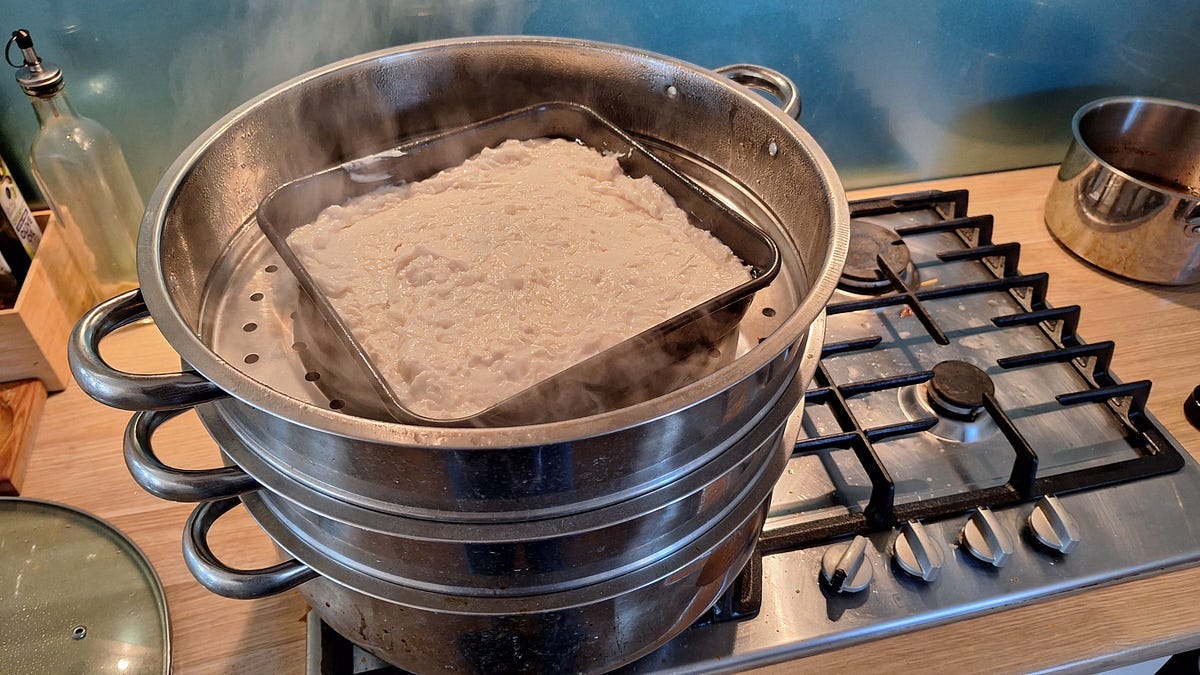
Remove from the steamer and let it rest. Pour away the excess water accumulated on top of the cake. If the top is a little wet, it is OK. The rice will eventually absorb it. When cool, cover and refrigerate overnight.
Frying the carrot cake
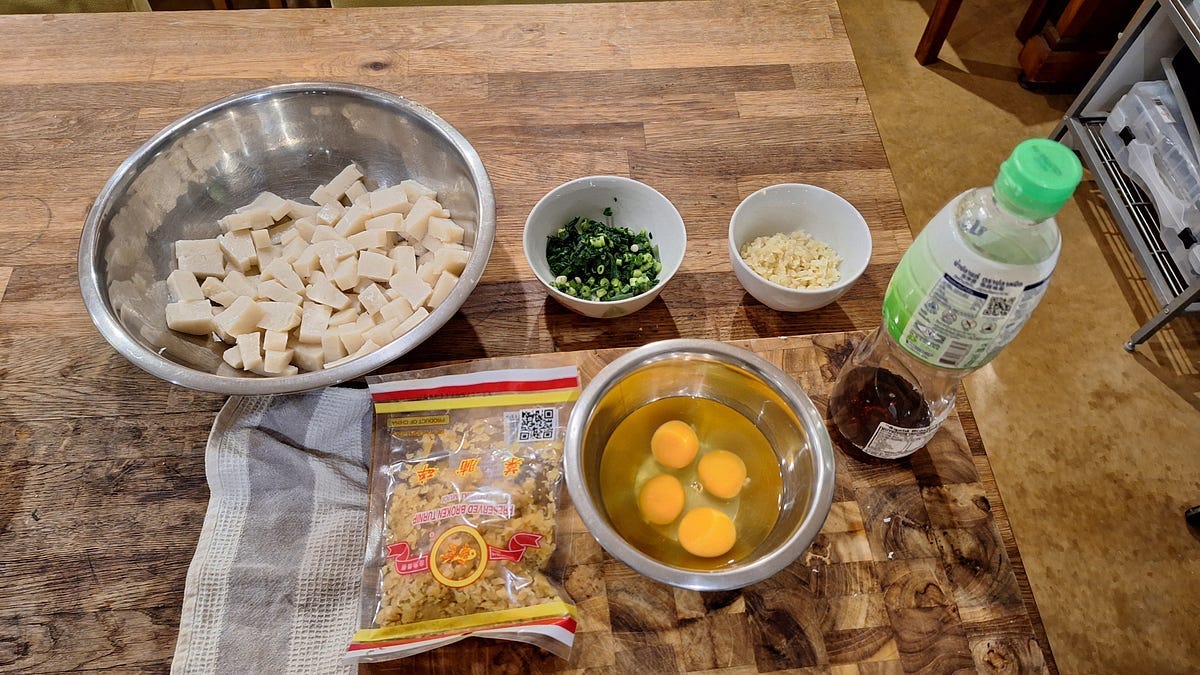
Cut the carrot cake into small pieces or cubes. We’re going to fry it like we fry noodles. Here are the ingredients I use:
Vegetable oil (lard is better)
2 tablespoons preserved radish (chai poh), chopped
2 cloves garlic, minced
As many eggs as you like
3 tablespoons fish sauce (for the white version)
2 tablespoons sweet dark soy sauce (for the black version)
Spring onions (for garnish)
Dash of white pepper
Instructions:
Heat 2–3 tablespoons of vegetable oil in a large skillet over medium-high heat. I prefer a flat cooking surface instead of a wok, but use what you have. Make sure there is enough oil so the cake crisps up nicely.
Add the garlic and gently stir-fry until fragrant.
Add the chopped preserved radish to the skillet.
Add the cubed carrot cake to the skillet.
Fry for 5–7 minutes until the cake is crispy and browned.
Prepare the eggs. I use 4–5 for a 28-inch skillet. It should cover the entire surface of the carrot cake. Add some fish sauce, beat the eggs well, then pour on top of the carrot cake. Let it cook and brown nicely.
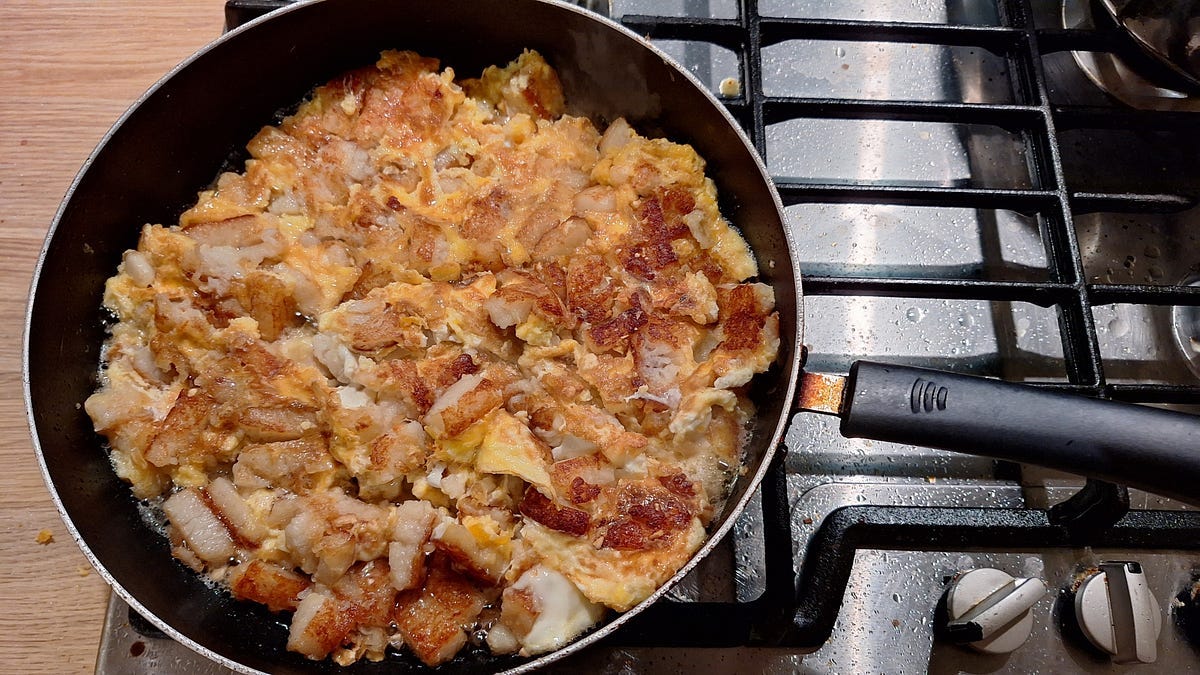
If the cake is flavoured well when you make it the day before, you shouldn’t need to add any salt or fish sauce at this point. Taste to see if you like it.
For the white version, I try not to stir-fry too much to keep the pieces large.
For the black version, add a generous amount of sweet dark soy sauce. Stir-fry for another 2 minutes until all ingredients are combined. Messy is OK.
If you like, you can also add some sambal chilli paste at this point.
Garnish the dish with chopped spring onions and a dash of white pepper.
After so many years and many trials and errors, I have finally nailed it.
I think it is as good as those in Singapore. It definitely tastes better than the stall’s “Chye Tow Kueh” that sold for $1.20 in 1974.
I now make it regularly. It costs just a few dollars, and the ingredients are easily available. My wife and younger son love it. I will teach him how to make it so that one day, when his children ask for it on their birthday, he can make it for them.
And he can tell the story of how their grandmother poured her heart into making this simple but delicious dish.
I’m salivating! ❤️