

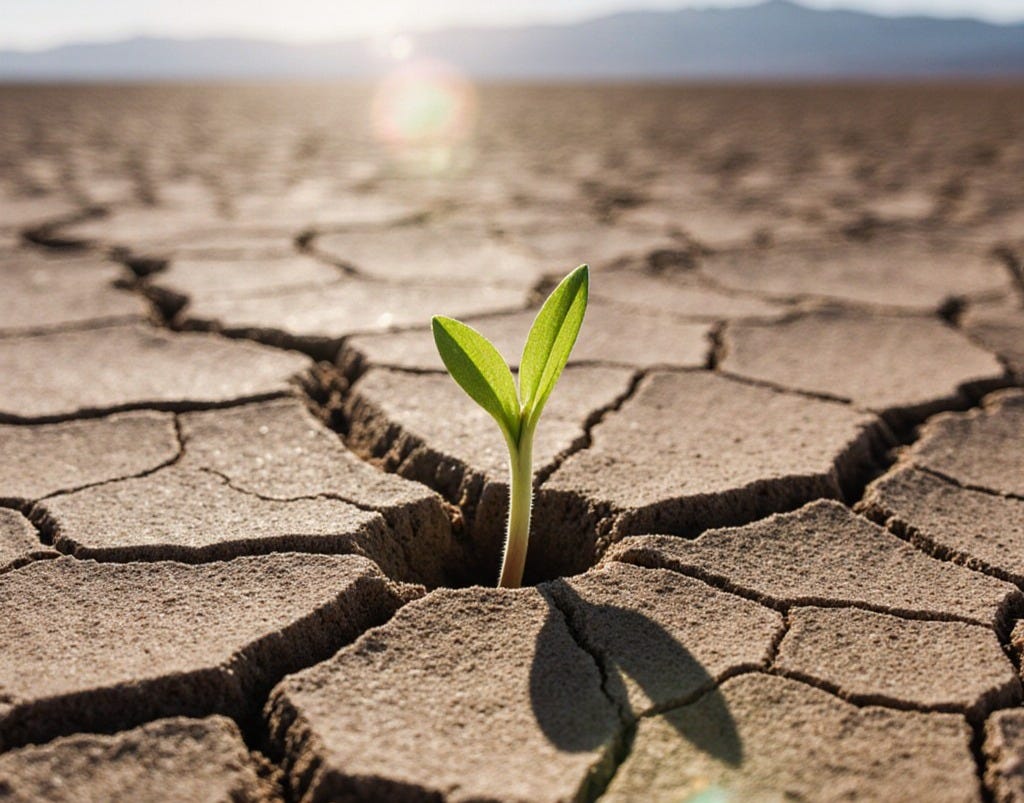
“May your choices reflect your hopes, not your fears.”
— Nelson Mandela
I think we toss the word “Hope” around too carelessly.
“I hope things improve for you.” “Hopefully, everything will work out.” “Let’s hope for the best.” In everyday speech, hope sounds soft, insincere, and almost fragile.
I think hope deserves a far greater place in our lives.
Hope is not a polite wish. It is a force. It is what carries us through the darkest nights when nothing else will. Hope whispers softly that the sun will rise again. It gives us something to aim for, something to care for, something to hold on to when we feel hopeless.
At its core, hope is a conviction, the stubborn belief that we WILL overcome, even against impossible odds. History is filled with people who endured horrors not because they were the strongest, but because they simply refused to give up hope.
Science confirms what the human spirit has always known: hope is not a sentimental notion. It is essential. It changes how the brain works, how the body endures, and how the heart keeps beating when everything seems lost.
It is fierce. And it is the reason we survive.
What Science Says About Hope
One of the most important discoveries in neuroscience is neuroplasticity, the brain’s ability to rewire itself by forming new connections. For decades, scientists believed that the adult brain was fixed, but research shows otherwise. “Throughout life, the brain forms new connections … psychological resilience also develops as the brain copes, heals, and adapts to challenges” Journal of Experimental and Clinical Neurosciences, 2021.
This is where hope comes in. A hopeless person gives up and stops trying. A hopeful person keeps moving, and each attempt creates new neural pathways. Hope is the spark that fuels neuroplasticity, enabling us to shift from destructive thought loops toward healthier, more resilient ones. As Psychology Today put it, the brain’s plasticity makes it possible to “transform negative thought patterns into positive ones through repetition and practice” (2025).
Hope also lights up the dopamine system, the network that drives motivation and reward. When we believe something good is possible, even before it happens, dopamine is released. That chemical surge energises us to take the next step. Without hope, the dopamine system goes quiet, and so do we.
The reach of hope extends beyond the brain. Studies show that it lowers stress hormones, steadies the heart, and strengthens the immune system. People with a hopeful outlook tend to recover faster and respond better to treatment than those who despair.
Hope, then, is not sentimental. It is survival biology. It rewires the brain, steadies the body, and strengthens our capacity to endure. To hold on to hope is to engage the very systems that evolution built for our resilience.
Why Hope Matters in Hard Times
It is easy to speak of hope when life is comfortable. The true test comes when darkness closes in, and there seems to be no way forward.
China’s War of Resistance Against Japanese Aggression, which lasted from 1931 to 1945, was such a test. It cost an estimated 35 million Chinese soldiers and civilians their lives.
In late 1937 and early 1938, as Nanjing fell, the scale of cruelty committed by the invading Japanese forces shocked the world. The Nanjing Massacre saw hundreds of thousands of deaths, mass rape, and the slaughter of prisoners and civilians. It was a time when despair could easily have been the only response.
Yet even in that darkness, people clung to hope. In Shanxi province, children as young as 8 to 12 formed regiments to resist the Japanese invaders. One boy, Xiao Jianghe, just 10 years old, led a group of 32 child soldiers who carried out guard duties, passed intelligence, and even exposed a spy (China Daily, 2015). He was part of the 7000 child soldiers who took up arms because “everyone else was dead”. They did not expect victory; they just wanted survival. And because they hoped to make a difference, however small.
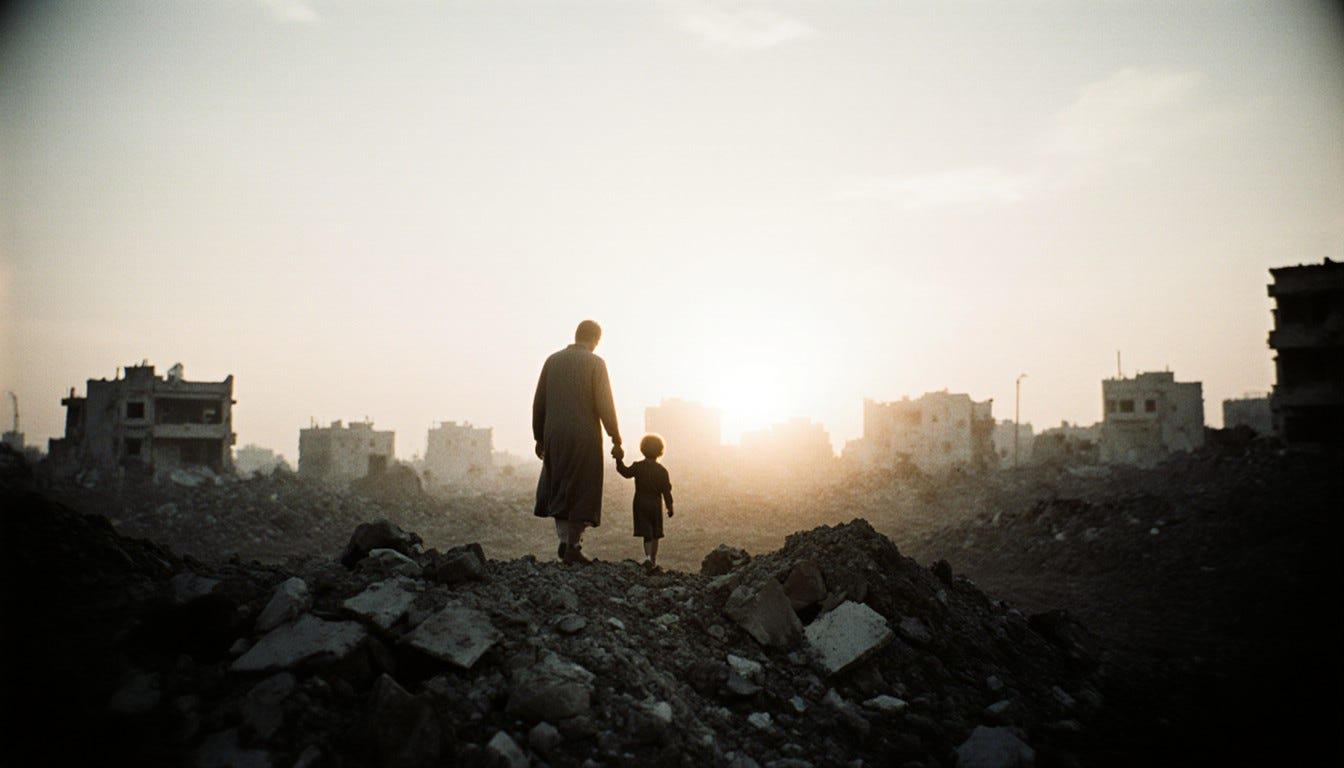
This kind of hope is not soft or naïve. It is defiant. It is the mule that digs in and refuses to give ground. Psychologists remind us that hopelessness narrows vision until people can no longer see options. Hope does the opposite. As C. R. Snyder’s Hope Theory describes, hope creates “pathways” thinking: the ability to imagine alternatives and persist, even when the road is blocked.
Hope matters most in the very moments when it feels least possible. It is the ember that survives in the ashes, the strength that emerges from weakness, the quiet defiance that says, I will not give up.
Hope in Everyday Life
The hope that sustained people in wartime, even children who stood against impossible odds, may feel distant from our lives today. Few of us will face the terror of invasion or massacre (though some still do). Yet the same stubborn spirit of hope is still required in quieter, yet no less tangible, ways. We face losses, illnesses, setbacks, and doubts that can leave us paralysed. Hope is what keeps us moving when despair tells us to stop.
So how do we cultivate that kind of hope in the ordinary struggles of daily life?
Take one step at a time
Hope is not always about grand goals. It is about refusing to stay down. Do what you can, with what you have. If you cannot move forward, at least hold your ground. Get up. Make your bed. Take a walk. Go for a run. These may seem trivial, but they are acts of defiance. Each step, however small, says, “I am not giving up.”
Look for the light at the end of the tunnel
Unless you can picture a way out, it is hard to sustain hope. This is not the casual “manifestation” tossed around on social media. This is active visualisation, imagining a better future and holding faith that it will come, even if you will not live to see it. Hope requires imagination strong enough to see through the darkness.
Find comrades in hope
No one carries hope alone for long. In wartime China, even children huddled together to resist, leaning on one another for courage and strength. We need the same. Find companions who share your hope. Lean on them when your own strength falters. Hope multiplies when it is shared, and often someone else’s belief will carry you when yours runs thin.
Practice practical optimism
Reframing does not mean ignoring pain. It means shifting perspective. Ask, “What else could this mean? What can I learn here?” This is practical optimism: not pretending everything is fine, but choosing to look for angles that help you endure and act. Like a mule that stumbles, gets up, and keeps walking, practical optimism refuses to stay down.
Cultivate gratitude, one piece at a time
Gratitude pulls attention away from what is broken and directs it toward what remains. Another day. Another chance. Another breath. Gratitude does not erase hardship, but it insists, “Not everything is hopeless.” Even small sparks of thankfulness feed the mule of hope, giving it the strength to carry on.
Hope does not always arrive like soaring eagles. More often, it trudges like a mule, carrying us step by step through difficult terrain. Its strength is endurance.
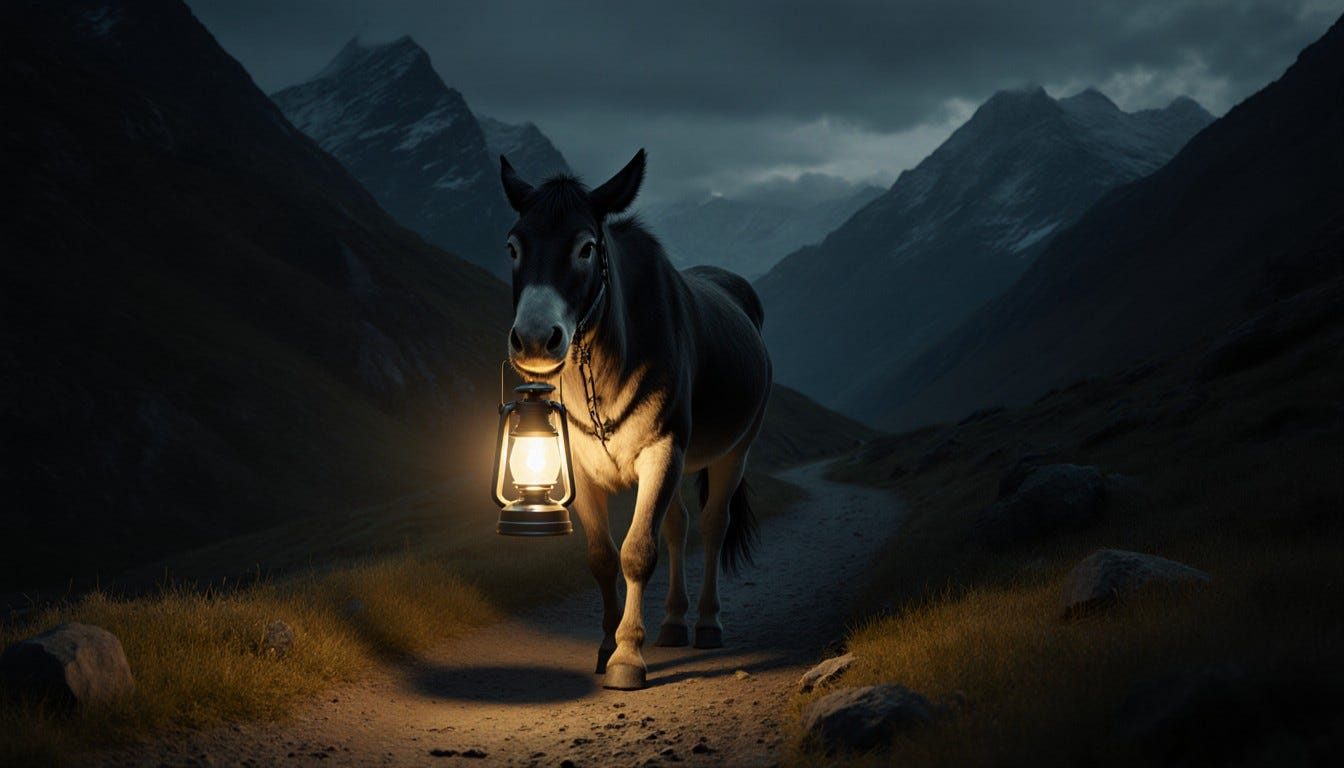
The Stubborn Mule of Hope
Hope is not fragile. It is written into our biology, rewiring the brain, fuelling motivation, and steadying the body under stress. History shows us that people endured the darkest times not through strength alone but because they refused to let despair have the final word.
We see the same in our own lives. Each time we rise after a heavy night, each time we take one step forward when fear tells us to stop, hope is at work. It may not look like triumph. Often, it seems like survival, standing firm when everything else is falling apart.
Hope is stubborn, mule-like, unyielding. And that is why it carries us, through war and loss, through illness and doubt, through the darkest nights into brighter mornings.