
How China's Manufacturing Works
Why the World is Made in China

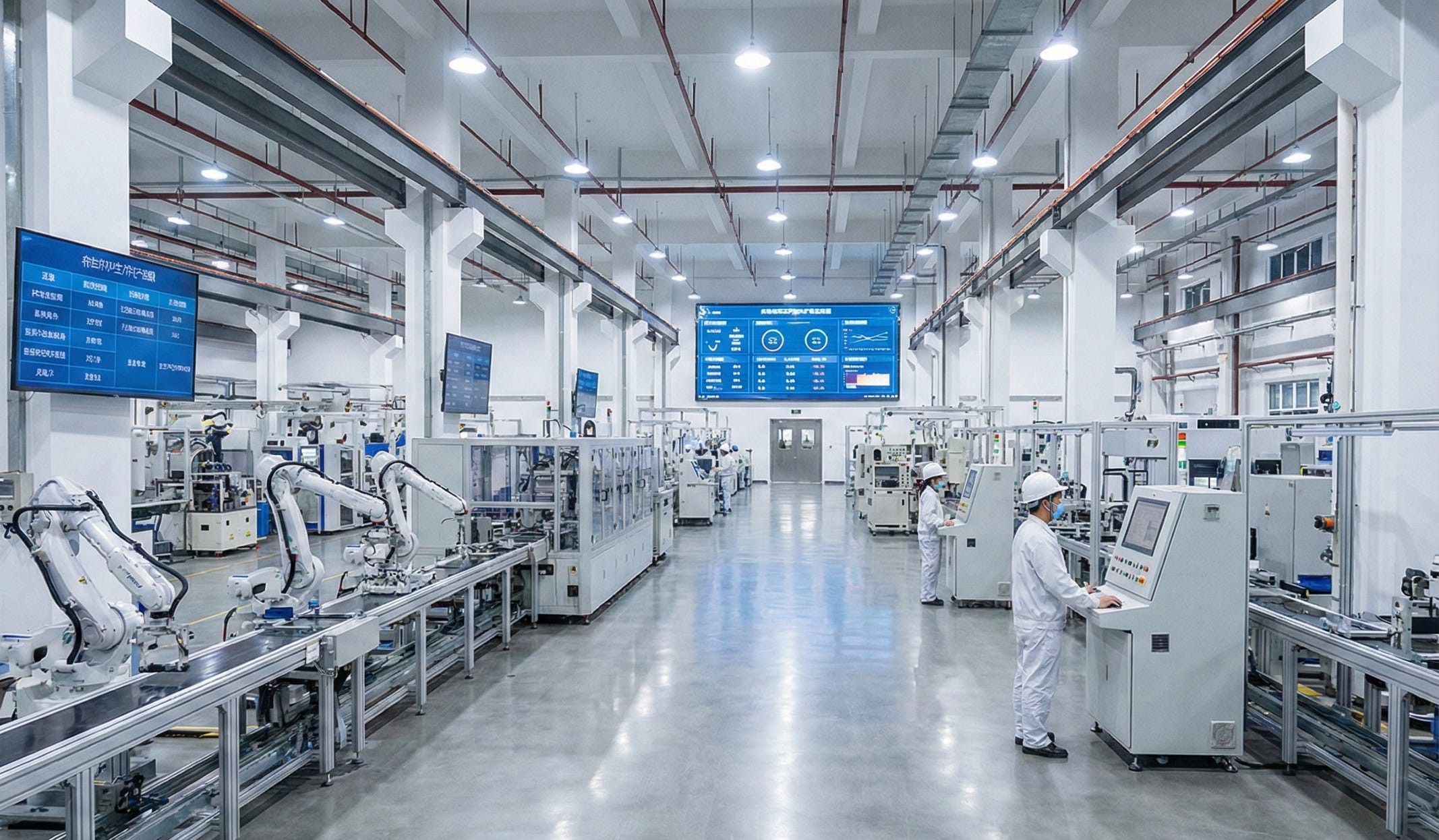
Ask someone why China became the world’s manufacturing centre, and many still give the same answer: cheap labour. It was partly true in the 1980s, but not anymore. Industrial wages in many Chinese provinces are now far higher than in Vietnam, India, Bangladesh, or Indonesia. If labour costs were the only consideration, global companies would have left China long ago.
Yet they haven’t.
Apple hasn’t. Tesla hasn’t. Dyson hasn’t.
Nearly every major PC, smartphone, EV battery, appliance, solar panel, and white good is still manufactured in China. Even luxury brands quietly rely on Chinese factories for precision components that require extremely tight tolerances.
I often hear people say, “We don’t buy cheap Chinese crap.” It’s a casual remark, but also a racist and ignorant one. The device used to make that comment was likely assembled in Shenzhen. The modem and router at home, the laptop on their desk, and the batteries in their EVs all come from China’s manufacturing ecosystem. China doesn’t just make cheap goods. It makes the world’s most advanced ones.
Tim Cook, Apple’s CEO, summed up the misunderstanding: China’s advantage is not cheap labour, but capability. China can mobilise tens of thousands of skilled technicians, tooling engineers, and component suppliers in a way no other country can. When a production bottleneck appears, someone nearby can solve it within hours.
China’s manufacturing strength is about a system built to be fast, adaptable, and precise.
The Supply Chain Cluster Effect — China’s Unmatched Advantage
China’s most significant manufacturing power is proximity. Entire industries operate as dense clusters, with suppliers, engineers, and specialists working in the same districts. This clustering effect lets manufacturers move at a speed that feels impossible elsewhere.
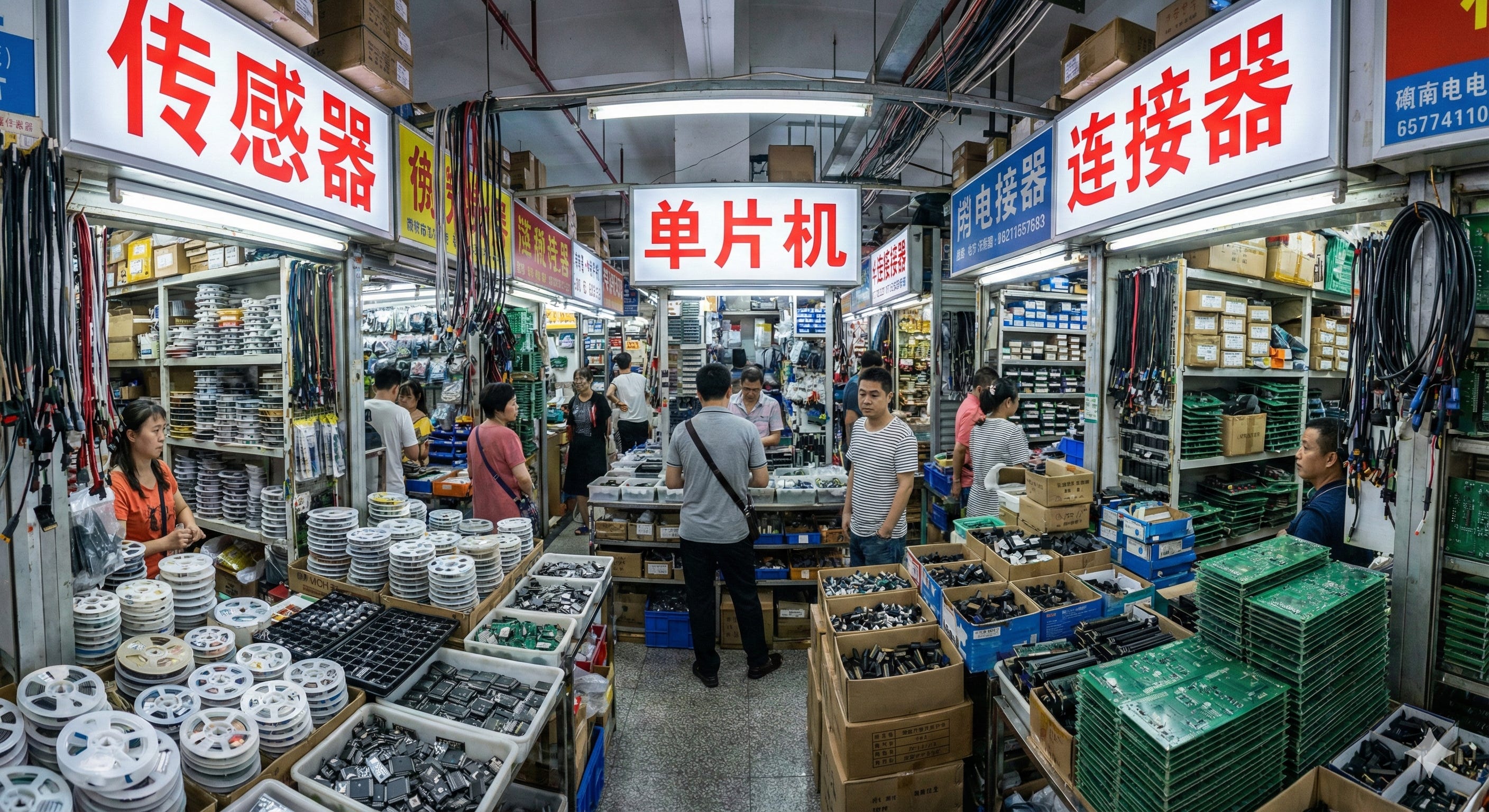
A famous example is Shenzhen’s Huaqiangbei electronics district, often called the world’s most complete hardware ecosystem. The first several floors of many buildings are filled with small stalls selling every electronic component imaginable: sensors, microcontrollers, displays, batteries, connectors, motors, PCBs, casings, etc. Thousands of parts that companies elsewhere must order from multiple vendors across different countries can be sourced in minutes.
Above these retail floors are offices and small labs where engineers prototype products. If they need a new connector or a revised board layout, they walk downstairs, buy the part, and bring it back. Prototypes are created in days, sometimes hours. And the entire process costs a fraction of what companies would have to pay if they were operating in Europe or America.
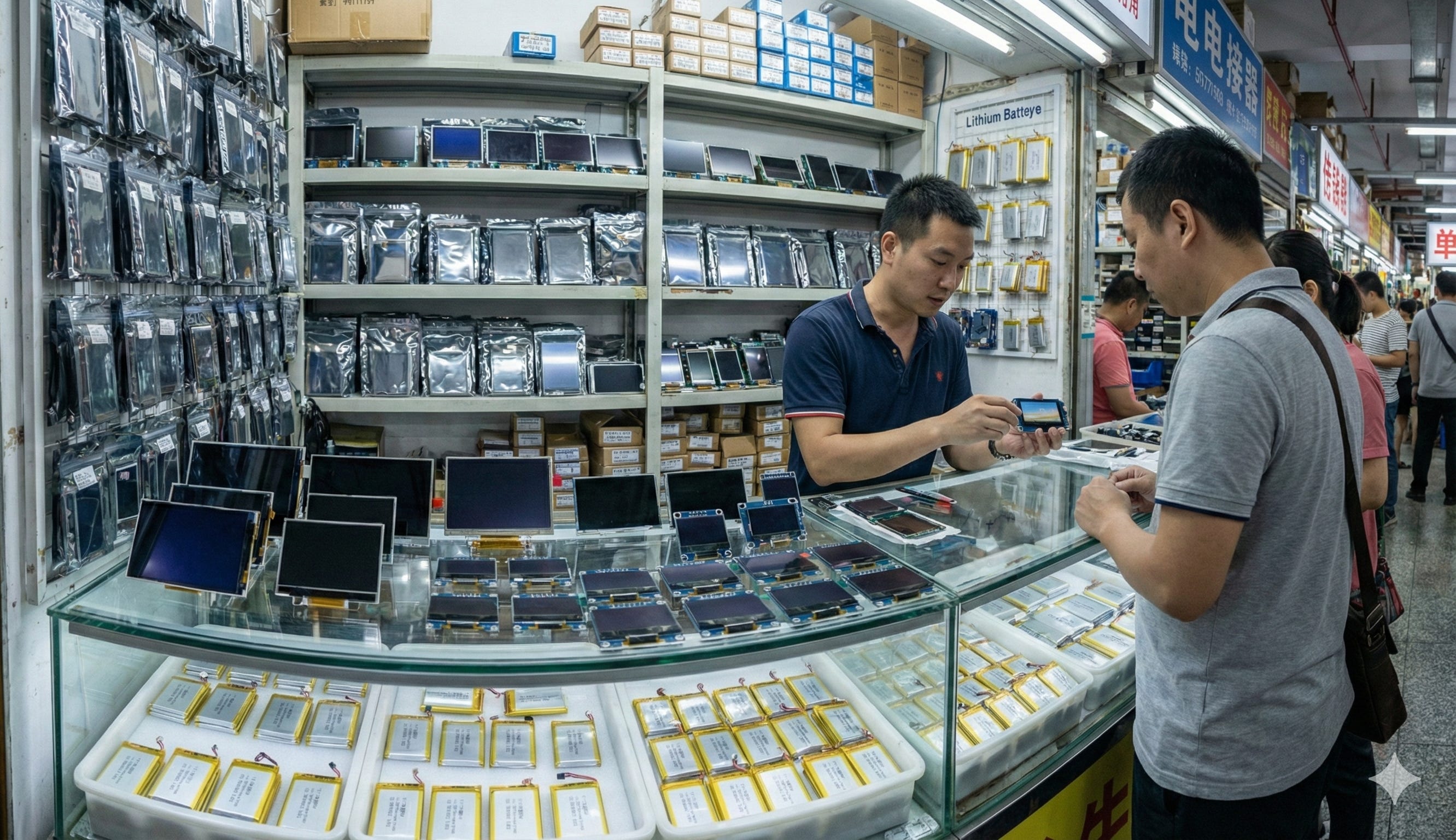
This environment exists across industries: Dongguan for electronics and plastics, Guangzhou for garments, Suzhou for precision machining, Quanzhou for footwear, and Yiwu for small commodities. Each city concentrates suppliers in one place, eliminating the delays that slow other countries down.
Distance kills speed. China eliminates distance.
A Technically Skilled, Rapidly Adaptive Workforce
Another misconception is that Chinese manufacturing relies on unskilled (therefore cheap) labour. In reality, it depends on a technically trained, deeply experienced workforce capable of solving problems on the factory floor without waiting for managers or external specialists.
Across the industrial belt, vocational schools and technical colleges operate in partnership with factories. Students graduate with practical skills: machining, electronics assembly, mould fabrication, CNC operation, robotics maintenance, and quality testing. Their learning continues inside the factory, where real production cycles force rapid adaptation.
China has tens of thousands of tooling engineers — the people who build moulds, calibrate machines, adjust tolerances, and keep production running. These capabilities take decades to develop and cannot be relocated easily.
A Western factory may pause production for days waiting for an external specialist. A factory in Dongguan might fix the issue the same afternoon.
Infrastructure: The Hard Skeleton of Manufacturing
Manufacturing depends on the systems around it: roads, ports, rail lines, cheap, stable energy, and efficient logistics. China spent decades building these.

High-speed rail allows engineers, specialists, workers and managers to travel between cities in a matter of hours. Deep-water ports like Shanghai, Ningbo, and Shenzhen handle some of the world’s highest cargo volumes with minimal congestion. Roads and highways across industrial provinces are built for logistics, not just commuters. The national power grid is stable, extensive, and reliable.
In countries where electricity is either expensive or inconsistent, or where ports are slow, productivity collapses. In China, the entire manufacturing rhythm depends on consistency and predictability. Samples, components, and finished products move through the system at incredible speed.
It is one of the biggest reasons companies stay.
A Problem-Solving Culture
China’s manufacturing speed is not only structural; it is also cultural. Inside factories, problems are solved collectively and immediately.
Whenever there’s a problem, engineers, technicians, and line workers gather around it the moment it arises. They improvise a fix or adjust the machine. A toolmaker nearby manufactures a replacement part.
This isn’t about working extreme hours. It’s about a deeply ingrained habit of rapid problem-solving and continuous adaptation. Factories compete by saying “yes” to difficult orders and figuring out how to fulfil them. Workers are fast, flexible, and comfortable with last-minute changes.
This mindset is cultural and evolves through years of practical necessity.
Stability and Scale
Manufacturers need predictability. China’s industrial zones provide a stable environment with consistent regulations, coordinated support, and clear industrial planning.
When one supplier struggles, another is often nearby. When demand spikes, factories expand production without rebuilding an entire supply chain.
This stability allows companies to plan long-term. They know the environment will not change abruptly. Expansion is supported, and the ecosystem can handle sudden surges in demand.
Wage increases don’t threaten this system because the real value is the reliability of the environment surrounding it, not just labour costs.
The Competitive Pressure That Shapes Entire Industries
Perhaps China’s most powerful accelerator is competition. Inside industrial clusters, no factory is insulated from competition. A single street in Shenzhen might have a dozen PCB makers. A block in Dongguan might house numerous injection moulding suppliers. In Guangzhou’s garment districts, workshops compete for orders by improving speed, quality, and flexibility.
This competitive intensity is visible at the national scale. When China decided to develop its EV industry, it didn’t protect its domestic companies. Instead, it invited Tesla to build the first wholly foreign-owned EV factory in China. It was an unprecedented move. China brought in the world’s most formidable competitor and forced its own EV makers to compete.
The result? BYD, NIO, Li Auto, XPeng, and dozens of suppliers accelerated dramatically. Instead of being crushed, the industry surged ahead.
China improves by competing with the best, not hiding from them.
Why Companies Stay Even as Wages Rise
Lower wages don’t automatically attract global manufacturing. Companies don’t chase the cheapest worker. They chase the most reliable system.
Relocating production introduces risk:
component shortages
slower supplier networks
weaker infrastructure
fewer technically trained workers
longer prototyping cycles
inconsistent quality
higher logistics friction
These costs far outweigh the savings from lower hourly wages.
This is why Apple builds its most complex products in China. It’s why Tesla’s Shanghai Gigafactory is one of the most productive auto plants in the world. It’s why appliance, telecom, robotics, and battery firms stay anchored in China for critical manufacturing.
Moving that system is far more expensive than paying higher wages.
The Myth of Replication
Every few years, a new country is declared “the next China.” Vietnam, India, and Mexico each experience growth, but none can fully recreate the ecosystem.
China has built an industrial civilisation over the last 40 years. Integrated supplier networks, technical expertise, logistics efficiency, and manufacturing culture. These cannot be replicated overnight. Even when companies diversify, they still depend on China for components, engineering, and scale.
Understand the System, Not the Slogans
China’s manufacturing can’t be explained by the simplistic narrative of cheap labour. It comes from an ecosystem where supply chains are woven together, skilled labour is abundant and accessible, infrastructure is reliable, and competition forces constant improvement. Problems get solved quickly. Production scales instantly. Entire industries adapt as a single organism.
Understanding the system is the first step towards leveraging China’s manufacturing capability as a competitive advantage. China’s manufacturing engine won’t disappear anytime soon.
If nations want to compete, they must understand the system, not just consume the slogans.
I don't buy cheap Chinese crap.
Prolly uttered by a non Asian, trying to maintain their sense of superiority in the world.