

I’ve spent many years in Australia, where I’ve often been asked to explain China because I am Chinese. This piece is one of those explanations, written from a personal point of view. Not as an analyst, but as someone who grew up in that world and now lives in this one. The object is understanding, not advocacy.
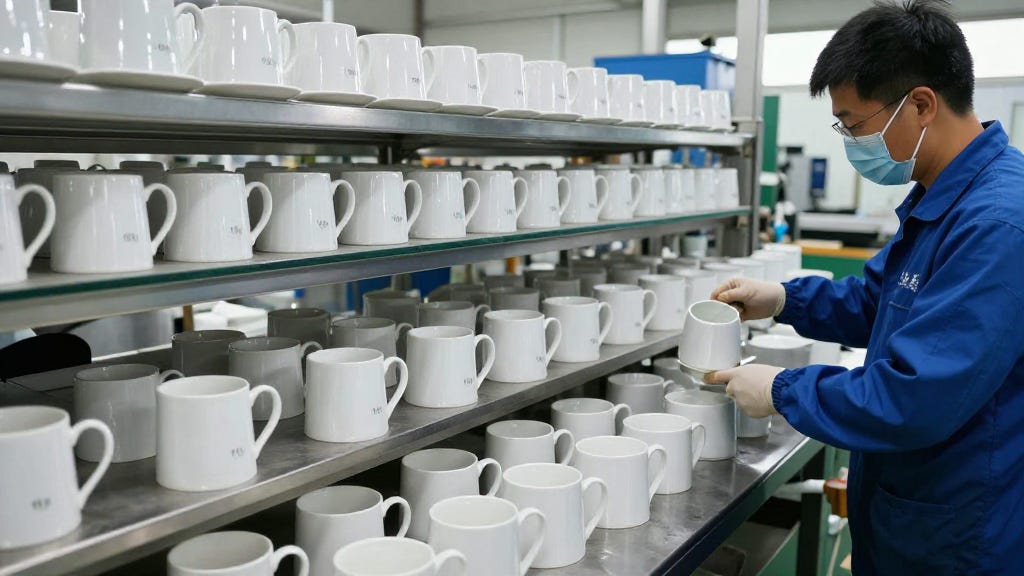
Last weekend, a friend said, quite out of the blue, that she “could not, in good conscience, continue buying from Temu.” I was curious because I was the one who introduced Temu to her. She said that because things are so cheap, it must involve forced labour and inhumane working conditions. I explained, as I usually do in such situations, that it’s the business model and efficiency that allows them to bring the price down. I talked about how factories work in China, and about work culture, etc.
“Well, I guess then I can go crazy on Temu again.”
The message was clear: Temu and Shein equals forced labour, exploitation, copyright theft, and environmental harm, all tied to the idea that “things shouldn’t be that cheap unless something ‘immoral’ is happening behind the scenes.”
This is not new to me. I’ve heard versions of the same statement from almost everyone I’ve known in Australia since we moved here in 2009.
No matter what the topic is: shopping apps, TikTok, Chinese cuisine, culture, history, it eventually loops back to topics like Tibet, Xinjiang, genocide, human rights abuses, authoritarianism, communism, or whatever the latest ABC headline happens to be propagating.
Last weekend was just the latest version of a 16-year ordeal.
Before responding to any of the moral claims, I want to start with something simpler: why Temu can sell at such low prices and how its business model actually works.
How Temu Actually Works
Temu sits atop a very different supply chain structure. Traditional retailers like Big W, Kmart, and Target, as well as Amazon, move a product through several layers before it reaches the customer.
The path looks something like:
Manufacturer → Exporter → Importer → Distributor → Warehouse → Store → Customer
Every step takes a cut. Every step adds cost. These costs are built into the structure. It’s how the business model works.
Temu removes nearly all of it.
It goes straight to the factory
Temu uses a Consumer-to-Manufacturer (C2M) model. Instead of buying through wholesalers, the app collects orders and sends them directly to a factory. No inventory, no retail rent, no layers of distributors.
It holds no stock
Traditional retailers face constant pressure to predict what customers will want weeks or months in advance. When they get it wrong, they’re stuck with unsold inventory. That leads to clearance bins, fire sales, and wastage, all of which are built into the final retail price.
Temu’s model removes that risk entirely. The platform doesn’t carry inventory. Factories produce only after orders are placed, which means production is tied to actual demand rather than forecasts. It’s a form of just-in-time manufacturing that significantly reduces overproduction and the waste caused by incorrect predictions.
Temu sets the price, and manufacturers decide whether to accept the margin
Manufacturers do not set the retail price on Temu. The platform does. Temu adjusts prices based on demand, promotions, and competition, then offers manufacturers a margin. The supplier chooses whether to accept that margin in exchange for access to a global market they could never reach on their own.
In this model, manufacturers are price takers. It’s similar to how restaurants work with Uber Eats. The platform controls pricing, visibility, and customer flow. The supplier participates because the volume and reach outweigh the lower margins.
This is why something that sells for five dollars on Temu might cost twenty-five dollars at Kmart. For decades, retailers quietly protected their margins. Temu stripped out the middle layers and revealed how much of the final price was markup rather than manufacturing cost.
Manufacturers aren’t exclusive to Temu
It’s also worth saying that Temu’s suppliers are not locked into the platform. Many of them sell the same products on AliExpress, Alibaba, Amazon, TikTok Shop, or their own online stores. Some even run small local retail outlets. Temu is simply one channel among many, but it is the channel that brings them the most significant volume of international orders. That volume is why manufacturers accept the margin Temu offers. The trade-off is global reach.
The “missing” costs
When you remove:
retail rent
warehousing
storage
forecasting
transport
staff
importer markup
wholesaler markup
retailer markup
…the price drops. Often significantly.
Cheap doesn’t automatically mean unethical. Sometimes it just means efficient.
The factories themselves are diverse
Many Australians (and Westerners) imagine every Chinese factory as a vast industrial complex. In reality, Temu works with hundreds of thousands of suppliers, from full-scale operations to family-run workshops and village clusters.
Many westerners do not know this, but it explains Temu’s pricing structure and business model.
The Reality of Small-Scale Manufacturing
When friends here jump to the conclusion that low prices must involve forced labour, they’re drawing from a narrow image of what “factory work” looks like. But much of China’s manufacturing is flexible, informal, and deeply embedded in community life.
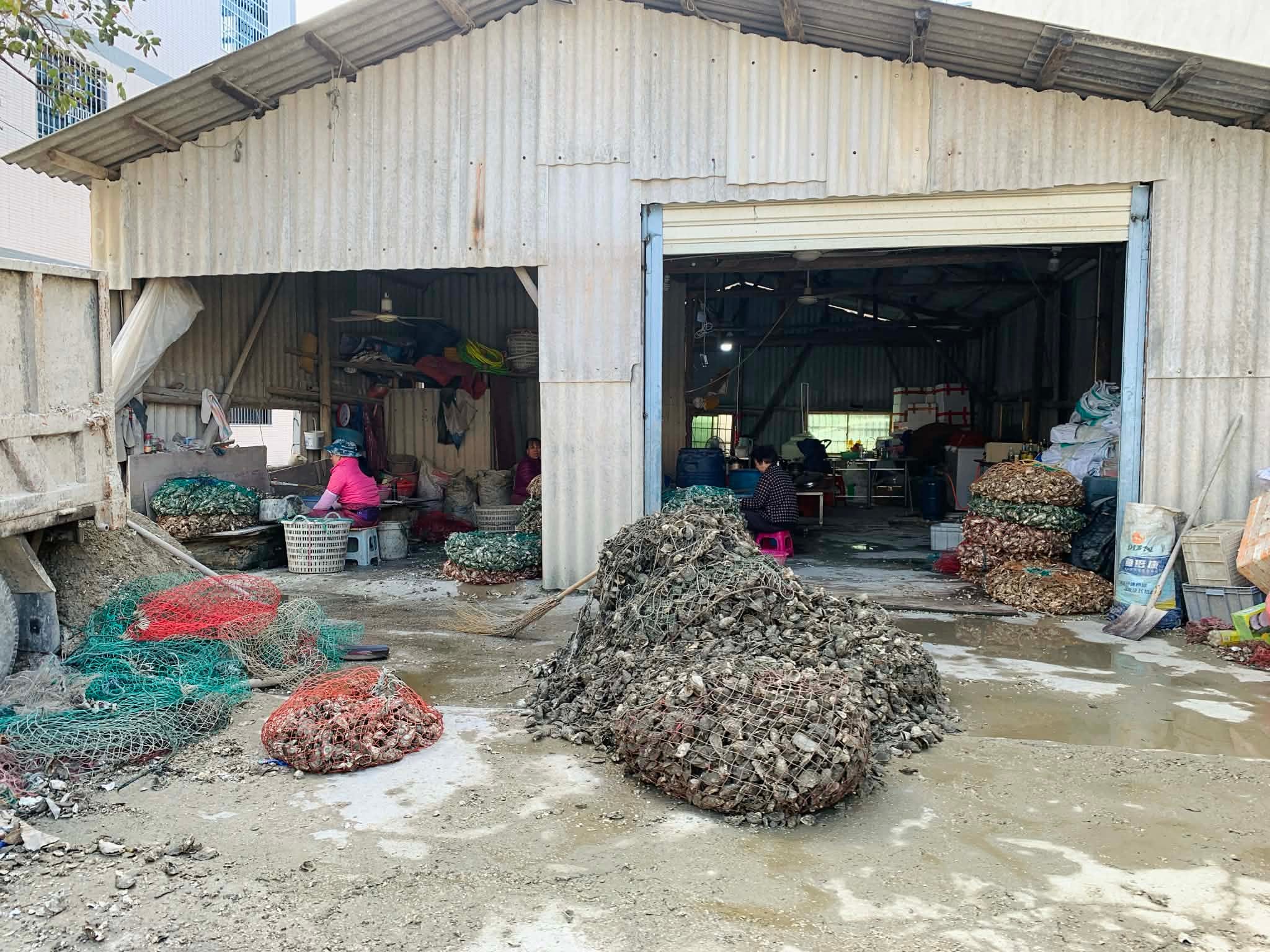
I’ve seen it firsthand in Fujian during our visit to my wife’s relatives. Oyster shucking in Zhangzhou is big business. Large oyster farms rely on small groups of families to process oysters by hand, which are then distributed to restaurants, markets, and even exported to places like Australia.
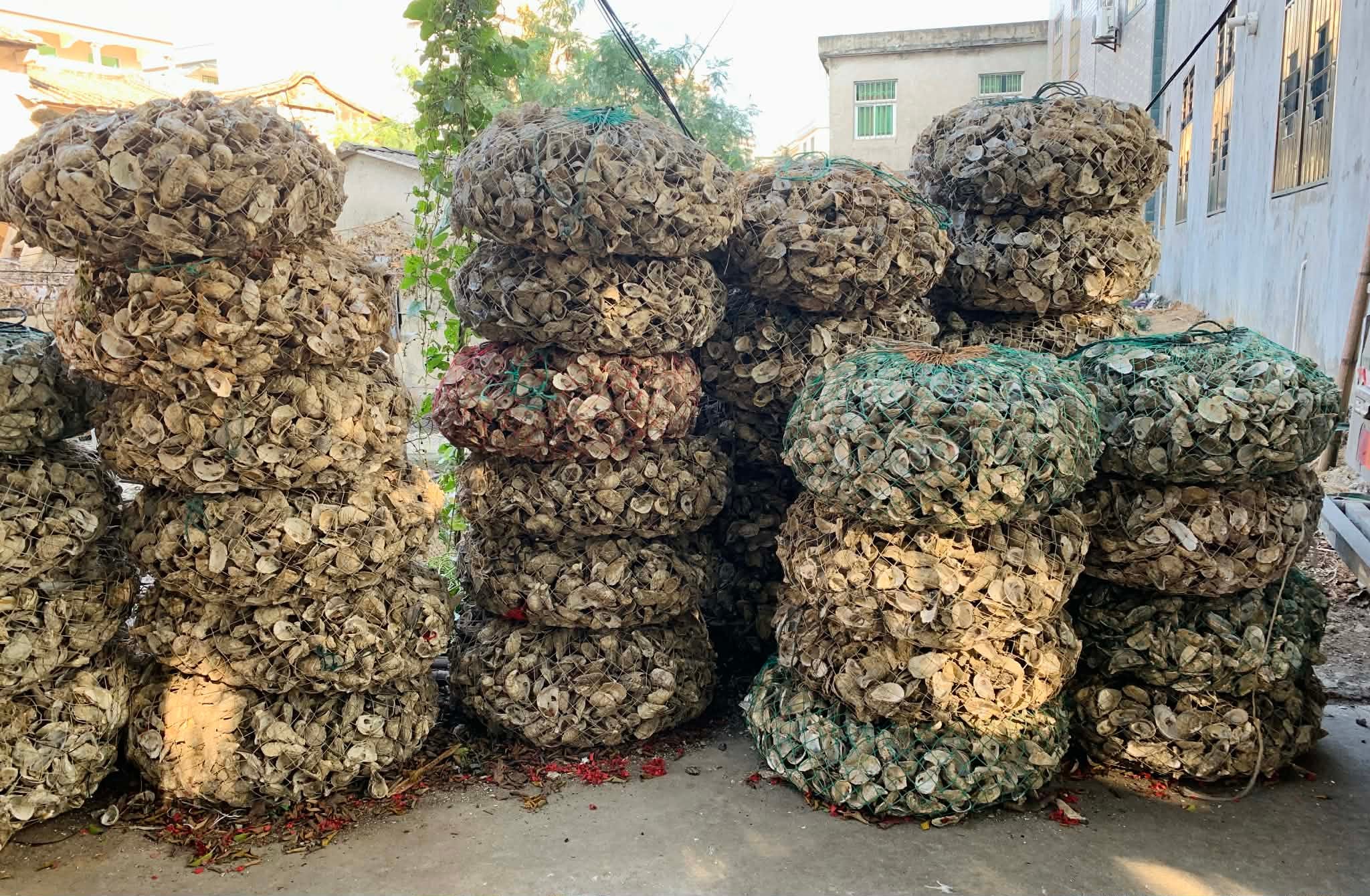
The work is paid by weight. Not by hour. Not by formal contract. Women gather in sheds outside their 3-storey houses, talking, gossiping and laughing while they shuck millions of oysters. Retirees, housewives, and aunties earn supplemental income in the hours when children are at school or when there’s nothing else to do.
There is no award wage. No paid leave. No overtime. No staff benefits. No employer-funded insurance.
Imagine doing a workplace audit on a factory like this. You will be led to think that this is your classic Dickensian sweatshop. Low wages. Forced-labour. Slavery.
Except it isn’t.
It’s flexible piecework that fits around family responsibilities and local rhythms. These women are not victims. They are not trapped. They are not living in fear. They choose to do it because it supplements their household income, gives them company, and fills their day with purpose.
The government covers healthcare, so they are not dependent on employer benefits the way workers in Western countries often are.
Temu’s supplier base includes tens of thousands of small operations like these, making slippers and T-shirts. And coffee mugs. In Jieyang, I came across a martial arts school that also makes paper packaging materials during the day (kung fu lessons at night). I had met the owner at a noodle shop where she invited my son and me to visit her school. Her husband is a kung fu teacher.
Manufacturing in China is not as neat or regulated as an Australian factory, but it is not a hidden empire of slavery either.
I remember helping my mother sew buttons onto dresses, paint miniature plastic toy animals, and even bake CNY cookies to sell. We would do this after school for a few dollars a day back in the 1970s. Slavery? No, just extra money to feed a family of 8.
Most Australians, including my friends at lunch, have never seen how small-scale production works in Asia. And when you don’t understand something, you fill the gap with dark assumptions.
When the Same Thing Happens in Australia, We Call It Something Else
Before anyone condemns informal or low-paid work in Asia, it’s worth looking at what happens here in Australia.
A few years ago, a neighbour found out that a local farm was employing workers from Vanuatu. She was shocked to see the workers eating vegetables that had been thrown out, cutting off the rotten bits. She thought the farm was neglecting them and wanted to call the authorities.
The workers begged her not to.
They explained that the farm gave them meal allowances, but they wanted to save every dollar to send home. Eating discarded vegetables was a choice. If we complained, and the farm got into trouble, they could lose the only income that allowed them to support their families back home.
Australia’s agriculture sector relies heavily on arrangements like this, with Pacific Islanders, backpackers, and Vietnamese migrants all working long hours for low pay. Farmers themselves are squeezed by supermarkets, which push prices down to keep groceries affordable.
And Australians, we enjoy the benefit from that system every time we buy fruits and vegetables on special.
We don’t call this “forced labour.” We call it “keeping cost of living affordable.”
So why is informal work in Australia understood as an economic reality, while similar work in China is framed as exploitation? The answer must inevitably be racism.
Moral Judgement Without Understanding
I don’t expect everyone to know the details of Temu’s business model and supply chain. Most people haven’t seen the workshops I’ve seen or the informal networks that make up a large part of China’s grassroots economy. What I hope for is a desire to understand before making a judgment.
When someone looks at a five-dollar item from Temu and jumps straight to the “forced labour” narrative, the accusation doesn’t land on the company alone.
It lands on the people who make the products. It lands on the culture behind them. And whether intended or not, it lands on people like me.
After sixteen years here, this is familiar to me. The topics vary, but the assumptions don’t: China is bad, dangerous, suspicious, untrustworthy; “I don’t buy Chinese crap”, you often hear.
Anything cheap must be morally compromised; anything efficient must be exploitative; anything unfamiliar must be sinister. Communist. Authoritarians. Dictators. “You Chinese people.”
It wears you down.
I recommended Temu because I thought it was a good place to find value. But that turned into another round of the same: if it comes from China and it’s cheap, it’s unconscionable. There must be something wrong. And by sharing Temu, I must be naive at best, complicit at worst.
Temu (and Shein) is not flawless. No supply chain is. Not in China, not in Australia, not anywhere. But the world is more complicated than a headline, and prices do not tell the whole story.
If someone wants to talk about Temu’s model, I welcome that conversation.
Start with how it works. The business model.
How costs are stripped out. How informal labour functions in different cultures. How much of Western retail pricing is built on massive markups?
Don’t just reduce an entire group of people to the darkest assumptions without pausing to understand.
When a discussion starts from curiosity, we can talk and learn. When it starts with an accusation, it goes nowhere. And we remain ignorant.
That’s why I’m writing this: not to defend a shopping app, but to open a space for learning. Maybe next time, the conversation can begin with a question rather than an accusation.
You can reduce costs in many ways: shared supply chains, better forecasting, cluster efficiencies, real-time demand data, and accepting lower margins during lull periods. Mistreating workers is not the best way to grow any business.
If labour issues exist, they should be addressed when there is evidence. China’s per capita GDP rose from under USD1,000 in 2000 to more than USD13,000 today, reflecting decades of investment, process improvement, and manufacturing discipline.
If we want to discuss ethics, we should start with an accurate picture. Conscience without context is just assumptions. Low prices have many possible explanations. We should understand the model before we judge it.
Everything you’ve shared here is true. But… skirting or ignoring safety standards and labor laws, or exploiting situations where law or enforcement are lacking is a part of the TEMU formula. I have some experience buying in China and around Asia. Some of these suppliers and supply chains I had to turn down, but not all. It is what it is.