

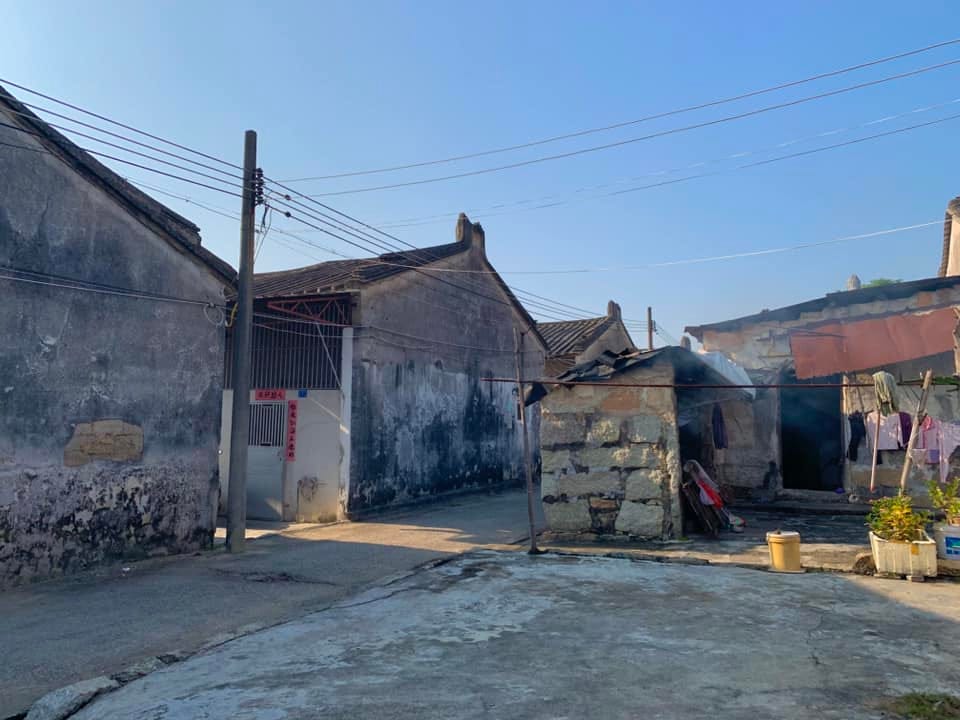
Last month, my wife and I visited the village where my father was born in 1928. I had wanted to do this for more than a decade now, but never really got around to planning it. I had only heard of Mashou Village but did not know what it was like. Neither did my father, who left when he was just under two years old.
My father was born in Mashou Village (马硕村), in Putian Town, Jieyang City, Guangdong Province, China.
Mashou Village
Mashou Village is a serene and picturesque community, cradled by mountains on three sides and bordered by water on two. It is a relatively large village with over 4,500 people and 1,000 households, most of whom are farmers. The village is renowned for its bamboo shoots, often called “Lingnan mountain treasures.”
Initially, I wasn’t optimistic about setting foot into Mashou Village. Our inquiries suggested that it was quite remote and rural. There was no public transport that did not involve hours of walking. The hotel receptionist in Jieyang even warned us that we might not make it back without a car. My wife, as always, was resourceful and optimistic, and began calling her relatives in Fuzhou for help and advice.
As luck would have it, a friend of a friend of her distant cousin found someone in his WeChat network who was free in the afternoon to take us to Mashou and back. A young man who is a professional MC for weddings.
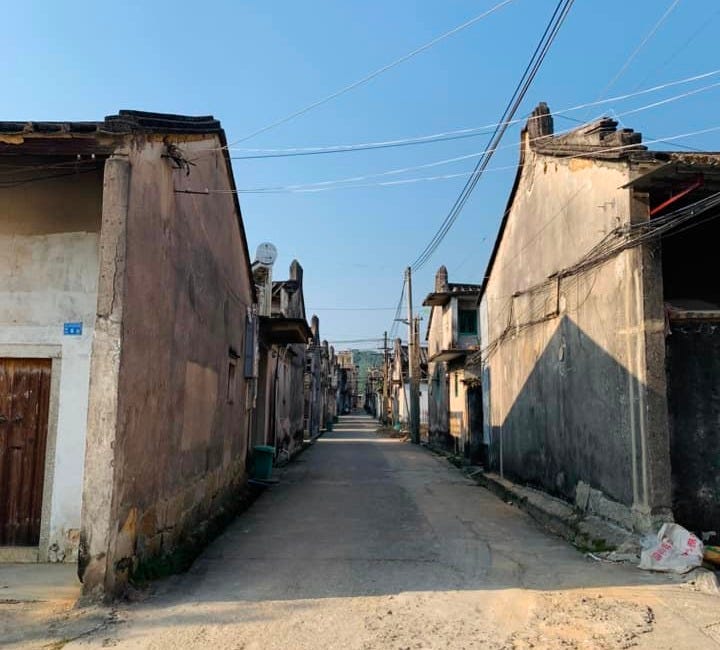
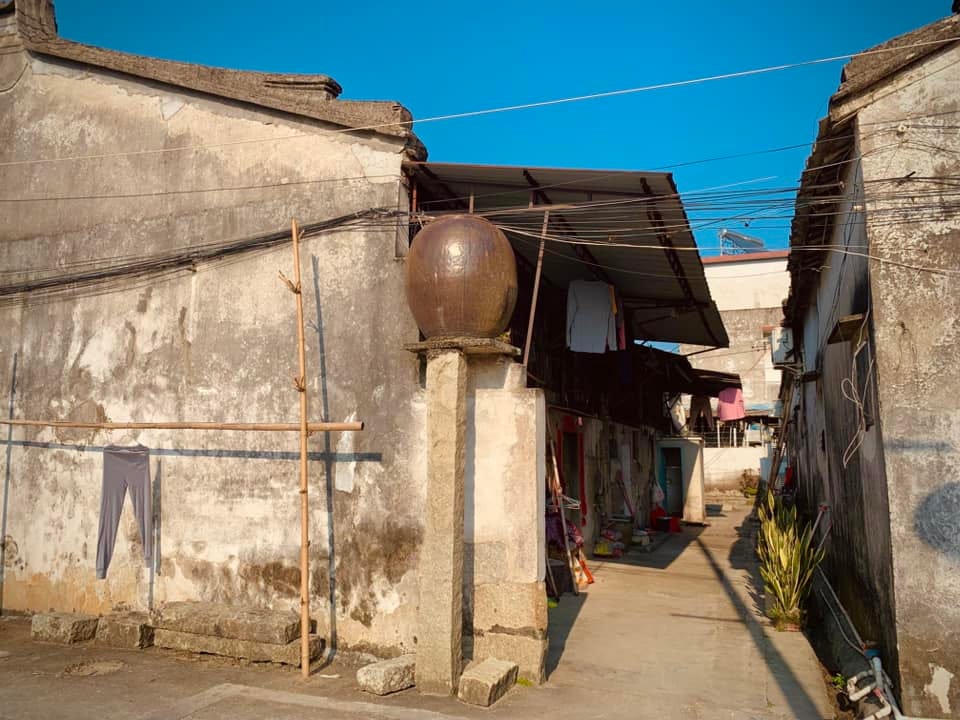
Driving into the narrow lanes of Mashou Village, I felt emotional. For years, I had been curious about this village, its people, its traditions, its history. These were glimpses of a life lived far from our own in Australia. Now, I am here, hoping to piece them together and, perhaps, find a sense of who I am. It was familiar, yet strange at the same time.
This is where I came from.
Meeting the Villagers
We made our way to the village square and found the administrative office. It was a modest building. Inside, we met the village secretary, a young man in his late twenties, and introduced ourselves and the purpose of our visit.
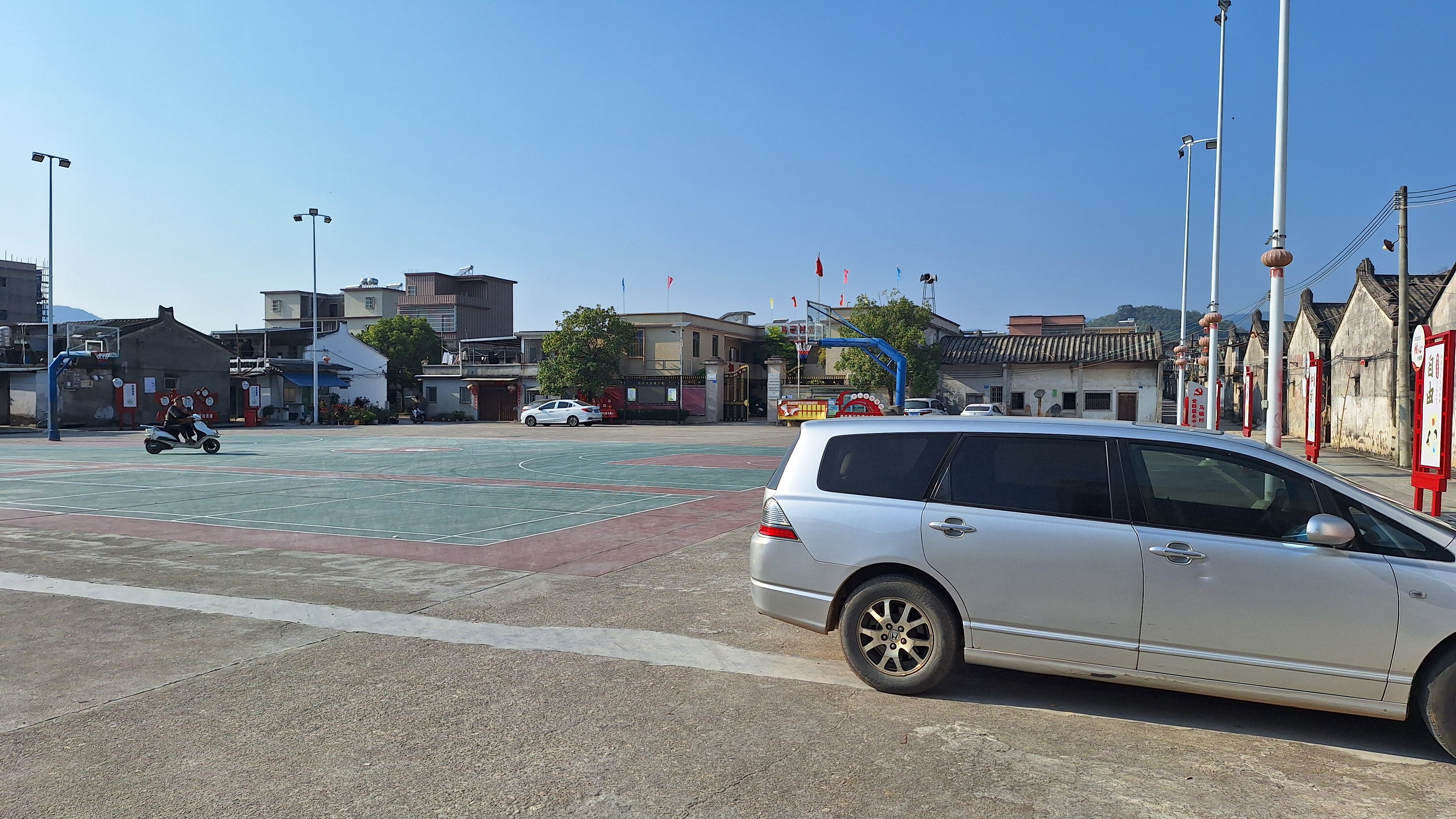
The villagers were overwhelmingly helpful. After I explained my visit, there was a buzz of activity as older folks began making calls and asking around.
“My grandfather’s name is Tan Kee Lai (陈奇来). He probably left in 1930 because my dad was two when they came to Singapore.”
“I know of a Tan Kee Leng and a Tan Kee Meng, but not sure about Tan Kee Lai,” said one elderly villager at the office. He would have been in his seventies.
“This name is familiar…” he added, giving me a glimmer of hope. He suggested we talk to some of the older villagers across the square. He will take us there.
Traditional Chinese names are not random but pre-determined.
In Chinese naming traditions, names typically consist of a family name (surname) followed by a given name. The zupu (family genealogy book) often guides the naming of descendants, especially through generation names (字辈, zì bèi), in which one character in the given name is shared by all members of the same generation, following a predetermined sequence outlined in a family poem or phrase.
So my given name is Zhiqiang (志强) and my brother is Zhiming (志明).
This practice ensures lineage continuity and family identity, with names reflecting virtues, auspicious meanings, or homage to ancestors. While these traditions remain strong in rural areas, modernisation has led to less adherence in urban settings, though some families preserve aspects like generation names to honour their heritage.
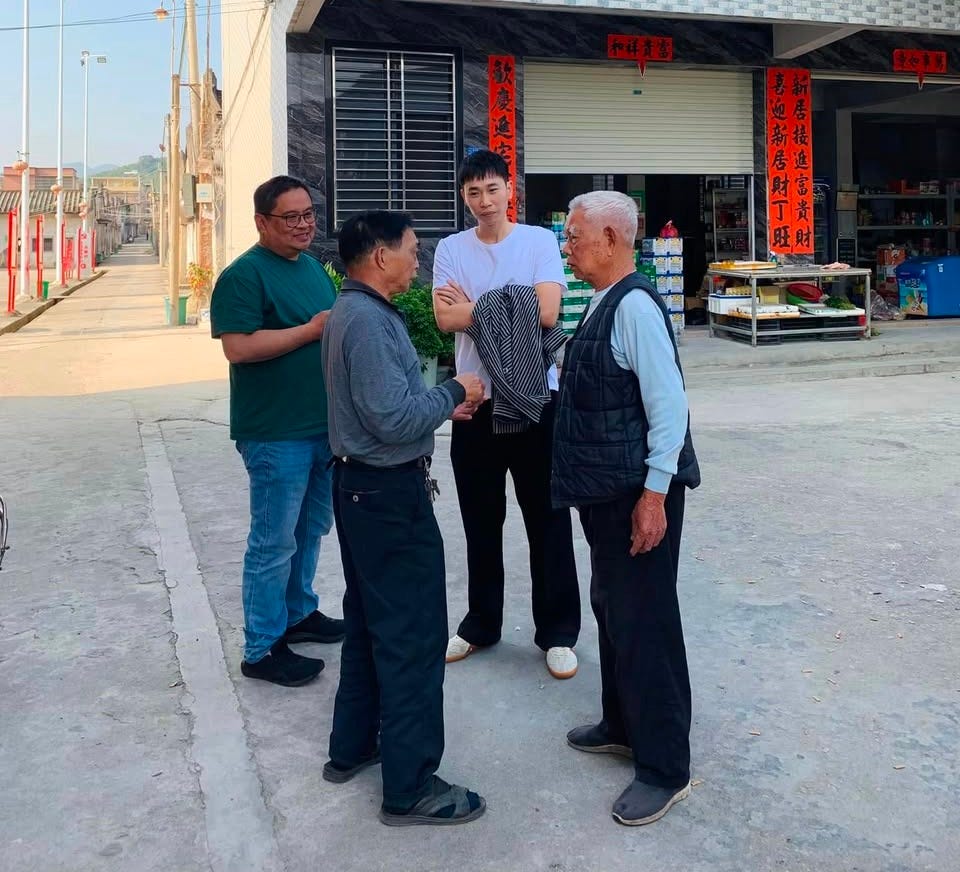
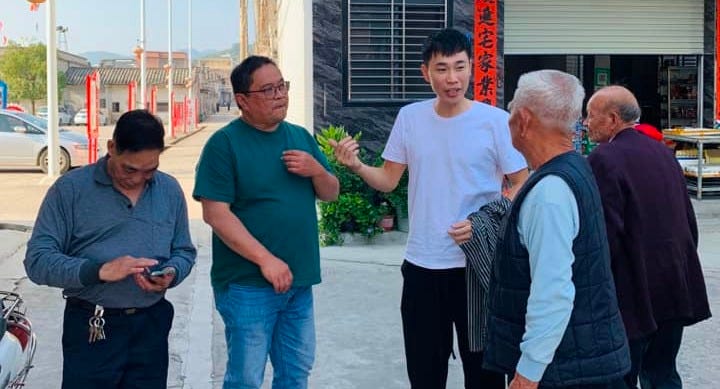
A small gathering soon formed, with several elders busy making phone calls. Eventually, we were told that I would likely need to refer to the records at the ancestral temple (祠堂 or cí táng) to find my grandfather’s name—and possibly my father’s. It’s a library of records and will take days, if not weeks, to check.
That would have to wait for another day.
A Long, Long Time Ago
I hadn’t expected to find anything or any relations on this first visit. It had been nearly a century since my grandfather left Mashou Village. He departed in 1930 for Singapore with his third wife (my grandmother), four or five children, and perhaps a younger brother.
I always thought that my grandfather had 3 wives all at once, but was told by my wife’s uncle that my grandmother was probably the third because the first two died or ran away because of poverty.
Life in those days was harsh, with life expectancy averaging 30–40 years, especially for women, because of high maternal mortality rates and limited healthcare.
My grandfather, a Chinese doctor, intended the move to Singapore to be temporary. He made a small fortune, which he sent back to China to purchase houses and land. Unfortunately, he passed away in Singapore around 1936-7, reportedly from anger and heartbreak after losing his wealth during the onset of the Second Sino-Japanese War.
My grandmother died of illness in 1942 in Singapore, just as WW2 began.
My father, barely 14, was left to fend for himself and his siblings. He never knew if he had uncles or cousins in China, a mystery that has lingered for decades.
Reflection on Identity
Some of my relatives in Singapore were mildly curious about my journey to Mashou Village. Many asked why I bothered: “Was it worth the trouble? Why not go to Chongqing? It’s more interesting…”
To some, this venture was little more than a novelty. But for me, its importance grows with each day. I can’t fully explain the urge to reconnect with my heritage, but my wife believes it’s my ancestors nudging me toward a sense of continuation. Perhaps it’s an awareness of my mortality that drives me—a desire to affirm that I’m part of a chain that won’t end with my sons or me.
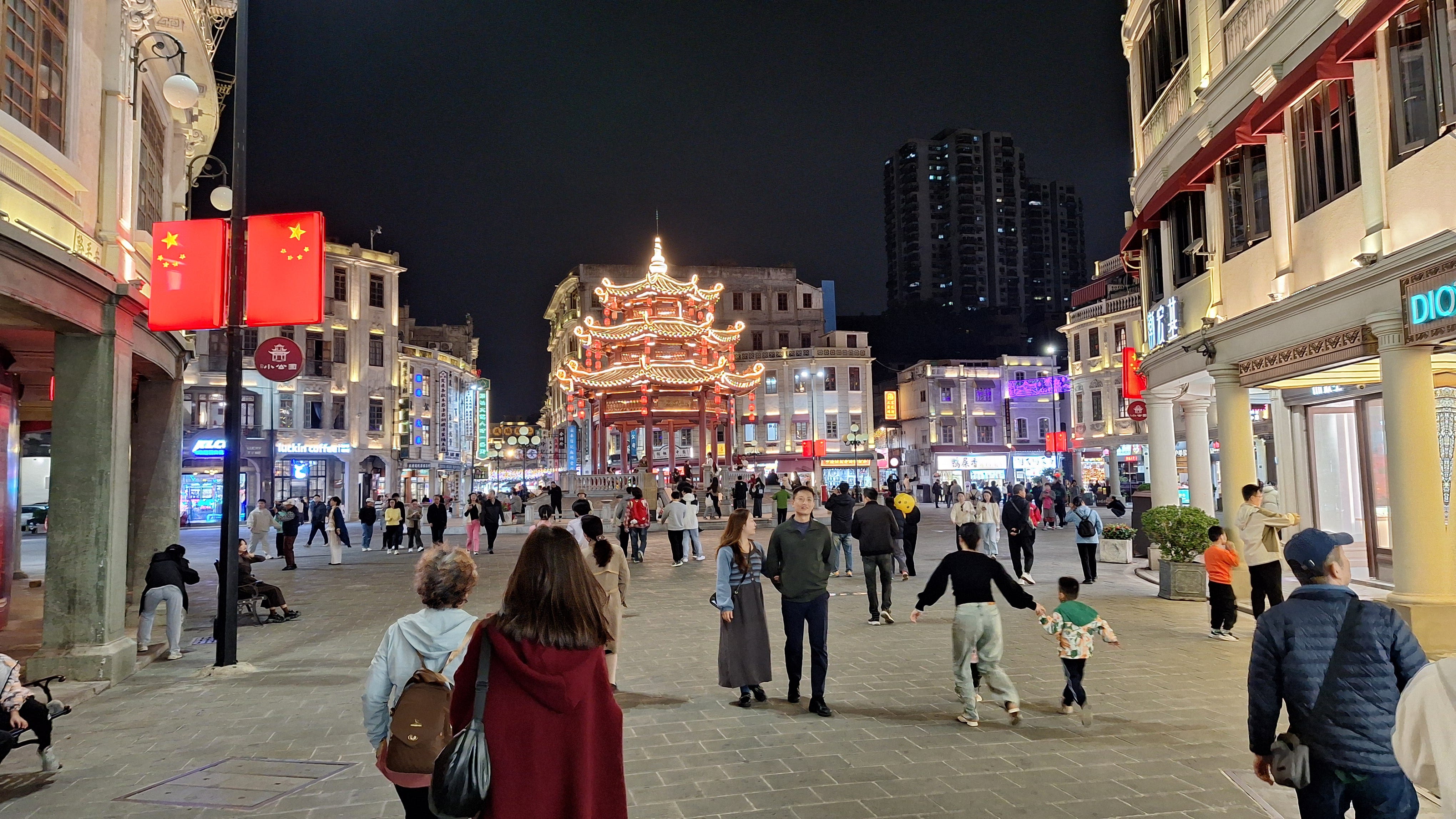
After our visit to Mashou, we travelled to Shantou (汕头) and Zhangzhou (漳州) to visit my wife’s ancestral village. Along the way, her distant cousin reminded me to keep searching. “Follow up,” he said, “and I will help if I can.”
He believes it is important.
For ethnic Chinese, lineage continuity is more than tradition; it’s a way to honour those who came before and to pass on values, traditions, and legacy. It’s also a crucial part of understanding one’s identity.
树高千丈,叶落归根
No matter how tall the tree grows, its leaves will always fall back to its roots.
This visit to Mashou Village was a deeply personal exploration of identity. As someone who has lived far from these roots, I’ve often felt disconnected from my heritage. Standing in the village, surrounded by the echoes of my grandfather’s past, I felt a profound connection to a lineage that stretches far beyond me.
I think of my life as a photograph, a single frame from a very long movie. Reconnecting with my heritage gives me a sense of what that movie was like. It’s now my role to continue the story, make it meaningful, and share it with my children and grandchildren.
Next Time
We didn’t stay in Mashou Village for long, and I could have been better prepared. Next time, I’ll have a clearer purpose: to trace my grandfather’s identity at the ancestral temple and, if he has any, locate and connect with his relatives and descendants.
As I left Mashou, I carried a renewed sense of identity, purpose, and hope for the future. For anyone seeking to reconnect with their roots, I encourage you to take that first step. Even if you don’t find what you’re looking for, you may discover that the answers you seek are waiting for you in unexpected places.
A, meaningful and profound experience, Francis; simply told, revealing. Thank you!