


My son works in one of the better Italian restaurants in Australia, and he has been teaching me what service really is.
My idea of service has always been an extreme and refined form of courtesy. But I was wrong, or at least I was only seeing the surface of it. He talks about service the way a musician talks about a phrase that sits perfectly, and I couldn’t follow. I’d spent a working life buying meals, treating the food as the event and everything around it as trimming. The waiter takes your order and delivers your food. You barely notice him unless something goes wrong.
We’ve been watching The Bear together. He’s the one who insisted that I watch it, and I understand now why. I felt that there was something he wanted me to see. He’d explain what good service felt like on the floor, on a full night, when it was going right. Watch the show, he’d say.
I think he wanted me to “get it” just like he did.
I watched all four seasons of it. And in there, what he’d been trying to tell me came through.
What is service
There’s a kind of service that many places, especially restaurants, never achieve. Even expensive places. You can feel its absence throughout the evening. The absence that looks like exaggerated courtesy: attentive, quick, apologetic, eager. Bending. Lowering itself in front of you, asking permission with the whole body just to serve you in your evening.
That is not service. That is servility, and the two are quite opposites.
The most servile service I can recall has almost always been in a Chinese restaurant. Even the expensive ones. Staff are courteous to a fault, attentive, fast, and place themselves far too low. Too shy to take command of the room. Which is strange, because the idea of service done properly, the real thing, is Confucian at its core. Somewhere along the line, we stopped living it.
The Servant is the Master
Good service comes from mastery and command.
The host is, if anything, placed slightly above his guest. Not in worth or status but in his role and position. He runs the show. He decides its shape and its pace, when to appear and when to disappear. With a sixth sense, he seems to know what you need before you need it. This elevation is precisely what lets him care for you. Strip it away, and the confidence goes with it, and what’s left collapses back into bowing. A servile man cannot take anyone in hand. He is too busy asking for permission just to be there.
This is the heart of li (礼), the Confucian idea badly translated into “ritual”. Li is the form that makes care possible. You seat your guest in the better chair, you pour before he asks, you serve, giving them the feeling of being taken care of. It is commanding. You are conducting the evening, and the form is what lets the warmth and the hospitality land without spilling into either indifference or grovelling.
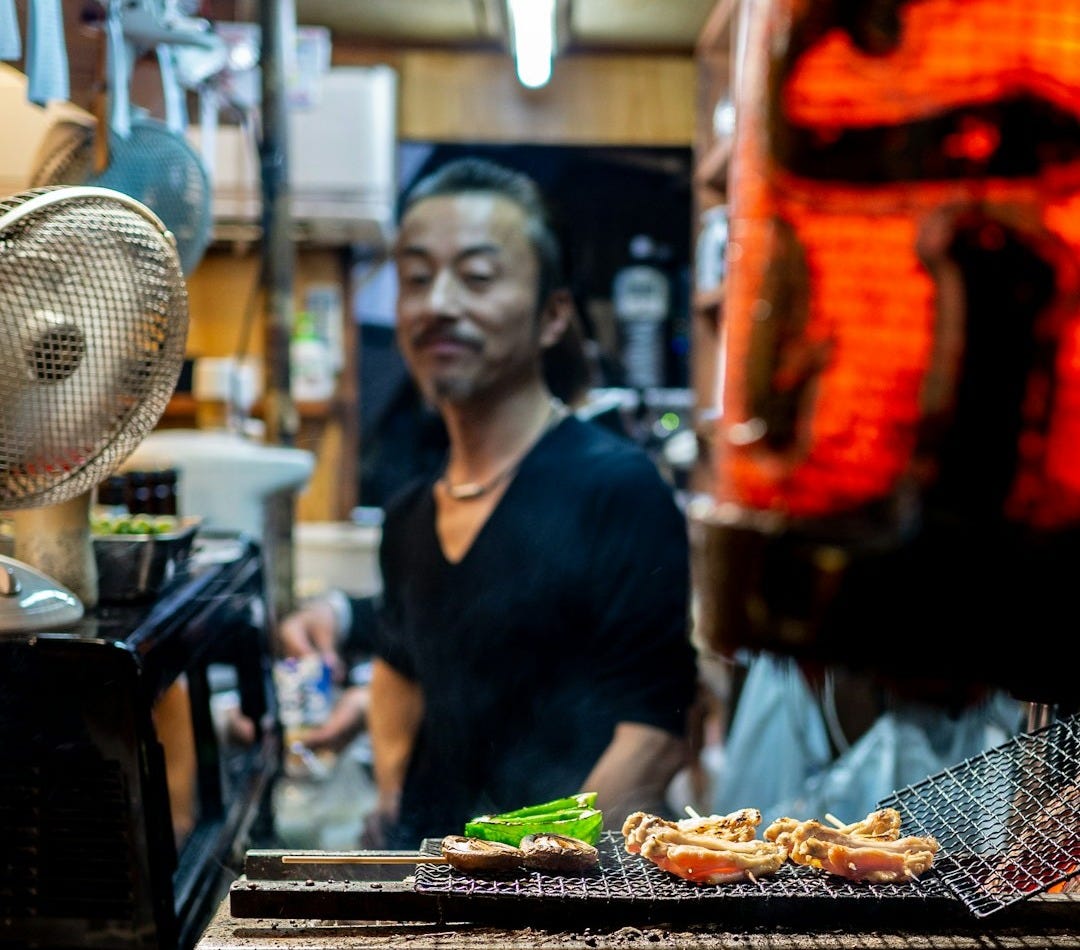
The Japanese shokunin (職人) or craftsman gives himself to the craft so completely that the craft itself becomes the service. The sushi chef who has shaped rice for years isn’t “humble” when he serves you. He is delivering the accumulated weight of those decades of practice, and that is a kind of authority no amount of smiling can replace.
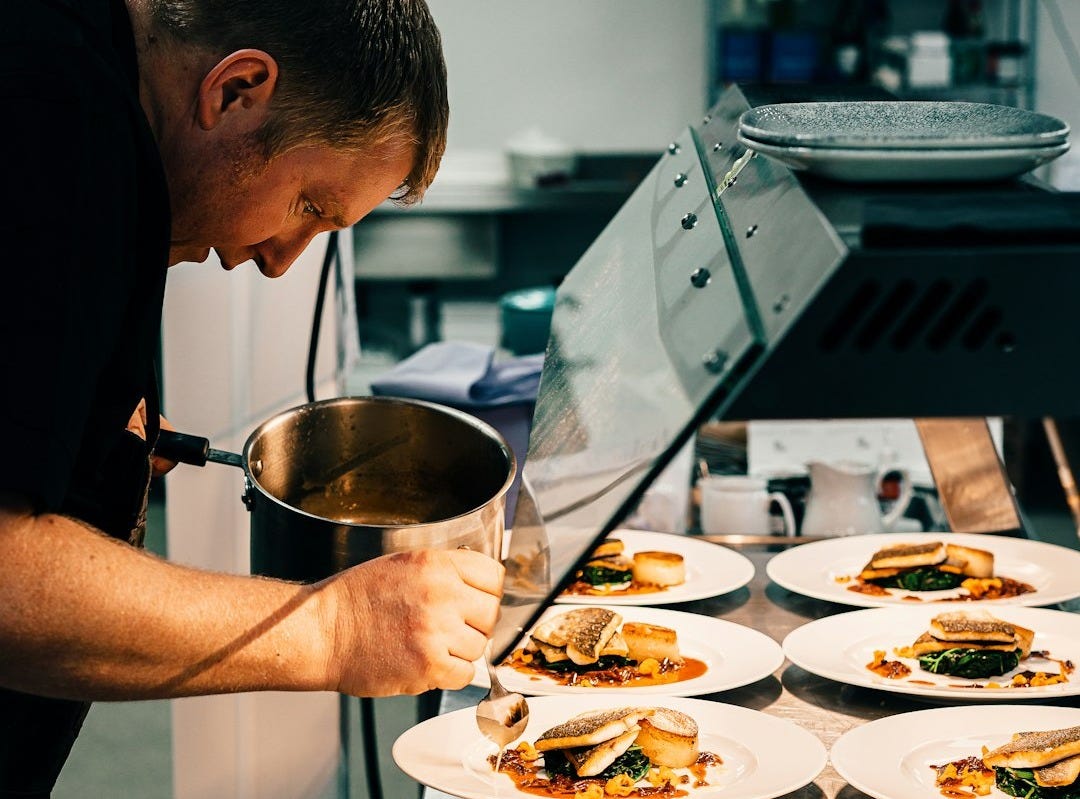
You see the same discipline in some Western kitchens, though it looks quite the opposite.
Listen to a kitchen on a full night, and it sounds like chaos, but it isn’t. “Yes, chef! Heard, chef! Behind! Corner! Fire table 6!” Every call is functional, an acknowledgement, a warning, a command timed to the second. The shouting is the discipline. It is a master holding a room together at speed so that out front, in the calm, you never have to know any of it is happening.

The shouting brigade and the silent Japanese counter seem like worlds apart, but they are the same thing, pointed at the same target. Both are aimed at mastery, because only a master can take the guest fully into his hands. The noise and the silence are two languages of the same thing: Like a symphony conductor who becomes so good no one notices the conducting. Just the music.
“Order from the QR Code”
But true service is fading, and I think it’s a tragedy.
When we walk into many restaurants in China today, we are directed to a QR code on the table. You order from your phone. You pay from your phone. No menu. No “today’s special is…”. The ritual becomes a process. The food arrives as quickly as it’s ready, delivered by someone who sets it down and leaves. Minimal interaction. Maximum efficiency. No rapport. No soul.
My son pointed this out when we travelled through southern China last year, and it has since appeared in some Adelaide Chinatown restaurants.
It sells itself as convenience, as the removal of friction. But the friction was never the problem. The friction was the sign that two human beings were actually meeting. Smooth it away, and the relationship goes with it, because they were the same thing all along. Service stripped down to efficiency is service with the human removed. And once you’ve removed the human, the next step is obvious. Robots cooking. Robots serving.
The saddest part is that the culture that wrote the theory of the host is the one that is most eager to delete him. This is not a small loss. It is one of the few genuinely human exchanges we have left, automated away and called progress.
This is my house
If you think about it, we are all service providers. In every occupation, everywhere, far beyond the restaurant.
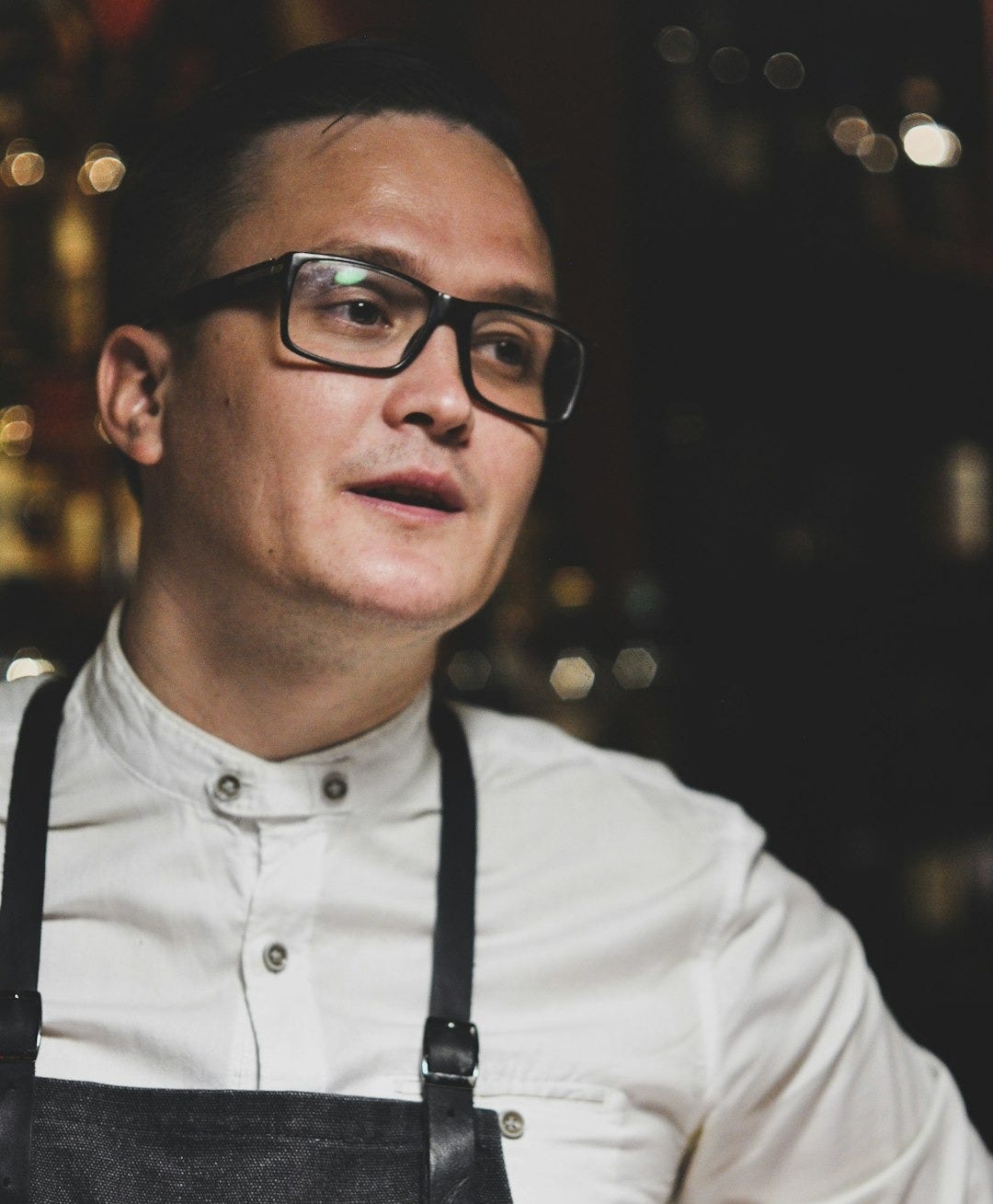
“This is my house, and you are my guest.” That sentence holds the entire relationship. The host cares, controls, directs, and, when necessary, protects. He is not egotistical, not rude, not indifferent. He thinks about what you want and what is good for you, which are not always the same. He is gentle and firm, the way a good parent is with a child, with family. He is not easily offended, because he knows you are human. But he will not suffer abuse either. Or allow his house (and guests) to be disrespected. He is the master of his house.
Now widen this, and you will see that every profession is a service profession. The surgeon is a servant. So is the nurse, who can only be a good nurse by becoming a service provider, taking the fear off you and your family and carrying it herself. The therapist who eases the ache, physical or otherwise. Even the management consultant, in the end, is offering the same thing: clarity, direction, strategy. The lawyer who takes your fear and confusion, and says, “This is now my problem. Leave it with me.”
That phrase captures the entire nature of service. Leave it with me. You cannot say it convincingly unless you are also very good at what you do. The competence is what gives you the confidence, the right to take someone in. This is why the servant, properly understood, is never the menial figure we visualise. He is the most capable person in the room. He is the true master.
And you are my guest.
The guest has a part to play too.
Service is a performance, and a performance needs an audience. You have to allow yourself to be well served; you have to surrender a little. Let the thing run its course. Let the piece of music carry you instead of beating time over it.
A demanding, suspicious, rude guest breaks the spell, and not only for himself. He wants to pull the host back down into servility, forces the bowing to return, and the evening curdles for everyone at the table. The art of being well served is its own skill, and mostly the skill of trust.
Service, as mastery exercised for another’s benefit, is the heart of what makes us human. More than courtesy. The act of elevating another person through real skill and care.
It demands that the ego step back so the craft can step forward. It cannot be done in fear, or anger, or from beneath those we serve. Only from a place of quiet mastery, by someone secure enough to make another person the centre of the moment. A machine can deliver a meal. It cannot host you. It has no house to welcome you into.
My son understood all this before I did. Maybe he couldn’t find the words for it, so he handed me a television show and waited for me to catch up. That, too, was a kind of service.