

Last month, my wife and I celebrated our 27th wedding anniversary. It was rather uneventful. We had a nice dinner with our younger son at a local curry place. No wine or flowers. No hoo-hahs.
It was like every day.
I remember when we first got married and lived in a tiny apartment. I was between jobs, and we struggled quite a bit as a young couple, mostly with finances. I remember on several occasions we had to eat in a cheap restaurant because we had less than a dollar to buy food at the hawker centre. So we charge our credit card for dinner. It was frightening and incredible.
We were poor but happy.
Eventually, things settled down, and both our careers took off. I attributed it to better Feng Shui when we moved to a better place.
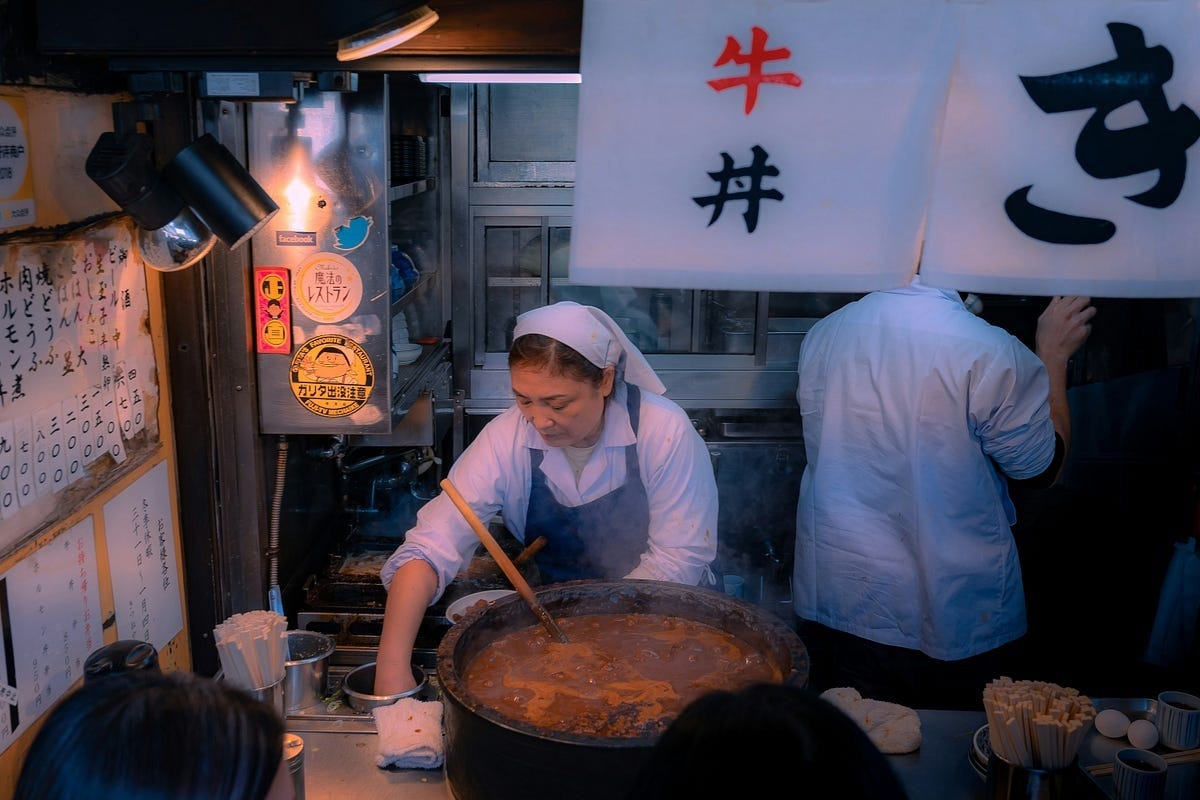
When I first met my wife, I shared with her the idea of marriage being a “stirring the porridge” kind of love. I read it in a book somewhere (I worked in a bookshop years earlier) and always thought it was an excellent analogy.
“Stirring the porridge” love is a metaphor for describing the attention and care that you give to a relationship. It is like stirring porridge so that it does not stick to the pot or burn. It is essentially a boring but necessary activity. There is nothing particularly difficult or exciting about stirring the porridge. You just have to do it.
I suppose we both knew that after the initial courtship and subsequent wedding, we would reach a stage where our relationship would enter the phase of normalisation, there would be chores that need doing, budgets that need managing, and porridge that needs stirring. Life becomes more routine, even mundane. And romance takes on a quieter tone, maybe even mistaken for dead.
Joseph Campbell described marriage as an ordeal.
“A love affair has to do with immediate personal satisfaction. But marriage is an ordeal; it means yielding, time and again. That’s why it’s a sacrament: you give up your personal simplicity to participate in a relationship. And when you’re giving, you’re not giving to the other person: you’re giving to the relationship. And if you realise you are in the relationship just as the other person is, then it becomes life-building, a life-fostering and enriching experience, not an impoverishment because you’re giving to somebody else … This is the challenge of a marriage.” -Joseph Campbell
From: An Open Life: Joseph Campbell in Conversation with Michael Toms
I completely agree that marriage is essentially self-sacrificing. A giving in and giving to, not to the other person but to the relationship. It is about building something together. For me, this is not negative at all. We make sacrifices willingly, and with joy. There is no expectation of returns or rewards. A complete surrender to the relationship and trust for where it might lead.
Not that it is a passive acceptance. A resignation, if you like. No, there is constant effort and active participation. A nurturing and grooming, taking care and protecting. I always know that our relationship is neither fixed nor stagnant, but constantly moving and flowing.
On our wedding invite, there was a quote that I included:
one’s not half two.
It’s two are halves of one:
- e. e. cummings
I have always loved this line from one of E. E. Cummings’ poems. Although it explores the nature of duality rather than marriage, I feel it encapsulates the key philosophy of relationship evolution. If we always see our marriage as a two-person construct, this will create a separation that could get in the way when challenges arise, as they inevitably will. But if you understand that, at its core, a marriage is “halves of one”, then you put the relationship above your individualities. There is a merger, or a “marriage”.
And with that “marriage”, two become one. And when that happens, there is a looking outward together in the same direction.
“Love does not consist in gazing at each other,
but in looking outward together in the same direction.”
Antoine de Saint-Exupéry.
I once witnessed what I thought then was a very sad incident in a relationship.
It was an argument between a friend and his wife over a petty matter. Something like, who should they visit first? His family or her family, on the weekend. One way or the other would have been fine. Eventually, my friend said, “OK. You win. Do it your way.”
As he walked out of the room, she whispered to us. “Yes! 10 points!”
I was surprised. What was going on inside their heads? Were they keeping scores? There were other incidents as well.
They had twins, and each agreed to look after one of them. So when one is crying, the other will say, “Hey, your child is crying. Can you do something about it?” while watching television or sitting around doing nothing else. It doesn’t matter if the other is busy or cooking. “Fair is fair,” he would say.
So constant fighting. Constant need to win. One vs the other. Keeping daily scores. Hourly scores. “Give a point, take a point.” Opponents in a marriage.
There were no extra-marital affairs, no financial hardship. Just two egos who can’t let the other one win. No matter the consequence.
Eventually, they divorced and went their separate ways.
Why do they see their relationship in such a “balanced” way? This is one reason I dislike calling marriage a partnership. I never introduce my wife as my partner because a partnership is essentially a business entity. It is transactional in nature. Everything has to be fair. No one should get the better of the other.
Maybe they were young. Strong-minded and independent. Both were successful in their career. After all, shouldn’t they each be treated equally and with respect?
“Your child is crying. Do something about it.”
Last month, my wife and I celebrated our 27th anniversary. It was rather uneventful. We had a nice dinner with our younger son at a local curry place. No wine or flowers. No hoo-hahs.
It was like every day.
And every day is beautiful.
Even when we have chores to do, bills to pay, and “porridge to stir.”
Sometimes, our friends ask us. What do you guys do on weekends? Now that kids are mostly on their own?
We go for long walks together when we can. Meditate sometimes. Watch YouTube. We cook together occasionally, make dumplings and have shared meals with our friends. We look forward to travelling together and visiting families in Singapore. We plan our future as if we’ll live forever. We enjoy each other’s company, and we are comfortable being apart sometimes.
We also give in.
Our lives are constant day-after-day-after-day of “stirring the porridge”. Gently, persistently, joyfully.
And we love porridge.