

We are at a turning point. AI is here, shaping how we think, create, and work with each passing day. The question isn’t if AI will change your life but how quickly it will happen.
This is about a shift in mindset, understanding what AI is, what it isn’t, and harnessing its power to bring ideas to life.
I was curious from the start, but it took some time and effort to transition from an overwhelmed beginner to someone who could utilise AI as a creative tool. In this piece, I’ll share what I’ve learned working with AI, why ignoring it is risky, and how you can begin your learning journey today.
I’ve noticed two general perspectives on AI. The first is fear: a deep worry that this AI thing must be controlled before it destroys us. These people think that AI is listening to every word we say, learning all our secrets, manipulating our interactions, and changing the way we live. To them, it’s the beginning of machines taking over humanity.
These often come from paranoia. Some people consume AI-related news, which can be scripts written by AI itself, filled with despair and doom. They retreat from technology and social media, convinced AI is tracking their every move, every word, every thought.
The other is marked by a strange scepticism, “I know all about AI. I use it all the time.” They’ve cracked the code. They also look at anyone else who uses AI with a kind of “wink-wink…I know you used ChatGPT, didn’t you?” They also generate massive amounts of generic, soulless noise that they mistake for content.
Neither understands what AI is. AI is not some all-knowing, spying overlord, nor is it a magic vending machine that replaces human creativity. It’s a powerful tool that works by identifying patterns and predicting the next word. It doesn’t have intentions or a will of its own. This fear and cynicism stem from a misunderstanding of AI’s nature, which keeps us from using it wisely and thoroughly.
What is AI?
AI is like an advanced autocomplete. Based on the context of your prompt, it predicts the words based on patterns from vast amounts of text. It doesn’t think, feel, or have intentions. It is not conscious or alive. AI doesn’t care.
AI is not the robot takeover imagined in movies. It is a machine built to recognise patterns and generate text quickly. The media and conspiracy theorists often fuel fear by claiming AI is evolving too fast and will soon become smart enough to control all of us. These stories grab attention and boost viewership, but they don’t reflect reality.
Currently, we have Artificial Narrow Intelligence or ANI. ANI is a specialised AI designed to perform specific tasks, like language generation, image recognition, or playing chess. It can excel at these tasks but does not comprehend them in the same way humans do.
In contrast, Artificial General Intelligence (AGI) would be an AI capable of understanding, learning, and applying knowledge across a broad range of tasks, matching human abilities. And beyond that is Artificial Superintelligence (ASI), a hypothetical AI that surpasses human intelligence in every field.
Large Language Models (like ChatGPT) are advanced pattern recognisers without consciousness, goals, or desires.
Today’s AI is far from AGI or ASI. ANI systems, such as Large Language Models (like ChatGPT) are advanced pattern recognisers without consciousness, goals, or desires. Understanding these differences helps clear up misconceptions and enables us to view and utilise AI as a practical tool rather than a threat.
AI is a Tool Like Microsoft Word, Just Smarter
When personal computers first arrived, many people found Microsoft Word complicated. Many still do. Some were uncomfortable with its multiple features and worried it would kill the creativity that came with “real” writing. But Word didn’t kill creativity. Instead, it helped writers get ideas onto the page more quickly and clearly. It was just word processing.
AI works on a similar principle but with a far greater impact. It is idea-processing. As the calculator (aka computer) marked the start of the Third Industrial Revolution, it changed how we work and communicate. AI is now part of the Fourth Industrial Revolution, with potential that extends far beyond the traditional tasks of typing and formatting text.
Consider Adam Smith’s famous example from The Wealth of Nations. He described how a single worker making pins by hand could produce only about 20 pins per day. But when production was divided into specialised tasks: cutting wire, straightening it, sharpening the points, and so on, ten workers using this “division of labour” could produce 48,000 pins a day. This dramatic increase wasn’t just faster work; it changed the very nature of production, unlocking new wealth and efficiency.
The real opportunity with technology lies in our imagination (or lack thereof) and how we use it. It’s not a zero-sum game where machines replace humans; instead, it’s a collaborative effort. It’s about combining human creativity with AI’s speed and scale, creating a “1 plus 1 equals infinity” kind of situation. Just as the shift from agriculture to manufacturing reshaped our entire society, AI will open doors to new ways of creating, solving problems, and working.
AI is an enabling tool. It doesn’t replace your ideas or voice. It combines patterns it has learned at incredible speed, but what makes the output meaningful is you, your judgment, your editing, and your perspective.
“Well. If it’s ideas you want, then you shall have them. In abundance.” - Morpheus
There’s a memorable scene in the TV show The Sandman that captures something I’ve felt a little like when working with AI. In the show, Richard Murdoc, a writer desperate for inspiration, holds Calliope, a muse, against her will and locks her away, demanding that she feed him ideas on command. When she was finally freed by her husband, Morpheus, also known as Dream, he unleashed a relentless torrent of ideas into Murdoc’s mind that drove him mad.
Although a little dramatic, working with AI is a little like that: an abundance of ideas pouring out faster than you can manage. It can feel like a flood that drowns you in possibilities. The sheer volume can be disorienting, making it difficult to identify those worth pursuing or keeping.
To make AI truly useful, you have to guide it with clear intentions. You decide what to keep, what to discard, and how to shape the ideas it offers. Without that direction, it will be overwhelming.
My journey with AI followed a similar path. Initially, I was impressed by how quickly it could generate content, almost as if by magic. But the words often felt empty, lacking in depth and personality. The results were usually generic and easily forgotten.
I have now learned how to work with AI more productively. I realised that prompting wasn’t just typing questions; it was a skill, a craft that anyone can learn.
Learning AI is Essential
Think of AI as a new gadget you just received. It can feel intimidating, unfamiliar, and even overwhelming. But with a bit of curiosity and experimentation, it will become manageable. What matters is using your imagination and how you choose to use this tool to create and solve problems.
Jensen Huang, CEO and co-founder of Nvidia, put it bluntly: “You’re not going to lose your job to an AI, but you’re going to lose your job to someone who uses AI.” This warning reflects the current shift already underway in many workplaces.
Major companies, such as Amazon, Accenture and Deloitte, are actively training their employees to use AI or developing in-house AI chatbots and capabilities. They expect teams to incorporate AI tools into everyday workflows to boost productivity and creativity. As low-level tasks become automated or obsolete, the real opportunities will come from using AI to work smarter, innovate, and create in new ways.
Ignoring AI now is risky. It’s like refusing to use smartphones or computers when they first appeared, choices that would have left you completely disconnected and irrelevant. Not knowing how to use AI will inevitably threaten your career and relevance.
But it’s not just about survival. AI will help to create new jobs and roles we cannot yet imagine. The future depends on how we engage with these tools and whether we use them effectively to drive growth.
“There are about 30 million people in the world who know how to program and use this technology to its extreme. The instrument we invented, we know how to use, but the other 7-and-a-half billion people don’t.”
Jensen Huang, CEO and co-founder of Nvidia
This gap underscores the importance of learning how to utilise AI. It will become a basic skill, as essential as reading or computer literacy. The earlier you start, the more control you have over your future.
The Future is here
AI is a tool. Learning to master it will help you work faster while keeping your voice at the centre of everything you create. It is about gaining new powers to express your ideas fully and clearly.
If you want to stay relevant and thrive in the changing world of work, learning AI is not optional. The sooner you explore AI, experiment with it, and make it part of your daily process, the more opportunities you will unlock. This is your chance to shape the future on your terms, using technology as an ally rather than fearing it as a threat.
For those who want to go deeper, I wrote PromptCraft. It is a guide that explains how AI works and teaches the craft of creating writing prompts that deliver the kind of content you want. It is filled with practical information on how to set up your LLM (like ChatGPT) to turn AI from a generic content machine into a creative collaborator who works with you.
AI is here. Embrace the journey. Let AI help you bring your ideas to life.
If you want to take your AI skills further, I’ve written a book called PromptCraft that dives deep into how AI works and teaches you the art of prompting so that you can make AI write like you.
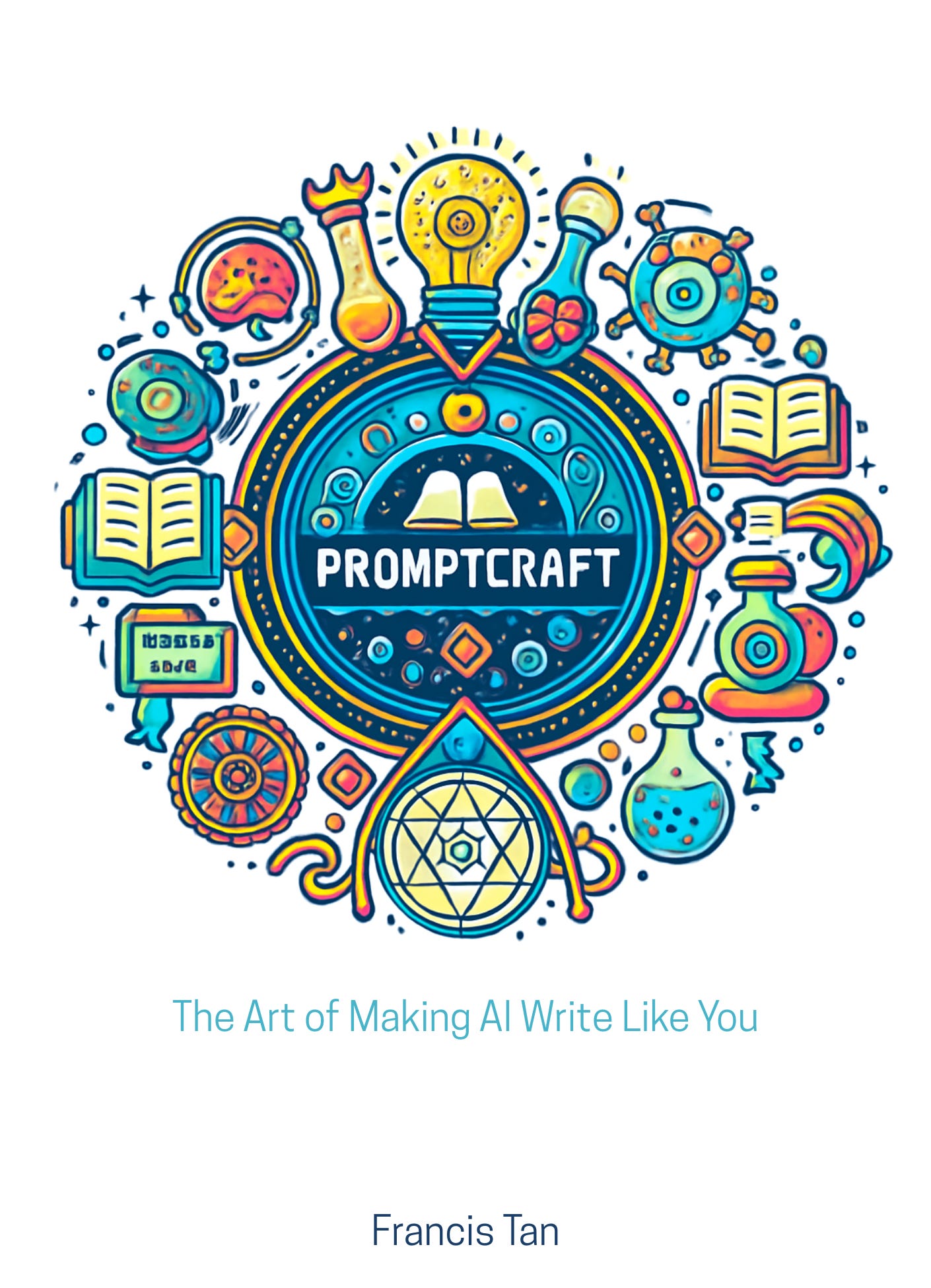
Take this step today to unlock AI’s full potential and transform how you work.
No.