

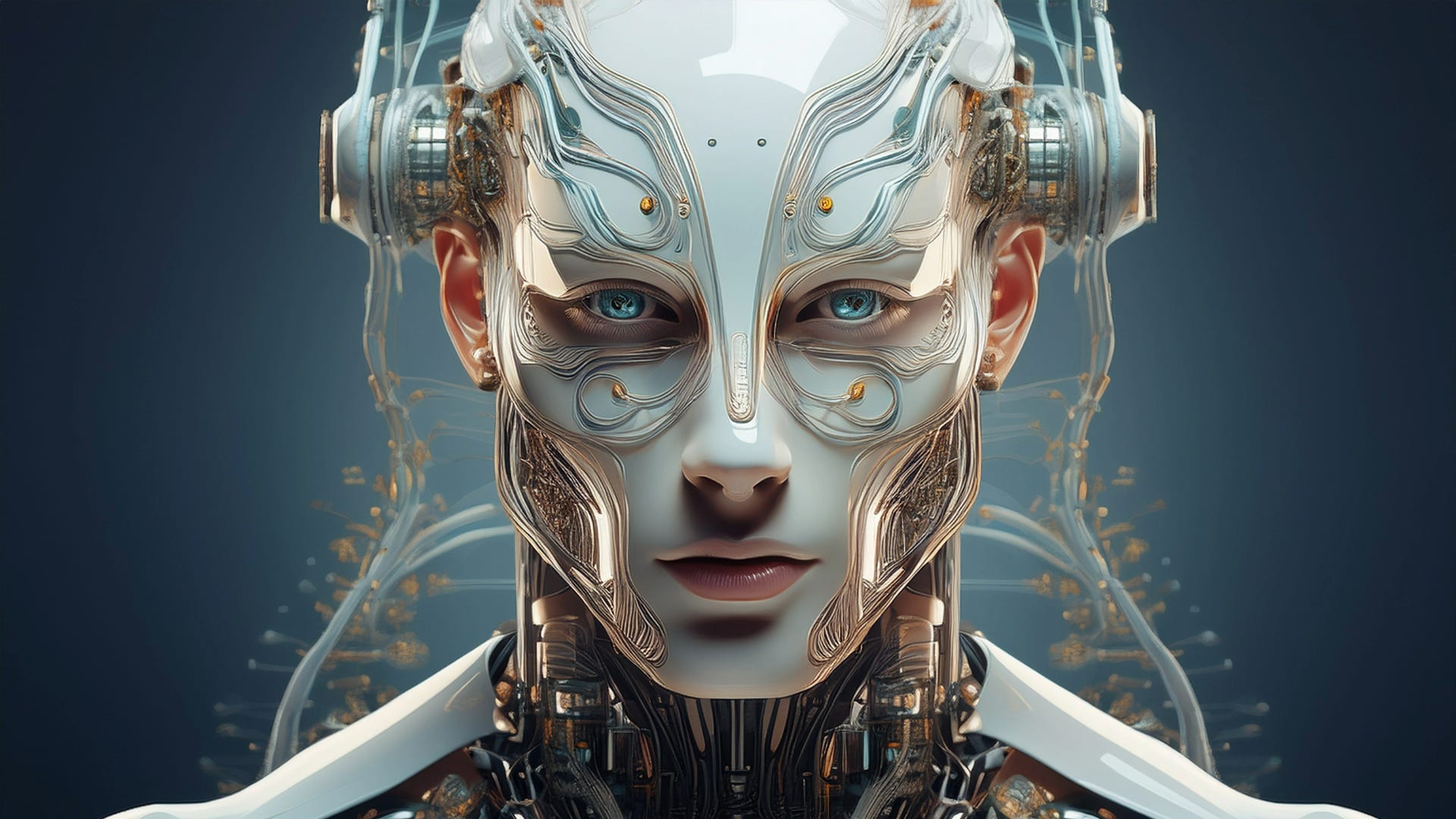
‘What a piece of work is a man, how noble in reason, how infinite in faculty,
in form and moving how express and admirable, in action how like an angel,
in apprehension how like a god, the beauty of the world, the paragon of animals!
- William Shakespeare. Hamlet, Act II; Scene 2
AGI headlines are often in the news. Forecasts, often from brilliant people, that humans are running out of time, create a sense of fear and hopelessness. Bigger models, more parameters, rising capabilities, and a mood that sometimes feels like a countdown to doomsday. The drama is that AI is coming for us.
This fear rests on a simple assumption. If a machine processes information faster than we do, it must be more intelligent than we are. And therefore better than we are.
I disagree.
Speed is a single trait inside a large and complicated idea. The argument that AI will replace humans outright stems from a narrow way of measuring intelligence. Whoever produces the most, remembers the most, or moves the fastest, wins. Those measures are designed for tools. Humans operate quite differently.
Measuring the wrong things
When people compare humans to AI, they usually measure speed and volume. LLMs give complex answers instantly. They generate staggering amounts of text in seconds. They sort patterns that take us days to complete.
From that point of view, AI can seem scary. But look at the simple calculator. It beats every mathematician on the planet in calculating, yet no one confuses that with intelligence.
AI is a similar type of tool. It works quickly and handles scale; it is a sophisticated prediction machine, and prediction is not the same as understanding. AI is narrow power. It sees patterns, not meaning. Tokens, not lived experience.
We reinforce this misunderstanding by treating intelligence as if it lives only in the brain. It is why people talk about “downloading” themselves onto a computer chip, as if storing memories captures what intelligence really is. It leaves out most of what makes human intelligence unique and “not artificial.”
Intelligence that we do not take into account
When people predict that AGI and, subsequently, ASI will surpass human intelligence, they are usually focusing on the academic slice of intelligence: logic, knowledge, analysis, memory, and calculation. These are useful, but not the source of what makes life meaningful. The richer forms of intelligence sit elsewhere.
Emotional Intelligence
It highlights what matters and directs our attention. It helps us read people and understand context.
Love creates loyalty, patience, sacrifice, and the instinct to protect. It pulls us together for companionship and meaning.
Fear keeps us alert to risk. It shapes caution, vigilance, and self-preservation. It also sparks courage when something matters enough to act anyway.
Joy fuels creativity, play, exploration, and the desire to share experiences. It reinforces behaviours that lead to fulfilment.
Anger signals that a boundary has been crossed. It pushes us to defend ourselves, correct an injustice, or reclaim a sense of control.
Sadness deepens empathy and reflection. It helps us release what cannot be held and recognise what we value.
Desire creates ambition, curiosity, attraction, craving, and personal growth. It is often the beginning of change.
Hope allows us to persist through difficulty. To push against mathematical odds and give meaning to effort, turning imagination into action.
Shame shapes our social behaviour and cultural norms. It encourages alignment with shared values and motivates course correction. It helps build societies and communities by moderating social behaviours.
Guilt prompts accountability. It tells us when our actions have harmed someone or conflicted with our own standards.
Awe opens the mind to new possibilities. It expands perspective and inspires learning, creativity, and humility.
Trust lets us build relationships, share responsibilities, and rely on one another.
Curiosity drives exploration, experimentation, and discovery. It pushes us to take risks and into the unknown in search of understanding and new horizons.
All these are unique to us as humans, and our emotions work with us and within us all the time. These are faculties that AI lacks.
Biological Intelligence
Your senses are a magical and highly developed suite of high intelligence. Sight, sound, touch, smell and taste, each interlinked with each to create an exclusive symphony of sensations that makes us truly human.
Sight
Vision gives us reach beyond our physical form. It lets us take in the external world instantly when we open our eyes. The simple act of seeing a sunset, admiring a landscape, or watching our children play involves layers of perception that evolved over millions of years.
Our eyes reach out and touch the world without our conscious effort. We notice posture, expression, movement, colour, and subtle changes in someone’s face. We sense tension in a room before a word is spoken. Sight ties memory to physical detail and helps us anticipate what might happen next.
AI sees pixels, can analyse only pixels, but cannot see. We can improve the resolution of a camera, but AI has no “point of view” and no lived context behind a Hi-Res image.
Hearing
Sound carries layers of meaning long before logic enters the picture. Tone, pace, breath, and hesitation tell us as much as the words themselves. A slight tremor in someone’s voice can signal fear or excitement. A quiet pause can say more than a sentence. Hearing grew out of our need to sense threat, comfort, sincerity, and intent. It also gives us rhythm and music, the emotional architecture of human culture.
If you have ever listened to Beethoven’s Fifth and felt tears rise without knowing why, you would have recognised the power of that terrible language in music. Music speaks beyond words, and your mind understands it instantly.
Our hearing is tied to our memory, instinct, and emotion. It lets us feel the world, not just register it. AI can transcribe audio, but it cannot hear.
Touch
Touch is one of the oldest forms of intelligence we have. It signals safety, comfort, pain, texture, and temperature. It shapes our memories and emotions. A firm handshake, a shaky grip, a gentle caress from a loved one, the sudden chill of a breeze. Touch anchors us in our bodies. It defines boundaries and regulates our nervous system. Much of our instinctive behaviour comes from signals we feel, not the thoughts we form. AI has no tactile world or bodily feedback.
Smell
Smell is a wonderful (and often forgotten) thing. It reaches straight into memory and emotion. A familiar scent can bring back a moment from long ago. The sharpness of smoke, the sweetness of jasmine, the salt of the ocean, the perfumed hair of a lover. Each carries signals from across the span of time and space. Smell alerts us to danger before our mind catches up. It influences appetite, attraction, comfort, and instinctive avoidance. It is one of our human brain’s earliest guides, tying place, time, and experience together. An AI model cannot experience scent or the flood of memory it releases.
Taste
Taste informs our appetite and enriches our culture. It shapes our habits and memories around meals shared with people we love. Taste teaches caution and pleasure. It helps us understand what nourishes and what harms. It connects us to our tradition and to a sense of belonging.
AI can describe flavours, but cannot experience them like we do. The taste of something that reminds us of grandma’s cooking instantly connects us to a personal, invisible world that AI cannot replicate. It processes only the representation, but not the reality itself.
Subconscious Intelligence
Our subconscious is a working mind of its own. It sorts through fragments of memory, emotion, and experience without asking for our attention. While we sleep, shower, or walk, it threads ideas together and reaches conclusions that conscious effort cannot force. We sense danger before you can identify it mentally. We recognise a face we have not seen in decades. None of this is guesswork. It comes from patterns we have absorbed across a lifetime.
This same quiet machinery fuels creativity. New ideas often arrive when we stop trying to find them. A melody forms during a commute to work. A novel peeks its head while we are cooking. A solution shows up just as we think the problem is insurmountable. The subconscious blends memory, emotion, curiosity, and experience into something our conscious mind could not produce on its own.
These moments are signs of a highly advanced form of intelligence that is not available to AI.
AI has no subconscious, no personal history, no emotional memory, and no hidden layers of experience shaping its output. It can draw on human knowledge, identify and remix patterns, but cannot tap into an inner world because it does not have one.
Human intuition and creativity grow from this “unconscious” part of the mind, which no model can replicate.
Aspirational Intelligence
Our aspirations are a form of intelligence. They pull us toward a future that does not yet exist. They shape our choices and guide how we interpret possibilities. Aspiration is the part of the mind that lets us start a journey without knowing where it will end. It is the force behind every ambitious project, every invention, every work of art.
Aspirational intelligence is what enabled humans to build the Great Wall, cross oceans, and explore the universe. It is also how we created AI. None of these began with certainty. They started with imagination, hope, and a kind of stubbornness that refuses to settle.
Aspiration gives shape to meaning. It influences how we read opportunity and how we carry responsibility. It moves our decisions even when the logic is unclear. It provides us with a sense of “tomorrow” and a reason to pursue our dreams.
AI cannot aspire. It does not imagine its own future. It does not care about outcomes. It has no pride, no fear of failure, no hope, no longing, no concept of legacy. It does not begin anything for reasons beyond the prompt it receives.
Aspiration belongs to us. It is one of the deepest forms of intelligence, and it is the reason we continue to build, explore, and create beyond the limits of what we can see.
AI is powerful, but incomplete
People often imagine AI as a machine that thinks like us, wants like us, and reasons like us, only with more power behind it. That picture does not match the systems we have today, or the direction current models pursue.
AI does not live in the physical world. It does not have a body. It cannot feel relief, longing, anticipation, or dread. It cannot miss someone. It forms no intentions and sets no goals. It values nothing.
It simulates. It predicts. It imitates. It extends what we can do, faster and larger, but it does not touch. AI does not know the colour red like we do, or feel the embrace of our children like we do. There is nothing beyond its ability to answer a prompt.
The real risk
Fearing AI for the wrong reasons distracts us. The danger is not that machines become too intelligent. The danger is that we underestimate our own intelligence and forget what a piece of work we are!
So where does this leave us?
AI is here to stay. It is valuable and transformative. It will reshape work and industry. It should. But it does not reduce, cancel or overtake human intelligence. It reminds us of our human intelligence.
It pushes us to reclaim capacities we stopped noticing, the ones rooted in emotion, intuition, creativity, conscience, humour, and connection.
This is where our value lies. This is where our real intelligence lives.
If you enjoyed this reflection, you may like my other Substack, The Intelligent Playbook, my newsletter about AI, human capability, and the tools that help us work smarter. It is written for people who want to understand AI without the hype and use it to strengthen their own creativity and judgment.
You can subscribe and learn how to make AI a partner rather than a threat.
I enjoyed your clarity and insight into what makes us humane and these conversations help to allay some anxiety