

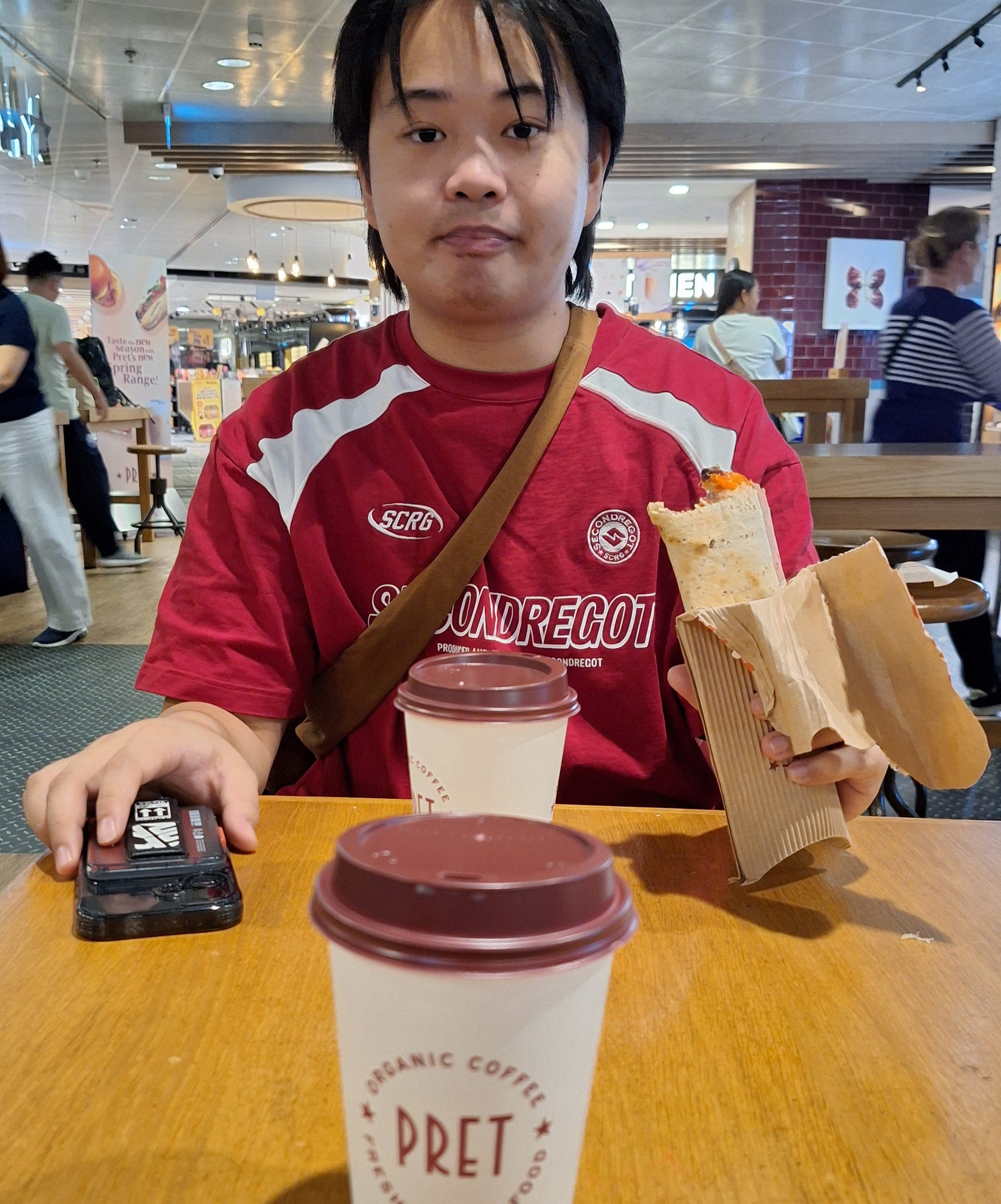
I could tell he was slightly annoyed that I insisted on arriving at the airport two hours early, which was my default, no matter the flight. I blame my “kiasu” side, the fear of losing out.
So there we were, killing time in one of the world’s fanciest airports, sipping overpriced Pret a Manger lattes and scrolling mindlessly through our phones between gate announcements.
This stretch of stillness marked the beginning of a 30-day adventure in China with my son. His gap year gave him the time, and my wife had the brilliant idea to travel during the off-season. Fewer crowds, lower prices, better weather… and maybe a chance for us to connect as adults.
Let’s see how that goes.
Visiting our history
This trip is about more than sightseeing and fantastic food (though there will be plenty of that). We’re also making a detour to our ancestral village, a place I only visited six months ago. It carries our family’s story.
My father left China around 1930 when he was just two years old. He never went back, and he never kept in touch with any relatives, if we even had any still there. Those were turbulent times: civil wars, then the Japanese occupation. His parents, my grandparents, probably thought their boat ride to Singapore was just a temporary move. Tragically, they both passed away shortly before the end of World War II when my father was 8.
I don’t know if there are any relatives still in China today. All I have is the name of the village we came from. And while I don’t expect to uncover some dramatic family reunion, I hope to pass on what little I know to my son. Maybe someday, one of my descendants will pick up where I leave off and start piecing things together again.
But beyond ancestry, this trip is about getting to know each other. More specifically, it’s about me getting to know him as a young adult, not just as the child I raised. For most of his life, I’ve only known him through the lens of parenthood. Now, I want to see who he’s becoming, and maybe even learn from him.
A Journey Through Time
We’re taking our time with this trip. No rushing. Just moving through places with history, meaning, and layers of stories waiting to be uncovered.
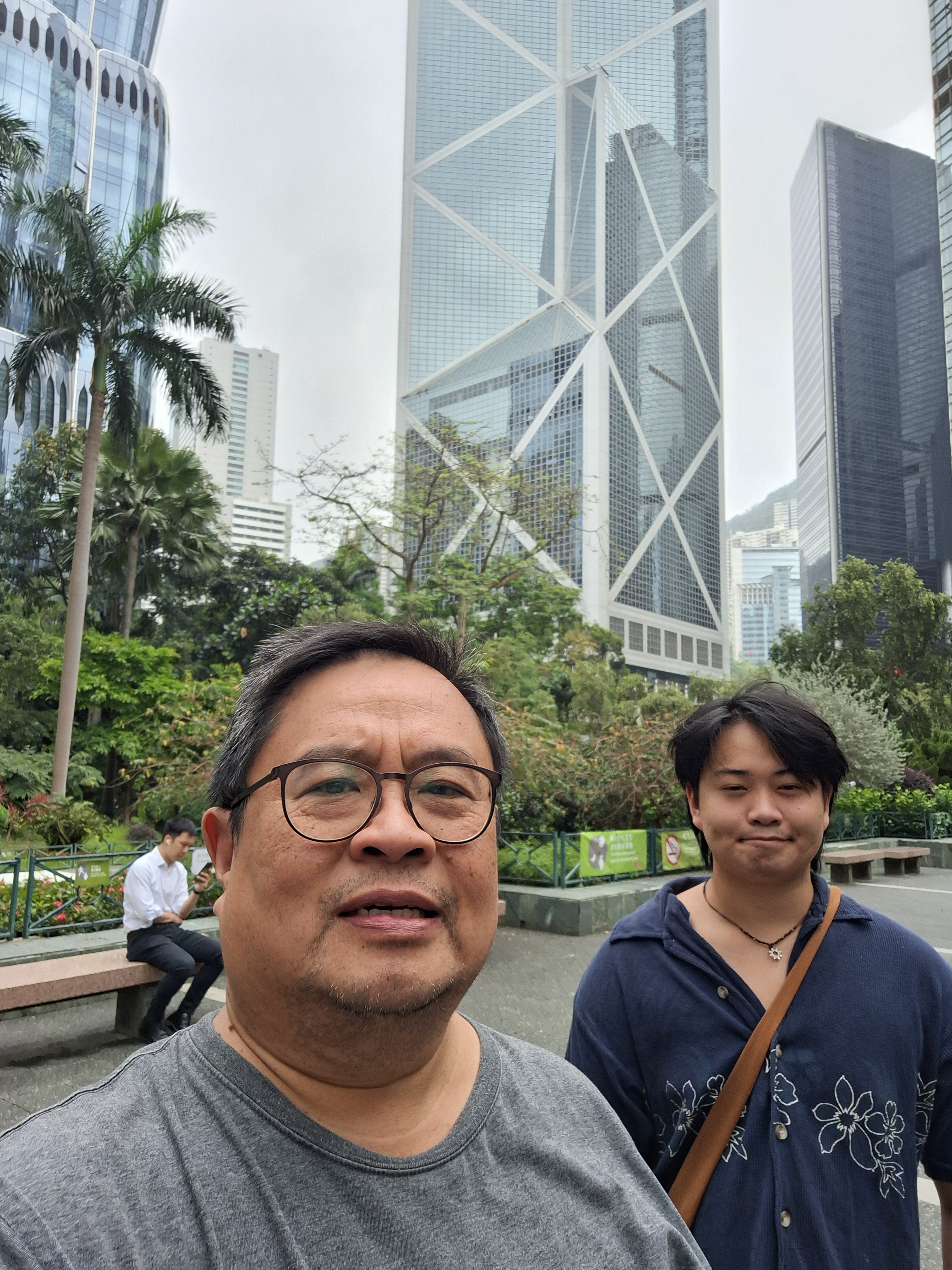
We’ll start in Hong Kong, where he wants to begin. Honestly, it’s a good place for all of us to start. For centuries, Hong Kong has been China’s gateway to the world. Seized by the British after the First Opium War in 1842, it became a symbol of foreign dominance during what the Chinese call the “Century of Humiliation.” Hong Kong remains a powerful reminder to many Chinese: others will take advantage if you’re weak. It always has been that way. It still is. And perhaps, it always will be.
From there, we head inland to Guangzhou, one of China’s most dynamic modern cities and one of its oldest. The area has been inhabited for thousands of years. Still, as a formal administrative centre, it dates back to 221 BC, when Emperor Qin Shi Huang unified China and established a military outpost called Panyu, the early predecessor of today’s Guangzhou. Over the next two millennia, it grew into a thriving port city and has long served as the heart of Guangdong Province, which was officially established much later, during the Yuan Dynasty around the 13th century.
Then, we’ll go to our ancestral home in Jieyang, specifically Mashuo Village, a small farming community of about 1,000 families, most of whom share our family name, Chen. It’s agricultural, modest, and generations deep. Though I don’t know exactly how far back our roots go, villages like Mashuo have often existed for hundreds, if not thousands, of years.
We’ll continue to Chaozhou, the cultural heart of our Teochew region. Chaozhou has long been known for its traditions. Its cuisine, opera, and tea culture are deeply rooted in history. The city dates back over 1,600 years and was once a major centre of learning and commerce in southern China.
We’ll break the journey with a few days in Nanjing, Fujian Province, home to the famous tulou, massive, circular Hakka earthen buildings that have stood for centuries. Some of these structures are over 600 years old, built to protect entire clans within their thick walls. I wanted to show him life in rural China, not just today, but for thousands of years.
We’ll end in Xiamen, a coastal city with a relaxed vibe and a complex past. Once a treaty port after the Opium Wars, Xiamen became a melting pot of Chinese, European, and Southeast Asian influences. Its colonial architecture, island getaways, and vibrant food scene make it the perfect place to recap everything we’ve seen and experienced.
Let’s Begin
I don’t think he’ll read this right away, if ever. He’s not much of a reader, and he’s not on Facebook. But that’s okay. This is as much for me as it is for him.
I’m writing this because I want to remember. I will be 60 soon. I want to capture the moments and memories for him and me. And maybe, one day, he’ll come across these words and smile at the memory of where we went, what we saw, and who we were when we took this journey together.
More than anything, I hope this trip becomes part of his story—the kind of story he tells his friends or someday shares with his own children or even grandchildren. Not just the sights and sounds, but the conversations over street food, the quiet moments between train rides, the laughter, the frustrations, the surprises.
This isn’t just about China. It’s about connection. To place, to history, to each other.
So here we go: thirty days, father and son, and a country full of stories and histories waiting to be discovered.
Let’s begin.
Have a wonderful trip and create many great memories!