

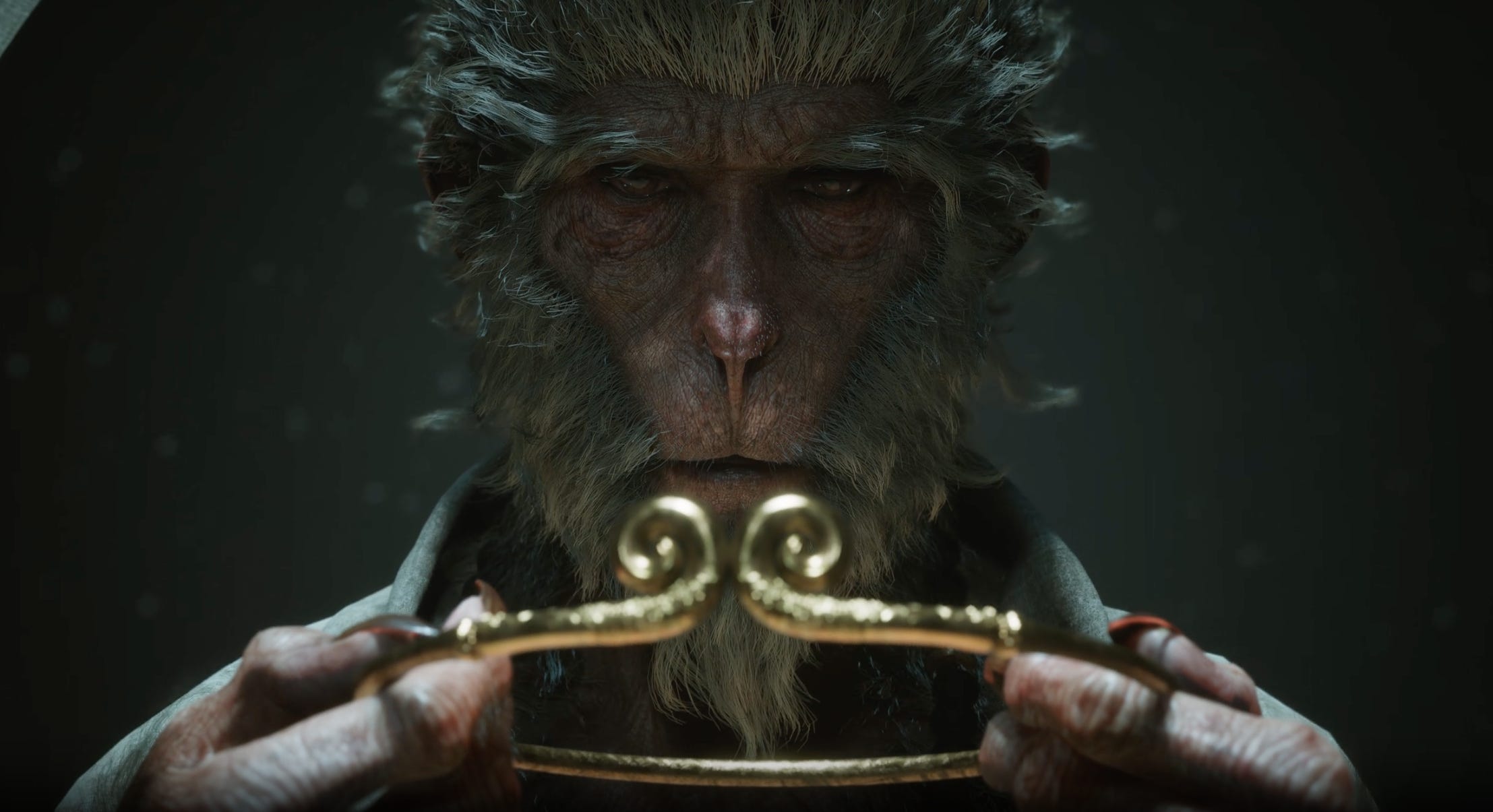
Over the weekend, my wife and I spent too much time watching computer gamers play Black Myth: Wukong on YouTube. Besides being the most decorated game this year, breaking records in sales and the number of online players, it is truly an amazing game with unbelievable graphics and historical and cultural context.
But this is not about the game.
It is about a thought that comes to mind when I watch (one of) the endings. In that scene, Wukong, the Monkey King, battles against the most formidable enemy, which is himself.
I recall where he was beaten down, and just before the “Dark Wukong” finished him, in his mind, the Buddha appeared and returned the golden circlet to him, which he put on his head willingly.
But before we go further, some context for those not familiar with the story of Journey to the West.
The magical circlet around Wukong’s head is called the 紧箍咒 (Jǐn Gū Zhòu) in Chinese. In English, it is often called the “Golden Circlet”. A more accurate translation would be the “Tightening Curse”, but also known as the “Calming Heart Mantra” or “True Words for Stilling the Mind” (定心真言).
Tied to the circlet, the Buddha invented the mantra and passed it on to Xuanzang (Tripitaka) by Avalokitesvara Bodhisattva to control his disciple, Wukong.
Xuanzang placed this magical circlet on Wukong’s head to control his rebellious behaviour. When Xuanzang recites the Mantra/Curse, the circlet on Wukong’s head will tighten, causing immense pain and forcing him to obey.
While the specific words of the mantra are not revealed in the novel, its purpose is clear: to control and subdue Wukong’s impulsive and rebellious nature. It serves as a tool for discipline and ultimately aids in Wukong’s transformation and enlightenment.
But the name “定心真言” itself suggests a deeper meaning. It implies that the mantra’s power lies not just in causing physical pain, but in calming and focusing the mind. A reminder that true self-mastery comes from inner peace and self-control, rather than external force. The pain comes from resisting the natural desire for inner peace.
At the end of the journey, after successfully retrieving the Buddhist scriptures from the West, Wukong achieves enlightenment and becomes the “Victorious Fighting Buddha” (斗战胜佛).
The circlet then no longer serves its purpose because Wukong has reformed and is no longer rebellious. With his enlightenment, the need is gone, symbolising his freedom from earthly constraints.
So in the computer game story, when faced with a formidable foe, Wukong puts on the “Golden Circlet” willingly. It’s like Superman, when given the opportunity to remove his weakness caused by Kryptonite, refuses to take it.
So why would he do that?
Wukong needed the circlet to defeat his inner demon
This is a very interesting idea for me. The object used to control his behaviour and restrain him becomes a lifesaving gift at the critical moment. It was not a more powerful weapon or a stronger suit of armour. It was a mantra to bring his base nature under control.
Without self-restraint, Wukong cannot overcome his darker side.
Self-restraint, represented as Wukong’s circlet, is a powerful weapon for containing one’s inner demons. This is a captivating concept of duality. We all possess the capacity for good and evil, light and darkness.
Our Demonic Nature
The idea of a “demonic nature” within us represents the darker aspects of the human psyche. It encompasses a range of impulses and behaviours that can cause harm to ourselves and others. These can manifest in various ways:
Aggression and violence: The capacity for anger and violence exists in all of us, though it varies in intensity. Psychologist Philip Zimbardo observed in his Stanford Prison Experiment that “good people can be induced, seduced, and initiated into behaving in evil ways.”
It showed how ordinary individuals, when placed in positions of power, can become abusive and violent. This underscores the importance of societal structures and ethical checks and balances in curbing our darker impulses.
While most of us live peacefully, history and current events remind us of the horrifying acts humans are capable of committing. The Holocaust, the genocides in Rwanda and Bosnia, and presently in Gaza, demonstrate our propensity to be cruel. Daily acts of domestic abuse or street violence highlight this human potential.
Selfishness and greed: The desire to prioritise our own needs and desires over others’ is a common human trait. This can manifest as greed, materialism, or exploitation of others.
At its core, selfishness stems from the instinct for self-preservation. However, unchecked, it can lead to exploitative behaviour, hoarding resources, and disregard for others’ needs.
Hatred and prejudice: We all have the potential to harbour feelings of hatred or prejudice towards individuals or groups based on their race, religion, sexual orientation, or other factors.
It is our natural tendency to favour our own kind and view those outside with suspicion or hostility. This can lead to prejudice, discrimination, and even violence against marginalised groups.
Lust and addiction: The desire for pleasure and gratification is a natural human drive. It starts off as the need for healthy relationships, intimacy, and connection with others in a responsible and respectful way. But when pursued excessively or without regard for consequences, it can lead to addiction, infidelity, or the exploitation of others.
Deceit and manipulation: The ability to lie and manipulate others for personal gain is a trait present in all of us, though to varying degrees. This can range from white lies to outright fraud and deception. Or even truth told with bad intentions.
“Truth told with bad intent beats all the lies you can invent.”
William Blake. Auguries of Innocence.
Shadow, as a consequence of Light
It’s important to note that this “demonic nature” doesn’t mean we are inherently evil. It just means that, because of our free will, we are capable of both good and evil. They coexist as two sides of the same thing.
Carl Jung said, “Everyone carries a shadow, and the less it is embodied in the individual’s conscious life, the blacker and denser it is.”
Being aware of our “shadow” helps us deal with it when it arises. If left suppressed or unacknowledged, it grows intense and can manifest in ways that will overtake our better selves.
That’s why we all need our Golden Circlet.
What is our “Golden Circlet”
I think it has to be our moral values; that set of guiding principles that tells us right from wrong, that shape our behaviour, interactions, and decisions.
This often stems from our religious beliefs, but our social and ethical upbringing also plays a significant role.
This metaphorical “circlet” around our crown is essentially a blessing and a gift. It is the key to our self-awareness and ability to practise self-control when we choose to act in alignment with our values and aspirations, even in the face of temptation or challenging emotions.
Wukong’s “demonic nature” is present in all of us. These impulsive, destructive, and often selfish tendencies lie dormant in us when we experience anger, greed, envy, or lust. When left unchecked, these always lead to harmful consequences for ourselves and others.
But self-restraint is not about suppressing our emotions completely; it’s about harnessing their energy and directing it towards positive outcomes. Wukong’s circlet allows him to control himself by choice.
By cultivating self-awareness and practising self-control, we can choose to act with compassion, empathy, and integrity, even in the face of temptation.
My lesson
Our ability for self-restraint empowers us to make good choices, even when faced with challenging emotions or tempting situations. This helps us live more fulfilling lives characterised by integrity, compassion, and self-mastery.
The concept of Wukong’s circlet serves as a powerful reminder that we all possess a shadow. But we also possess the ability to control it. By recognising our need for self-restraint and cultivating it, we can tap into our inner strength and choose to live a life guided by wisdom and compassion.