
What We Learned From Our Migration Journey to Australia
Thinking of making the move? That's what it was called when we wanted to migrate to Australia. It was a good scary move.

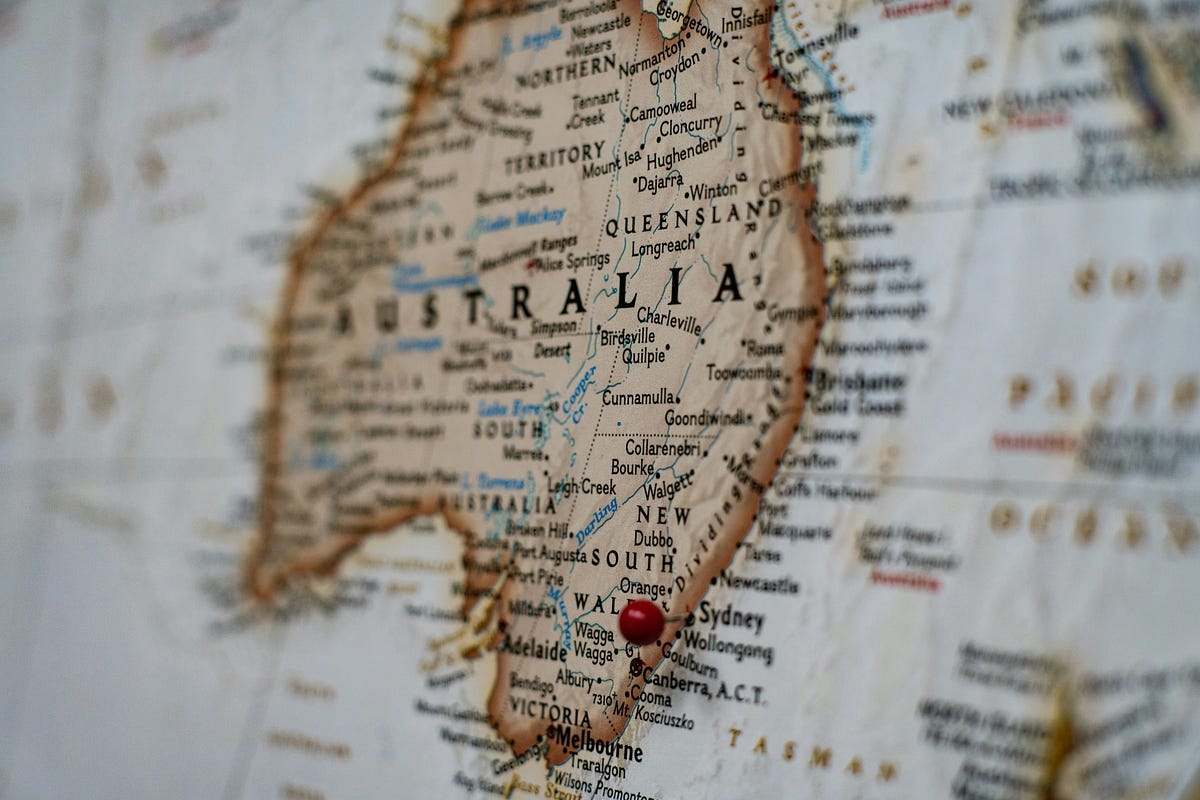
I wanted to share our migration journey for the benefit of anyone who is considering the move. The lessons we have learned, as well as mistakes to avoid. We were lucky things worked out for us. We took tremendous risk without really understanding those risks. We were rash; we came with no jobs, no family, and no friends.
Just unfiltered optimism.
It started in April 2001.
Subaru of Australia was the best distributor in the Subaru world, having achieved 4% market share — the highest in the world then. I visited the Subaru Docklands showroom to learn how they did it.
I never really liked Australia. I never intended to visit, even for holidays. This was because of all the “Pauline Hanson” stories that I grew up with in the 90s.
But I remember the morning we (my wife and I) arrived in Melbourne. We checked into the service apartment and at about 7:30 am; we stepped out onto Little Collins St. There was magic. The crisp, cold air is so clean it hurts your lungs. And all these people going to work, wearing mostly black trench coats, on a drizzly autumn morning.
“How ya going?”
“Good morning! How ya going?”
“How’s it going?”
Smiles everywhere. And almost everyone greeted us as they passed. At the back of my mind, I thought, “This isn’t Pauline Hanson.” I was already falling in love.
We spent the next few days doing touristy things. As we drove along the Great Ocean Road, it was at Apollo Bay that it happened. We had just finished sharing a “fisherman’s basket” and was taking a stroll on the jetty. I looked back on the esplanade and said,
“I want this. (Long pause) Let’s migrate.”
It took 8 years before we finally got our visa.
We applied for PR in 2003, and it was approved in 2004. But we had to deposit AUD$100,000 into Australian Government bonds for a year. We didn’t have the money then, and were unwilling to borrow. Our first child was on the way, and my career had hit a brick wall. It was not a good time.
So we let the application lapse and thought that was it.
It wasn’t until 2008 that we revisited the idea. By then, our situation had improved. But we were also older. Our second child had just arrived.
After discussing with the migration agent, there were several hurdles to permanent residency:
Because of our age, we could only apply for a state-sponsored visa in rural Australia. This visa gave us the extra 25 points that we need. The agent recommended Adelaide since it was the least rural compared to the likes of Northern Territories and Tasmania. There could also be fewer job opportunities.
It would be a temporary visa for 3 years. We would have to stay in South Australia for at least 2 years, and work full-time (minimum of 38 hours a week) for at least 1 year (52 weeks cumulatively). We would not be able to work or live elsewhere.
We had to make our first entry into South Australia within 6 months. Then, the 3-year clock starts ticking. Very little time to plan our move.
We had to have at least AUD $60,000 to bring with us.
Before we get permanent residency, we will not have Medicare (medical benefits) or Centrelink (social benefits). This means we need Health Insurance ($7600 a year), pay the full $85 a day for each child going to childcare (that’s $170 per day), and we would have no rent assistance.
If we didn’t meet these conditions, we would have to return to Singapore when the visa expired. We would have to start all over. In early 2009, we got our temporary visa to South Australia.
The entire process was costly. The agent’s fees, government fees, medical check-up, police checks, fees when we sold our flat, cost of moving while we waited for the visa, cost of storage while we waited for the visa, air tickets, freight, rent, bonds, car, furniture, school fees, uniform, etc… It added up quickly. We were using our savings faster than expected.
We were very brave, or very stupid. Or both.
So what have we learned from our migration journey to Australia?
When applying for your visa
Work with an agent, especially if time is of the essence. Because when you decide to take action, it is almost always too late. A registered migration agent can speed things up. You usually get a free, first consultation, and unless you meet the requirements for the visa, they cannot persuade you to proceed. They can lose their licence if your application fails.
Weigh the risks. And once you have decided, act.
When moving to Australia
Do not take everything with you. You can get most things here. When we moved, I had some 12 cartons of books that I am now only beginning to get rid of. It was expensive to send over. There were boxes of stuff that we didn’t open for years. We just take them with us everywhere we move.
Make sure you have sufficient funds. If the recommendation is $60,000, make sure you have twice as much. Enough to live without hardship for at least a year after all expenses. Second-hand cars are cheap, and rent is usually cheaper when compared to places like Singapore. Food is inexpensive if you cook instead of dining out.
I suppose the reason we migrated was to seek a new life. That meant letting go of the old one.
When looking for a place to rent
If we had to migrate today, we would look for a place near a relatively good public school and a train line to the city. In all major cities, it is a nightmare to drive to work in the morning.
And since working from home is the norm these days, a house further from the city is OK. But if we want to live in the city, we will rent an apartment.
When looking to buy a house
Find something that is easy to maintain. Forget swimming pools or ornamental ponds, enormous gardens and backyards. Having lived in a flat all our lives, we had no idea the work that needed to maintain a house.
Research the neighbourhood to make sure that crime is low. Talk to the neighbours if you can, just bring a box of doughnuts and introduce yourself. A friendly neighbour makes a world of difference when you have no family here.
When looking for a school
If children are less than 10, a good public primary school is usually fine, but a just primary school. I would avoid public schools that take in kindergarten to 18-year-olds. Young children are less complicated.
Unlike private schools, public schools cannot expel problematic students. Bullying and drugs are problems you don’t need when you’ve just arrived. I feel Catholic schools are more disciplined, and less expensive than prestigious private schools. Plus, they can expel students if they need to.
When looking for a job
If haven’t got a job before you arrive, be prepared to hit the ground running. Don’t just depend on job ads or job sites. Because here, if you are unemployed, you can get benefits like the Jobseeker payment.
To qualify for payment, you need to show that you are looking for work. This usually means applying for a certain number of jobs a week. It also means many will apply for anything and everything. Job ads invite hundreds of applications, many of which are neither qualified nor relevant. This makes it difficult for genuine jobseekers to stand out.
Job ads invite hundreds of applications, many of whom are neither qualified nor relevant. This makes it difficult for genuine jobseekers to stand out.
Instead, research on companies (on LinkedIn) that you want to work with. Find out who is the person who can hire you. Call. Many employers will appreciate the initiative. They are also more open to having a conversation, and may even recommend you to their contacts if they don’t have a suitable position.
Did we ever regret the move?
No. We miss our families and friends. The food, definitely. We miss midnight suppers and morning breakfasts. We miss the efficiency. We miss the convenience of living in a city that never sleeps.
But we know our two boys will be happier. Education in Australia is more holistic. The work-life is more balanced. Imagine this:
According to News.com.au (10 Feb 2024), the federal government is set to enshrine so-called ‘right to disconnect’ laws, which will effectively prevent bosses contacting staff outside of work hours.
There are safety nets, old-age pension, and government support, though some can still fall through the gaps. And as long as you are willing to work, you can live a reasonably comfortable life.
I hope you enjoyed this article. While "What Matters" is free, I do appreciate your support as a paid subscriber. If you don’t do subscriptions, you can also buy me a coffee. Either way, it means a lot.
Thank you for being here. Please remember to like, restack, and leave a comment.
